June 29, 2026
After-Hours Spanish Legal Receptionist: A Firm's Guide

An after-hours Spanish legal receptionist is a bilingual reception professional who handles client calls, intake screening, and appointment scheduling for law firms outside standard business hours. The industry term for this role is “bilingual legal receptionist,” though the after-hours function is what separates it from a standard front-desk position. Law firms serving Hispanic communities face a clear gap: Spanish-speaking clients call after 5 p.m., and most firms have no one available to answer in their language. 24/7 coverage expands client accessibility and retention for firms with Hispanic client bases. Diazluna addresses exactly this gap with a native-level bilingual reception model built for legal professionals.
What does an after-hours Spanish legal receptionist need to do the job?
Setting up effective bilingual after-hours legal support requires more than hiring someone who speaks Spanish. You need the right technology, the right training, and a clear understanding of what the role actually demands.
Core qualifications
Typical qualifications for a bilingual legal receptionist include English-Spanish fluency, customer service experience, and computer literacy. That baseline matters, but legal intake adds another layer. The receptionist must understand attorney-client privilege, know when not to give legal advice, and follow intake procedures without supervision after hours. Cultural competence is equally non-negotiable. Receptionists with deep cultural awareness improve Hispanic client retention more than linguistic fluency alone.
Technology requirements
Your phone system must support call routing that directs Spanish-language callers to the right person without hold-time confusion. A CRM integration lets the receptionist log call notes, flag urgent matters, and schedule appointments in real time. WhatsApp integration is increasingly standard for Hispanic clients, who often prefer messaging to phone calls for initial contact. Without these tools in place, even a fluent receptionist loses efficiency fast.
In-house vs. outsourced coverage
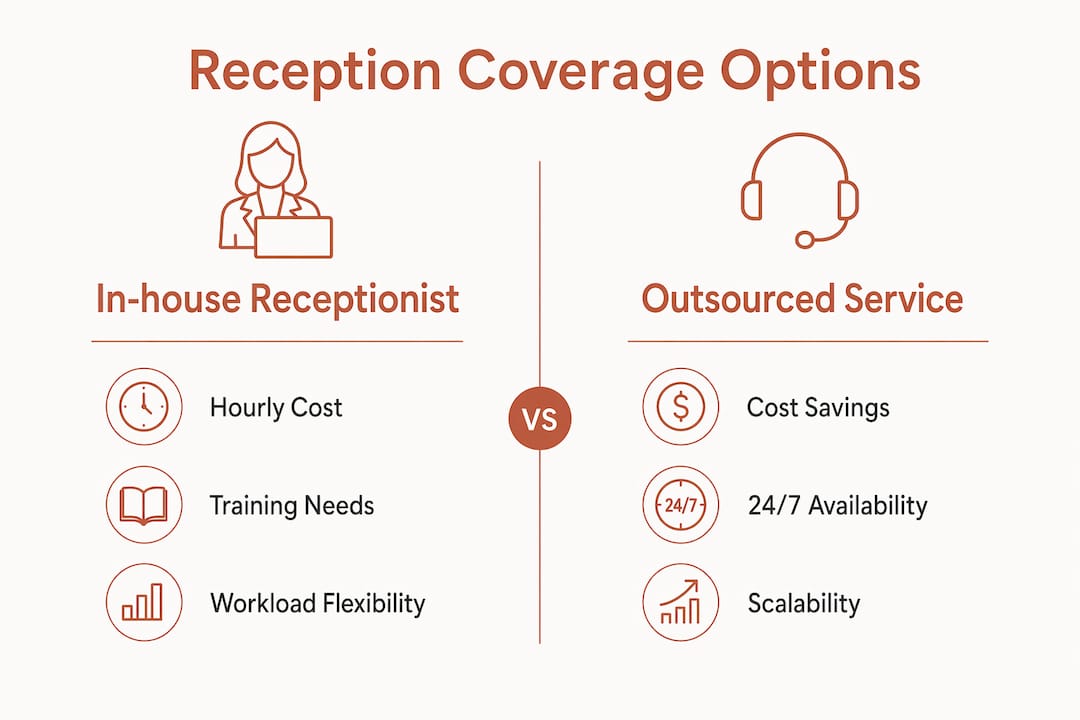
| Factor | In-house receptionist | Outsourced bilingual service |
|---|---|---|
| Hourly cost | $15–$23 per hour plus benefits | Lower per-call or monthly rate |
| Coverage hours | Typically business hours only | 24/7 available |
| Turnover risk | High | Managed by provider |
| Legal training | Requires firm investment | Often pre-trained |
| Scalability | Limited by headcount | Adjusts to call volume |
Outsourcing bilingual reception can save firms up to 75% compared to hiring an equivalent in-house staff member. That figure reflects not just salary but benefits, training time, and the cost of coverage gaps during vacations or turnover.
Pro Tip: Before hiring, audit your current call volume by language. If Spanish-language calls represent more than 20% of your after-hours inquiries, outsourcing to a dedicated bilingual service almost always costs less than staffing in-house.
How do you hire an effective bilingual legal receptionist for after-hours coverage?
Hiring for this role requires a structured process. A candidate who speaks conversational Spanish is not the same as one who can handle a distressed client calling about a custody emergency at 10 p.m.
-
Define the scope first. Decide which hours need coverage, which practice areas the receptionist will handle, and what authority they have to schedule or escalate calls. Vague job descriptions attract unqualified candidates.
-
Screen for legal vocabulary in both languages. Ask candidates to explain “attorney-client privilege” in Spanish during the interview. Their answer reveals both fluency depth and legal awareness. Candidates who stumble on this term will struggle on live calls.
-
Test cultural fit, not just translation. Ask scenario-based questions: “A caller is upset and speaking very fast in Spanish. How do you slow the conversation down without making them feel dismissed?” The answer shows emotional intelligence and cultural awareness, not just language skill.
-
Verify experience with legal intake. Strong candidates handle inbound screening, appointment booking, conflict-checking, and client recognition with custom scripts per attorney. Ask for examples of each from prior roles.
-
Run a live call simulation. Give the candidate a mock scenario in Spanish: a new client calling after hours about a personal injury case. Evaluate tone, accuracy, and how they handle information they cannot legally share.
-
Onboard with firm-specific scripts. Every attorney has a different communication style. Build custom intake scripts before the receptionist takes their first live call. Review and update scripts quarterly.
Pro Tip: Remote hires expand your candidate pool significantly. A bilingual legal receptionist based in Texas or Florida may cost less than a local hire in New York while bringing stronger Spanish fluency from daily community use.
Common hiring pitfalls to avoid
Avoid hiring based on resume language claims alone. Fluency on paper rarely matches fluency under pressure. Do not skip the legal knowledge screen because the role “is just reception.” After-hours callers often have urgent legal needs, and a misstep in what the receptionist says can create liability. Finally, do not assume one receptionist can cover all hours indefinitely. Burnout and turnover in after-hours roles run high without proper scheduling support.
How do you integrate bilingual reception into your after-hours workflow?
Hiring the right person is only half the work. The other half is building the systems that make their work consistent and professional.
-
Use native bilinguals, not mid-call interpreters. Native-level bilingual capability is the standard that prevents a perceived drop in service quality during calls. Transferring a Spanish-speaking caller to a third-party interpreter mid-call signals to the client that your firm is not truly equipped to serve them.
-
Build Spanish-language intake scripts for each practice area. A family law intake script differs from a criminal defense script. Clients calling about immigration have different emotional states than those calling about a business dispute. Scripts should reflect those differences in tone and vocabulary.
-
Train for appointment scheduling in Spanish. The receptionist must confirm dates, times, attorney names, and required documents entirely in Spanish without switching languages. Mixing English into a Spanish call creates confusion and signals low fluency.
-
Enforce confidentiality protocols after hours. Strict adherence to confidentiality policies after hours is mandatory. Protocols include secure call handling, limited information disclosure, and compliance with attorney-client privilege. The receptionist should never confirm whether someone is a client without verifying caller identity first.
-
Personalize every interaction. Clients respond positively when receptionists remember their names and case details. A simple “Mr. Ramirez, I see you spoke with our office last week” builds more trust than any scripted greeting.
-
Monitor call quality monthly. Record a sample of after-hours calls with proper disclosure and review them with the receptionist. Use a short rubric: language accuracy, tone, protocol adherence, and resolution rate.
What goes wrong with after-hours bilingual reception, and how do you fix it?
Even well-designed systems break down. Knowing the most common failure points lets you correct them before they cost you clients.
-
Language fluency gaps surface under pressure. A receptionist who handles routine calls well may struggle with fast-talking, distressed, or dialect-heavy callers. The fix is regular call reviews and targeted coaching, not replacement.
-
Turnover breaks coverage continuity. After-hours roles have higher turnover than standard positions. Build a backup coverage plan before you need it. A second trained receptionist or an outsourced service on standby prevents gaps.
-
Misrouting wastes client time. If your call routing sends Spanish-language callers to a general voicemail after hours, you lose them. Audit your phone tree quarterly and test it from a Spanish-language caller’s perspective.
-
Automated translation mid-call destroys trust. Relying on automated translation services mid-call reduces client satisfaction and can damage your firm’s reputation. Real-time machine translation is not a substitute for a native speaker in a legal context.
-
Technology failures need a backup plan. If your CRM goes down or your VoIP system fails, the receptionist needs a paper-based protocol. A simple call log sheet and a direct attorney cell number for emergencies prevents a tech failure from becoming a client loss.
“The most common mistake firms make is treating bilingual reception as a translation service rather than a client relationship function. The language is the tool. The relationship is the product.”
Key takeaways
An after-hours Spanish legal receptionist is a specialized bilingual professional who requires legal knowledge, cultural competence, and technology support to serve Hispanic clients effectively outside business hours.
| Point | Details |
|---|---|
| Cultural competence matters more than fluency alone | Receptionists who treat clients with dignity retain more Hispanic clients than those who only translate. |
| Outsourcing cuts costs significantly | Outsourced bilingual reception can save firms up to 75% compared to in-house staffing. |
| Native bilinguals outperform interpreter transfers | Mid-call interpreter transfers signal poor service quality and reduce client trust. |
| Scripts must be practice-area specific | Generic intake scripts fail after hours; customize by case type and attorney preference. |
| Confidentiality protocols apply after hours too | Secure call handling and attorney-client privilege compliance are mandatory at all hours. |
Why cultural competence is the real differentiator
I have seen law firms invest in bilingual phone systems, hire Spanish-speaking staff, and still lose Hispanic clients at a high rate. The reason is almost always the same. The firm treated bilingual reception as a translation problem instead of a trust problem.
Spanish-speaking clients calling a law firm after hours are often in a stressful situation. They may be dealing with an arrest, a custody dispute, or an immigration issue. What they need in that moment is not just someone who speaks their language. They need someone who understands their context, respects their dignity, and communicates with the warmth that builds confidence in a firm they have never met before.
I have watched firms spend thousands on phone systems and then assign after-hours calls to a bilingual staff member with no legal training and no cultural coaching. The calls get answered. The clients do not come back. The gap is not the language. It is the experience.
The firms that get this right treat their bilingual receptionists as client relationship professionals, not call handlers. They invest in cultural training alongside legal training. They review calls not just for accuracy but for tone. They ask: did the client feel heard? That question is worth more than any script.
— Francisco
Diazluna’s bilingual front desk for law firms
Law firms serving Hispanic clients need more than a Spanish speaker answering the phone after hours. They need a trained, native-level bilingual reception experience that reflects the professionalism of the firm at every hour.
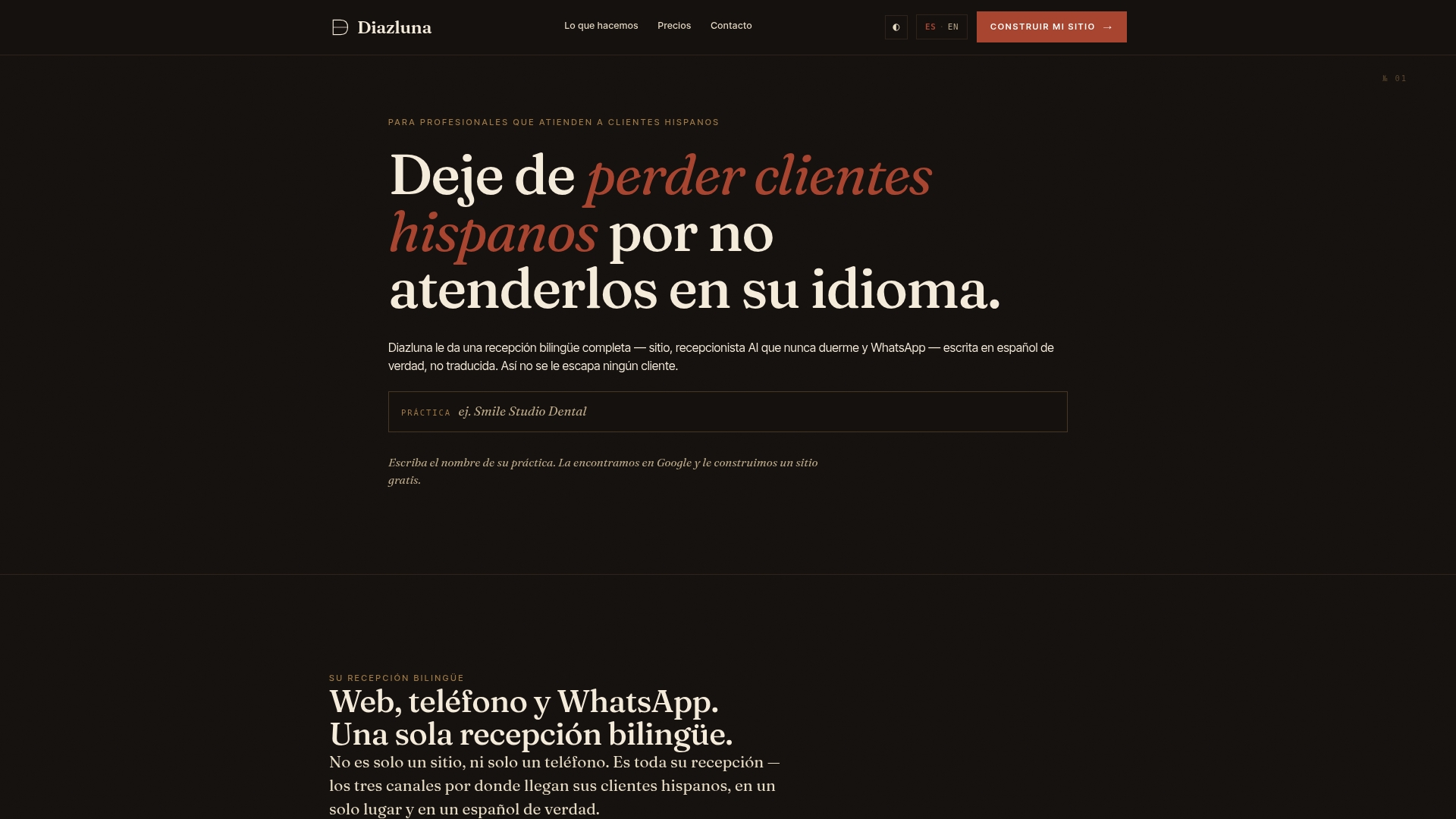
Diazluna provides bilingual legal reception built specifically for law firms with Spanish-speaking clients. The service combines a 24/7 AI receptionist fluent in both English and Spanish, WhatsApp integration, and a fully bilingual web presence, all without the overhead of in-house staffing. Firms that use Diazluna report a significant drop in lost Hispanic client inquiries. You can learn more about the full offering at Diazluna’s bilingual front desk.
FAQ
What is an after-hours Spanish legal receptionist?
An after-hours Spanish legal receptionist is a bilingual professional who handles client calls, intake screening, and scheduling for law firms outside standard business hours. The role requires native-level Spanish fluency, legal knowledge, and cultural competence.
How much does a bilingual legal receptionist cost?
Full-time in-house bilingual legal receptionists earn between $15 and $23 per hour, plus benefits and training costs. Outsourcing to a bilingual reception service can reduce that cost by up to 75%.
Why not use a translation service or interpreter for after-hours calls?
Mid-call interpreter transfers reduce client trust and signal that the firm is not equipped to serve Spanish-speaking clients directly. Native bilingual receptionists maintain professional authority and a consistent client experience throughout the call.
What qualifications should a bilingual legal receptionist have?
Candidates need English-Spanish fluency, customer service experience, computer literacy, and a working understanding of legal intake procedures including attorney-client privilege. Cultural competence is as important as language skill.
Can an AI receptionist handle Spanish-speaking legal clients after hours?
A well-trained AI receptionist with native-level Spanish capability can handle intake screening, appointment scheduling, and basic client communication after hours. Diazluna’s 24/7 AI receptionist is built for exactly this function, with WhatsApp integration and bilingual web support included.