July 5, 2026
Bilingual Content's Role in Client Loyalty: 2026 Guide

Bilingual content is defined as any communication produced simultaneously in two languages to serve distinct cultural audiences, and its role in client loyalty is now measurable, not theoretical. A 2026 global survey found that 76% of consumers prefer to buy from websites in their native language. That single finding reframes bilingual content from a courtesy into a revenue decision. For professionals serving Hispanic clients in dentistry, law, and healthcare, the stakes are even higher. Spanish is not just a communication preference for this audience. It is a trust signal, and businesses that treat it as such earn loyalty that English-only competitors cannot reach.
How bilingual content builds trust and cultural identity
Language is the primary marker of cultural identity, and language familiarity moderates brand interaction and customer loyalty in measurable ways. When a Hispanic client lands on a website written in Spanish, the message is not just “we speak your language.” The message is “we see you.” That recognition produces an emotional response that generic English content cannot replicate.
The psychological mechanism behind this is well documented. Native-language communication reduces cognitive effort for clients, which lowers their guard and creates emotional alignment with the brand. Less mental friction means more trust. More trust means repeat visits, referrals, and long-term retention.
For Latina consumers specifically, Spanish carries meaning beyond vocabulary. Research shows that 92.5% of Latinas identify justice, learning, and growth as core values that brands must reflect in Spanish-language content. A direct translation of an English page does not accomplish this. Authenticity in tone, not just accuracy in words, is what earns the loyalty premium.
Brands that show up in Spanish authentically reflect values important to Latinas, such as justice and community, earning a loyalty premium beyond language alone.
The data on community orientation reinforces this point. 55% of Latinas are more likely to become clients of brands that play positive community roles, a figure that has grown 25% since 2023. That growth signals a shift. Hispanic consumers are not just noticing which brands speak Spanish. They are rewarding the ones that do it with genuine cultural respect.
- Spanish functions as a cultural trust signal, not merely a language option.
- Emotional alignment from native-language content reduces client churn.
- Authenticity in tone outweighs literal translation accuracy for Latina consumers.
- Community-oriented messaging in Spanish drives measurable loyalty gains.
What bilingual marketing strategies actually improve client retention
The most effective bilingual marketing strategies start with a single principle: produce content in both languages from day one, not English first and Spanish second. Culturally adapted campaigns resonate better and improve loyalty more than direct translations. When a campaign is conceived in English and then translated, the Spanish version inherits the cultural assumptions of the original. The result feels foreign to native speakers, even when the grammar is correct.
Full localization means adapting tone, values, imagery, and community references, not just swapping words. A dental practice that writes its Spanish content around family health and community trust will connect with Hispanic clients far more effectively than one that translates its English FAQ page. The same applies to law firms and healthcare providers. The cultural frame matters as much as the language itself.
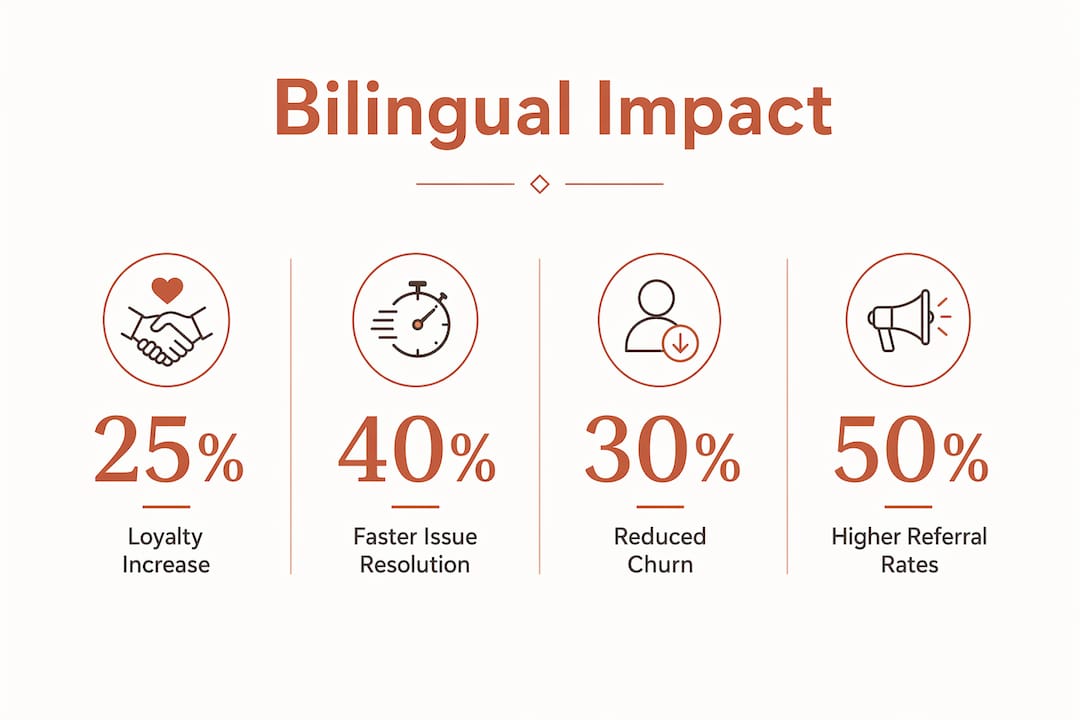
Segmenting clients by language preference from the point of first contact is the operational move that makes this work at scale. Collecting language preferences at signup enables segmentation and personalized campaigns that improve engagement from day one. Without this data, businesses default to English for everyone and lose Spanish-speaking clients before the relationship even starts.
Practical tactics that reinforce client retention through language include:
- Build a fully bilingual website where Spanish is a primary version, not a translated afterthought.
- Offer WhatsApp communication in Spanish, since it is the preferred messaging channel for many Hispanic clients.
- Train or deploy AI receptionists fluent in both languages to handle after-hours inquiries without language friction.
- Write email and SMS campaigns in the client’s preferred language, based on the preference data collected at intake.
- Create social content that reflects Hispanic cultural values, not just translated captions from English posts.
Pro Tip: Brief your content team in both English and Spanish simultaneously. When writers work from a shared brief rather than a translated brief, the cultural voice of each version stays authentic from the first draft.
The importance of bilingualism in business becomes clearest at the touchpoints where clients decide whether to stay or leave. A client who cannot understand their appointment reminder, their legal document summary, or their post-visit follow-up email will not complain. They will simply not return.

Does bilingual content measurably improve client satisfaction and retention?
The answer is yes, and the data is specific. Clients who receive support in their native language resolve issues faster and report higher satisfaction than those served in a second language. The satisfaction gap between native-language and non-native-language support exceeds the gap between fast and slow support. Speed matters less than comprehension.
That finding has a direct implication for client retention. A client who waits five minutes for a Spanish-speaking receptionist will leave more satisfied than one who gets an immediate answer in English they only partially understand. Businesses that optimize for speed without accounting for language are solving the wrong problem.
| Metric | English-only service | Bilingual service |
|---|---|---|
| Client satisfaction rate | Lower, due to comprehension gaps | Higher, driven by native-language clarity |
| Issue resolution speed | Fast but often incomplete | Thorough and trusted |
| Repeat patronage likelihood | Reduced by language friction | Increased by cultural alignment |
| Referral rate within community | Limited | Higher, as satisfied clients refer within their language community |
Satisfied multilingual clients are more likely to refer others within their language communities. This referral effect compounds over time. A single Spanish-speaking client who feels genuinely served becomes a source of organic growth within a network that English-only businesses cannot access.
The churn reduction effect is equally significant. Proactive bilingual engagement reduces churn and improves loyalty by addressing language friction before it becomes a reason to leave. Businesses that wait until Spanish-speaking clients complain are already too late. The clients who leave due to language barriers rarely explain why.
Common pitfalls when implementing bilingual content
The most common mistake is treating bilingual content as a translation project rather than a communication strategy. Businesses brief their English team, approve the English content, and then send it to a translator. The Spanish version arrives late, carries the wrong cultural tone, and gets published with less care than the English original. Clients notice.
- Translation-first thinking: Producing English content and translating it afterward strips out cultural nuance and produces Spanish that feels mechanical.
- Ignoring language preference data: Businesses that do not collect language preferences at intake cannot segment their audience and default to English for everyone.
- Underinvesting in Spanish touchpoints: A bilingual website with an English-only phone line sends a contradictory message that erodes the trust the website built.
- Relying on AI without cultural oversight: AI tools handle volume well, but effective bilingual support integrates AI-driven triage with human expertise to preserve cultural fluency in sensitive interactions.
- Treating bilingual content as optional: Failing to provide multilingual support signals to Hispanic clients that they are second-class, which creates a trust deficit that is hard to recover from.
The fix for most of these pitfalls is a mindset shift. Bilingual content is not a feature added to an English-first business. It is a parallel communication system built for a specific audience from the ground up.
Pro Tip: Add a language preference field to every new client intake form. Route that data directly into your CRM so every future communication defaults to the client’s preferred language without requiring them to ask.
The businesses that get bilingual content right treat it as a strategic asset rather than a cost center. That framing changes every decision, from budget allocation to content planning to staff hiring.
Key Takeaways
Bilingual content builds client loyalty among Hispanic consumers by reducing cognitive friction, signaling cultural respect, and creating the emotional alignment that drives repeat patronage and referrals.
| Point | Details |
|---|---|
| Language as a trust signal | Spanish communicates cultural recognition to Hispanic clients, not just linguistic accessibility. |
| Simultaneous content creation | Developing English and Spanish content together produces stronger cultural resonance than translation. |
| Segment by language at intake | Collecting language preferences at signup enables personalized communication from the first interaction. |
| Native-language support drives satisfaction | Clients prefer waiting longer for Spanish support over receiving fast but confusing English responses. |
| Bilingual content reduces churn | Proactive Spanish-language engagement addresses friction before it becomes a reason to leave. |
Why I think most businesses are still getting this wrong
Most professionals I talk to treat their Spanish-language content as a checkbox. They add a translated page to their website, maybe hire a bilingual receptionist, and consider the job done. What they miss is that Hispanic clients, especially Latinas, are not just checking whether you speak Spanish. They are checking whether you mean it.
The loyalty premium for authentically bilingual brands is real and growing. The 25% increase in community-oriented brand preference since 2023 tells me this audience is becoming more discerning, not less. A dental practice or law firm that invests in genuine bilingual communication now is building a moat that late movers will struggle to cross.
The emotional dimension of this is something I find consistently underestimated. When a client reads a message in their native language, written with cultural warmth and not just grammatical correctness, they feel respected. That feeling is the foundation of loyalty. No discount, no referral program, and no loyalty card replaces it.
My honest recommendation: stop thinking about bilingual content as a translation budget line. Start thinking about it as your primary client retention tool for the fastest-growing consumer segment in the United States. The businesses that make that shift early will not regret it.
— Francisco
How Diazluna supports client loyalty for Hispanic-serving professionals
Professionals who serve Hispanic clients in dentistry, law, and healthcare face a specific challenge. Every unanswered Spanish call, every English-only website, and every missed WhatsApp message is a client who chose someone else.
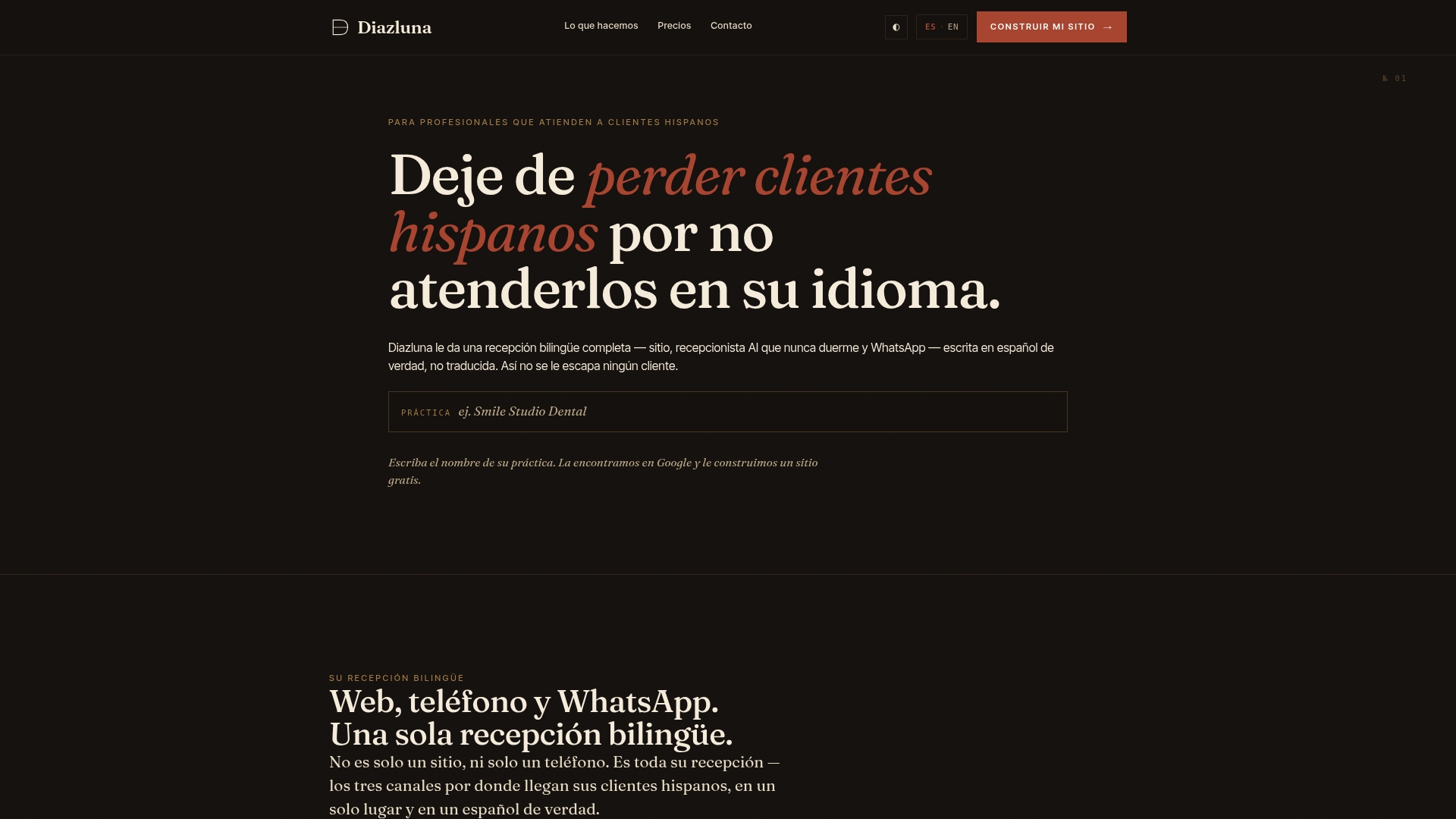
Diazluna’s bilingual front desk service combines a fully optimized bilingual website, a 24/7 AI receptionist fluent in both Spanish and English, and WhatsApp integration into one system built specifically for Hispanic-serving practices. Clients get answers in their language at any hour. Practices stop losing clients to language friction. Diazluna also indexes new sites with Google within 24 hours, so Spanish-speaking clients can find you before they find anyone else. For attorneys specifically, Diazluna offers a bilingual solution for law firms that covers every client touchpoint from first contact to follow-up.
FAQ
What is the role of bilingual content in client loyalty?
Bilingual content builds client loyalty by reducing language friction and signaling cultural respect. Clients who receive communication in their native language report higher satisfaction and are more likely to return and refer others.
Why does Spanish function as a trust signal for Hispanic clients?
For Latina consumers, Spanish communicates cultural recognition and shared values, not just language accessibility. Research shows that 92.5% of Latinas expect brands to reflect values like justice and community in their Spanish-language content.
How does bilingual content reduce client churn?
Native-language communication removes the cognitive effort clients spend decoding a second language, which creates emotional alignment with the brand. Proactive bilingual engagement addresses language friction before it becomes a reason to leave.
What is the biggest mistake businesses make with bilingual content?
The most common mistake is translating English content into Spanish rather than creating both versions simultaneously. Translation-first approaches strip out cultural nuance and produce Spanish content that feels mechanical to native speakers.
How can a practice start implementing bilingual content effectively?
Add a language preference field to every client intake form and route that data into your CRM. Then build or upgrade your website, phone, and messaging systems to serve Spanish-speaking clients in their preferred language from the first interaction.