June 28, 2026
What a Bilingual Service Package Includes in 2026

A bilingual service package is a multilingual communication and lead management solution that covers calls, texts, web chats, and scheduling in both English and Spanish. Understanding what bilingual service package includes goes well beyond simple translation. The most effective packages combine automatic language detection, structured lead intake, CRM integration, and omnichannel coverage. Professionals in dentistry, law, and healthcare who serve Hispanic clients need to know exactly which features drive real results and which are just marketing filler. This guide breaks down every core component so you can evaluate options with confidence.
What communication channels does a bilingual service package include?
A bilingual service package covers multiple contact methods in a single layer, not just phone calls. Omnichannel bilingual coverage handles inbound calls, SMS, web chat, and email routing together. That matters because Hispanic clients in the U.S. reach businesses through different channels depending on their age, location, and comfort level. Locking your practice into phone-only coverage means missing a large share of potential contacts.
English and Spanish are the standard language pair in every reputable package. Some providers extend coverage to French, Portuguese, or Mandarin, but those are add-ons rather than defaults. The channel and language breakdown for a typical bilingual support service looks like this:

| Channel | Language support | Typical availability |
|---|---|---|
| Inbound phone calls | English and Spanish | Business hours or 24/7 |
| SMS and text messaging | English and Spanish | 24/7 with AI |
| Web chat | English and Spanish | 24/7 with AI |
| English and Spanish | 24/7 with AI | |
| Email routing | English and Spanish | Business hours |
One feature separates strong bilingual service offerings from weak ones: automatic language detection. Top bilingual services detect the caller’s preferred language without forcing them through an IVR menu. Asking a Spanish-speaking patient to “press 2 for Spanish” creates friction and signals that your practice treats them as an afterthought.
- Calls answered in the caller’s detected language from the first word
- SMS replies sent in the same language the client used to text
- Web chat responses matching the visitor’s browser or input language
- WhatsApp conversations maintained in the client’s chosen language
Pro Tip: Before signing with any provider, call their demo line in Spanish and in English. If you hear an IVR language prompt, that is a red flag. Automatic detection should kick in before a human or AI agent speaks a single word.
Culturally natural phrasing also matters. A literal word-for-word translation sounds robotic and erodes trust. The best bilingual packages train agents and AI models on brand voice and regional Spanish variations, not just dictionary Spanish.
Which lead management features are included in bilingual service packages?
Lead management is where bilingual service packages create or destroy revenue. A package that only takes messages and sends emails is not a lead management tool. It is an expensive voicemail box. Effective bilingual packages push structured data directly into CRM systems, capturing the right intake fields every time.
The components of a bilingual package built for lead management include:
- Intake qualification fields: Budget range, urgency level, service type, and preferred contact time
- Structured CRM entry: Data entered directly into fields, not dumped into a notes box
- Appointment scheduling: Calendar integration with real-time availability checks
- Lead routing: Qualified leads sent to the right team member based on intake answers
- Follow-up triggers: Automated reminders sent to clients who did not complete booking
- Reporting dashboards: Call volume, conversion rate, and lead source tracked by language
Configurable intake fields and qualification rules are the difference between a package that grows your practice and one that just answers the phone. A dental office, for example, needs to know whether a caller is a new patient, whether they have insurance, and what procedure they need. A law firm needs to know the case type and timeline. Generic intake forms miss that specificity entirely.
Pro Tip: Ask every vendor whether you can customize the intake logic yourself or whether changes require a support ticket. Self-service customization means you can adjust qualification questions as your practice evolves without waiting days for a vendor update.
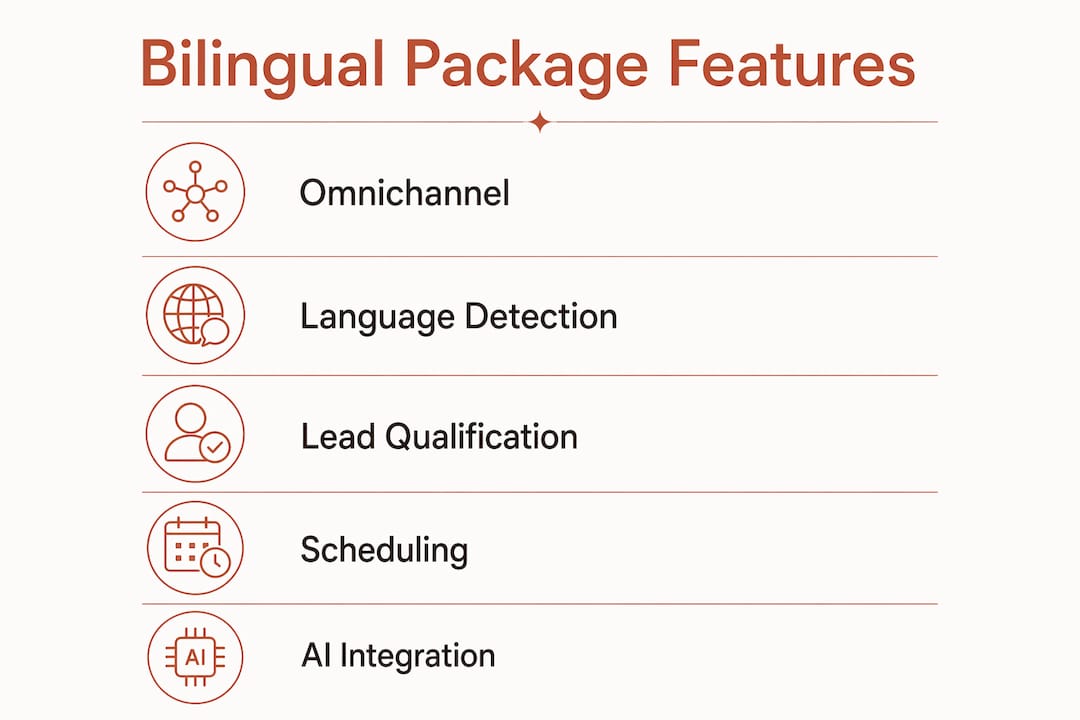
Without proper qualification questions and CRM integration, bilingual answering services become mere message-taking tools. That gap costs practices real revenue because unqualified or poorly captured leads rarely convert.
Scheduling automation is a separate feature worth confirming. Some packages include calendar integration at the base rate. Others charge extra for two-way sync with platforms like Google Calendar or practice management software. Confirm which scheduling tools the package connects to before you commit.
What pricing models exist for bilingual service packages?
Bilingual service pricing falls into two main structures: flat monthly fees and usage-based per-minute or per-interaction fees. Each model fits a different type of practice. Usage-based pricing aligns cost with call volume, which benefits seasonal businesses or practices with unpredictable demand. Flat monthly fees work better for high-volume practices that want predictable overhead.
| Pricing model | Best for | Key risk |
|---|---|---|
| Flat monthly fee | High-volume, consistent demand | Overpaying during slow months |
| Per-minute human service | Low-volume or seasonal practices | Costs spike during busy periods |
| AI platform subscription | 24/7 coverage at fixed cost | Less flexibility for complex calls |
| Hybrid tiered pricing | Mixed AI and human needs | Complexity in billing reconciliation |
Common add-on charges that inflate the base rate include:
- After-hours and weekend coverage premiums
- Holiday surcharges
- Booking complexity fees for multi-step scheduling
- Additional language support beyond English and Spanish
- CRM integration setup fees
Buyers should request pricing examples for at least three scenarios: a routine month, a peak month, and a month with heavy after-hours demand. That comparison reveals the true cost range and prevents billing surprises. A vendor who resists that exercise is telling you something important.
Script complexity also affects price. A simple appointment booking script costs less to run than a multi-branch intake flow that qualifies leads by case type, insurance status, and urgency. Know your intake complexity before you request a quote.
Pro Tip: Ask vendors to show you a sample invoice from a current client with a similar call volume. Real invoices reveal line items that never appear in a sales deck.
Price disputes commonly stem from misalignment between what the buyer expected and how the vendor bills. Scenario-based pricing requests solve that problem before the contract is signed.
How do AI and hybrid models change what bilingual packages offer?
The delivery model behind a bilingual service package determines its availability, speed, and cost structure. Three models exist: fully human, fully AI, and hybrid.
Human bilingual receptionists handle complex or emotionally sensitive calls well. They pick up on tone, adjust their approach mid-conversation, and manage situations that require genuine judgment. The tradeoff is cost and availability. Human teams work set hours, take breaks, and cost more per interaction than AI systems.
AI bilingual receptionists operate 24 hours a day, 7 days a week, with no hold times and no shift changes. AI-powered implementations can deploy in hours, not weeks, with integration to CRM and practice management systems. That speed matters for practices that need to start capturing Spanish-speaking leads immediately rather than waiting through a long onboarding process. Diazluna’s AI receptionist, for example, is fluent in both English and Spanish and connects directly with WhatsApp, making it accessible to clients who prefer messaging over phone calls.
Hybrid models assign AI to handle routine interactions like appointment booking, FAQs, and intake collection, while escalating complex or sensitive calls to a human agent. Human bilingual receptionists are best for complex calls but are more expensive and limited in hours. Hybrid models balance those tradeoffs by reserving human attention for situations that genuinely need it.
Key questions to ask when evaluating the delivery model:
- What percentage of calls does the AI handle without human escalation?
- How quickly does the system escalate to a human when needed?
- What happens to calls that come in outside human agent hours?
- Does the AI maintain context when transferring to a human agent?
The right model depends on your call complexity and budget. A dental practice booking routine cleanings can run almost entirely on AI. A personal injury law firm handling sensitive intake conversations may need a hybrid approach where AI collects basic information and a human closes the intake.
Key Takeaways
A bilingual service package delivers real business value only when it combines omnichannel coverage, automatic language detection, structured lead intake, and transparent pricing into one integrated solution.
| Point | Details |
|---|---|
| Omnichannel coverage is standard | Strong packages cover calls, SMS, web chat, WhatsApp, and email in English and Spanish. |
| Automatic language detection is non-negotiable | Packages that use IVR language menus create friction and lose Spanish-speaking clients. |
| Lead intake drives revenue | Configurable intake fields and direct CRM entry separate revenue-generating packages from message-taking services. |
| Pricing requires scenario testing | Request routine, peak, and after-hours pricing to reveal true costs before signing. |
| AI and hybrid models expand availability | AI-powered bilingual services deploy in hours and provide 24/7 coverage at a lower cost than fully human teams. |
What I’ve learned from watching practices choose the wrong bilingual package
Most professionals I talk to make the same mistake. They evaluate bilingual service packages by asking “do you cover Spanish?” and stop there. That question is the floor, not the ceiling. The real differentiator is what happens after the call connects.
Automatic language detection is the first thing I check. If a vendor cannot tell me exactly how their system identifies the caller’s language without an IVR prompt, I move on. That single feature signals whether the vendor has built a real bilingual product or just added a Spanish-speaking agent to a standard answering service.
The second thing I look for is CRM integration with structured data entry. A bilingual front desk solution that drops a voicemail or sends a generic email is not a lead management tool. It is a liability. Practices lose revenue not because clients did not call, but because the intake process failed to capture and route the lead correctly.
Pricing transparency is the third filter. I have seen practices sign contracts based on a base rate, then receive invoices two to three times higher because of after-hours premiums and booking complexity fees they never anticipated. Always price the same month three ways before you sign anything.
The technology is moving fast. AI bilingual receptionists that would have taken months to deploy two years ago now go live in hours. That changes the calculus for small and mid-size practices. You no longer need a large budget to get 24/7 bilingual coverage. You need the right vendor and the right intake logic.
— Francisco
How Diazluna delivers bilingual front desk coverage for professional practices
Diazluna combines a fully optimized bilingual website, a 24/7 AI receptionist fluent in English and Spanish, and WhatsApp integration into a single package built for dentists, attorneys, and healthcare providers serving Hispanic clients.
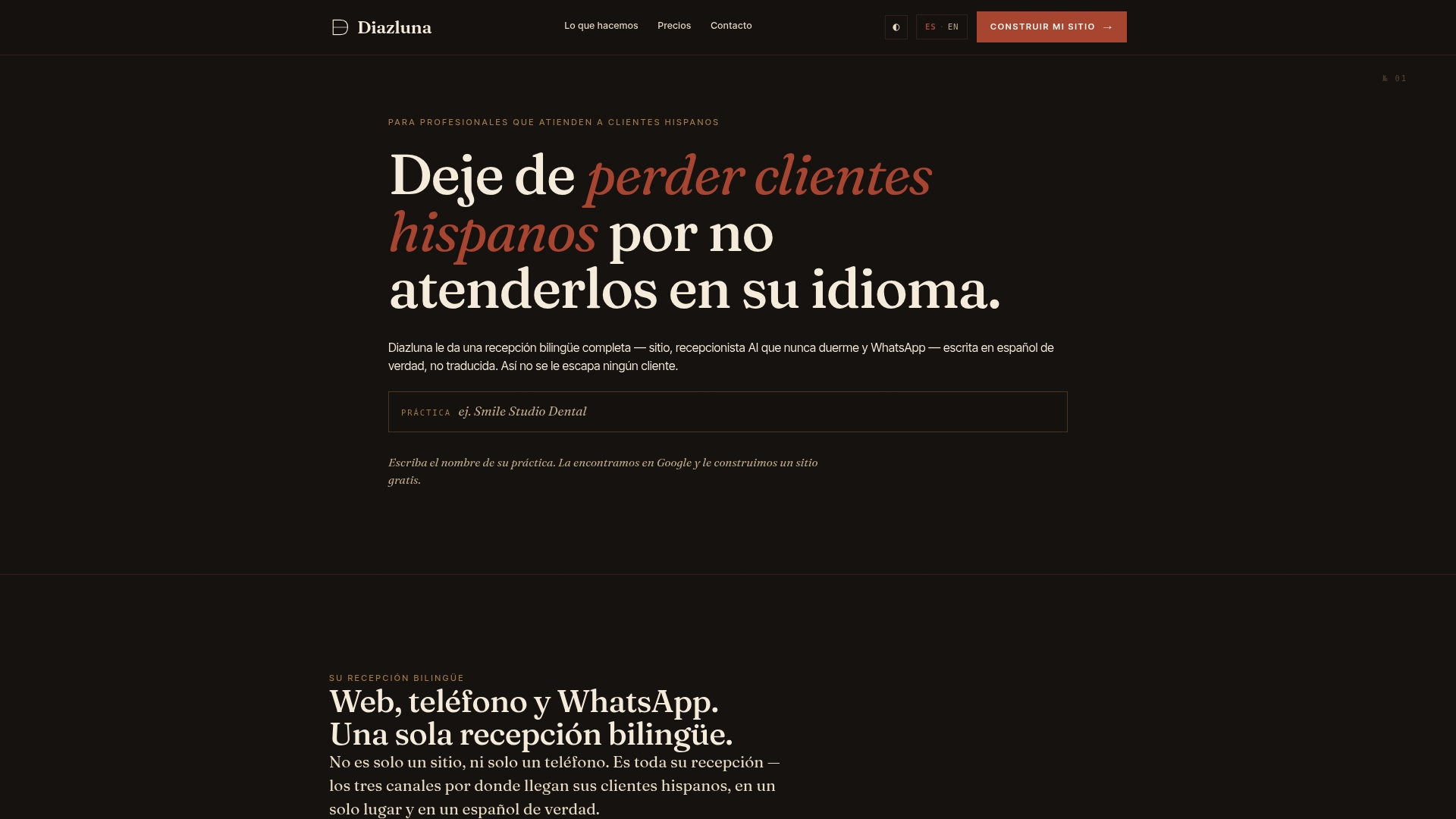
The AI receptionist handles inbound calls, web chat, and WhatsApp messages around the clock, captures structured lead intake, and connects with your existing scheduling tools. Google indexes Diazluna-built sites within 24 hours, which means your practice starts appearing in Spanish-language searches faster than most traditional agency timelines allow. Practices using Diazluna report a significant drop in lost leads from Spanish-speaking clients who previously could not get through. Visit Diazluna’s bilingual front desk to see package details and request a demo tailored to your practice type, whether you are in dentistry or legal services.
FAQ
What does a bilingual service package include?
A bilingual service package includes omnichannel communication coverage in English and Spanish, automatic language detection, structured lead intake, CRM integration, appointment scheduling, and reporting. The exact features vary by vendor and pricing tier.
Why is automatic language detection important in bilingual packages?
Automatic language detection removes the IVR prompt that forces callers to select a language, reducing friction and improving the caller experience for Spanish-speaking clients. Packages without this feature treat bilingual support as an afterthought.
How is AI-based bilingual service different from human bilingual service?
AI bilingual services operate 24/7, deploy in hours, and cost less per interaction than human agents. Human agents handle complex or sensitive calls better, which is why hybrid models that combine both are often the most practical choice for professional practices.
What pricing model works best for a small professional practice?
A flat monthly AI platform fee works best for practices that want predictable costs and 24/7 coverage. Usage-based per-minute pricing suits practices with low or seasonal call volume where paying only for actual interactions keeps costs lower during slow periods.
How do I avoid hidden charges in a bilingual service contract?
Request pricing examples for a routine month, a peak month, and a month with heavy after-hours demand before signing. That exercise reveals surcharges for weekends, holidays, and booking complexity that rarely appear in a base-rate quote.