July 16, 2026
What Is a Bilingual Legal Receptionist? A Firm's Guide

A bilingual legal receptionist is a front-office professional who manages legal administrative duties while communicating fluently in both English and Spanish. The role covers client greeting, call handling, appointment scheduling, and client intake, all conducted across two languages. Law firms serving Spanish-speaking communities depend on this position to maintain clear, accurate communication from the first point of contact. Understanding what the bilingual receptionist role requires, and what it delivers, helps legal professionals make smarter staffing and service decisions.
What is a bilingual legal receptionist and what do they do?
A bilingual legal receptionist is defined as a trained front-desk professional who performs standard legal secretarial duties in both English and Spanish. The industry term for this function is “bilingual legal front desk coordinator,” though “bilingual legal receptionist” is the phrase most firms use in job postings and internal titles. The role sits at the intersection of administrative competence and language fluency, making it one of the most operationally critical positions in any law firm serving a Hispanic clientele.
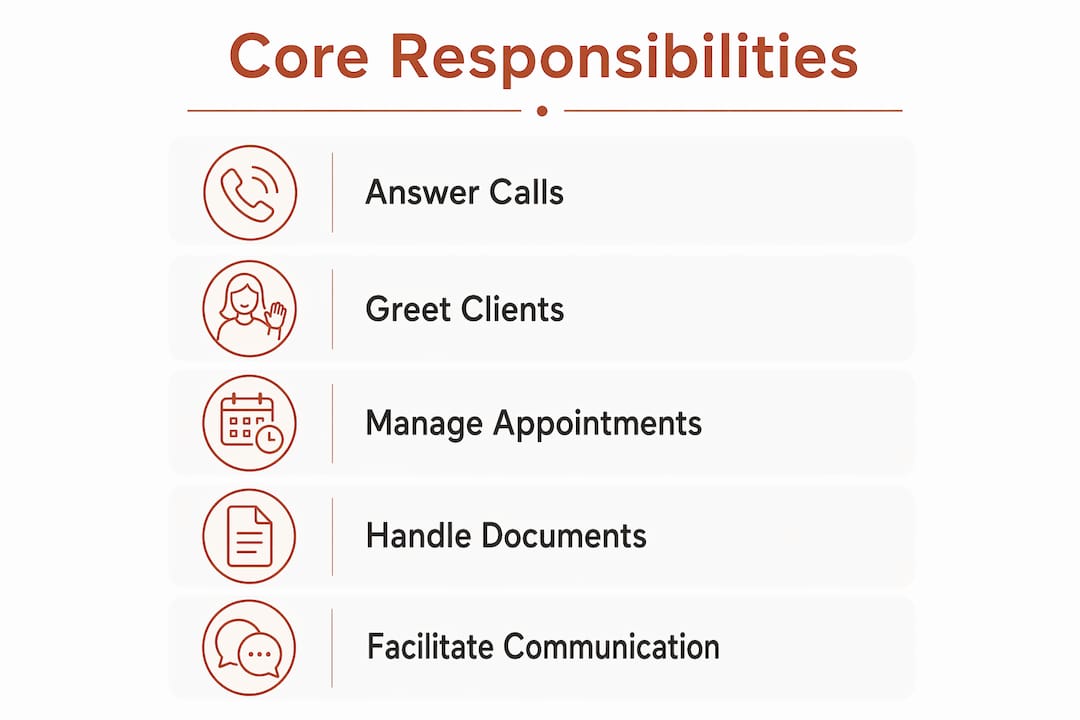
Core responsibilities include front-office management, bilingual client greeting, multi-line call handling, appointment scheduling, and client intake management. Standard requirements include one to two years of legal or administrative experience and full verbal and written bilingual fluency. That combination of experience and language skill is what separates this role from a general receptionist position.

The legal context adds specific weight to every interaction. A receptionist in a law firm does not simply take messages. They screen calls, relay case-sensitive information, and represent the firm’s professionalism to every client who walks through the door or calls in. When that client speaks Spanish as their primary language, the receptionist’s bilingual ability is not a bonus feature. It is the baseline requirement for the firm to function.
What are the essential duties and skills of a bilingual legal receptionist?
The daily responsibilities of a bilingual legal receptionist span both language and logistics. Firms that hire for this role expect candidates to handle all of the following with equal competence in English and Spanish.
- Managing multi-line phone systems. Proficiency in multi-line telephone systems is a standard requirement alongside bilingual language ability. Receptionists answer, screen, and transfer calls without losing accuracy in either language.
- Client greeting and intake. Receptionists welcome clients in person, collect intake information, and direct them to the appropriate attorney or staff member. For Spanish-speaking clients, this first interaction sets the tone for the entire legal relationship.
- Scheduling and calendar management. Receptionists coordinate attorney calendars, book consultations, and send reminders. Errors in scheduling create downstream problems for attorneys and clients alike.
- Using legal practice management software. Bilingual legal receptionists often use legal practice management software such as Clio or MyCase to manage calendars and client intake forms. Familiarity with these platforms is frequently required alongside bilingual fluency.
- Document handling and correspondence. Receptionists sort mail, manage fax lines, prepare outgoing correspondence, and maintain organized client files in both languages.
- Cultural sensitivity in every interaction. Bilingual receptionists must demonstrate cultural sensitivity and communication accuracy while multitasking phone, in-person, and translation duties. Cultural competence reduces client stress and improves access to legal services.
Pro Tip: Train your bilingual receptionist on the specific legal terminology your practice uses most, such as “poder notarial” for power of attorney or “demanda” for lawsuit. Generic bilingual fluency is not enough in a legal setting. Terminology accuracy protects your clients and your firm.
The skills required for this role go beyond language. Strong organizational ability, discretion with confidential information, and the capacity to stay composed under pressure are all non-negotiable. Legal offices move fast, and the front desk is where that speed is most visible to clients.
How does a bilingual legal receptionist improve communication with Spanish-speaking clients?
A bilingual legal receptionist removes the single biggest barrier between a Spanish-speaking client and effective legal representation: the language gap. When a client cannot clearly explain their situation or understand what they are being told, the entire legal process breaks down. The receptionist is the first person to prevent that breakdown.
Bilingual receptionists improve communication by relaying messages accurately and providing culturally sensitive assistance, which increases client comfort and trust. This role enhances client intake experiences for Spanish-speaking clients and facilitates better access to legal services. That improvement is not cosmetic. It directly affects whether a client feels safe enough to share the full details of their case.
The specific communication benefits include:
- Reduced misunderstandings. Legal matters involve precise language. A bilingual receptionist ensures that nothing is lost in translation between a client’s account and the attorney’s understanding.
- Accurate message relay. When attorneys are unavailable, the receptionist takes detailed messages in the client’s preferred language and delivers them accurately to legal staff.
- Client comfort and trust. Clients prefer interacting with bilingual staff because it reduces misunderstandings and improves legal service satisfaction. Bilingual receptionists can increase client retention and referrals.
- Cultural competence. Language fluency and cultural awareness are not the same thing. A skilled bilingual receptionist understands the cultural context behind how Spanish-speaking clients communicate, including deference to authority figures and family-centered decision-making.
- Efficient handling of diverse inquiries. Bilingual receptionists field questions about fees, case status, and next steps without requiring the attorney to step in as a translator.
The practical result is a smoother intake process, fewer dropped calls, and clients who feel respected rather than tolerated. For a law firm, that translates directly into better reviews, stronger referrals, and a more stable client base.
What qualifications and experience are typically required?
Hiring a bilingual legal receptionist means evaluating candidates against a specific set of professional standards. The qualifications below reflect what most law firms list as requirements or strong preferences.
| Qualification | Details |
|---|---|
| Bilingual fluency | Full verbal and written proficiency in English and Spanish, including legal terminology in both languages |
| Legal or administrative experience | 1–2 years of receptionist or administrative experience in a legal setting is the standard baseline |
| Legal software proficiency | Working knowledge of platforms such as Clio or MyCase for calendar and intake management |
| Customer service skills | Demonstrated ability to manage high call volumes, in-person clients, and competing priorities simultaneously |
| Legal terminology knowledge | Legal terminology understanding in both languages is highly valued by hiring firms |
Preferred qualifications often include prior experience at a law firm specifically, rather than general administrative experience. Firms that serve high volumes of Spanish-speaking clients also look for candidates with experience in immigration law, family law, or personal injury, since those practice areas generate the most Spanish-language client contact.
Candidates without formal legal experience can sometimes qualify if they demonstrate strong bilingual communication skills and a track record of managing complex, high-volume front-desk environments. Medical offices, government agencies, and social services organizations all produce candidates with transferable skills.
What are the benefits to legal firms and clients?
The business case for hiring a bilingual legal receptionist is direct. Firms report better client management and reduced misunderstandings with bilingual front desk staff. Benefits of bilingual receptionists include increased client satisfaction, operational efficiency, and expanded reach to Spanish-speaking communities. Each of those outcomes has a measurable effect on firm revenue and reputation.
The benefits break down across two groups: the firm and its clients.
For the firm:
- Attorneys spend less time acting as informal interpreters, which protects billable hours.
- The firm gains access to a larger client pool by removing the language barrier at the first point of contact.
- Fewer intake errors mean less rework and lower risk of miscommunication-related complaints.
- A bilingual front desk signals professionalism and inclusivity, which strengthens the firm’s brand in Hispanic communities.
For clients:
- Spanish-speaking clients receive accurate information from the first call, not a garbled summary passed through a non-bilingual intermediary.
- Clients who feel understood are more likely to complete the intake process and retain the firm.
- Cultural sensitivity at the front desk reduces the anxiety many Spanish-speaking clients feel when navigating the American legal system for the first time.
Pro Tip: Ask your bilingual receptionist to note the language preference of each new client in your practice management software. That single data point helps every attorney and staff member who interacts with that client going forward, and it signals to the client that your firm pays attention.
For firms considering a virtual bilingual receptionist as an alternative to a full-time hire, the core benefits remain the same. The key is ensuring that whoever answers the phone or responds to a message does so with genuine fluency and cultural awareness, not a scripted translation.
Key Takeaways
A bilingual legal receptionist is the most direct way a law firm can improve communication, client trust, and operational efficiency with Spanish-speaking clients.
| Point | Details |
|---|---|
| Core role definition | A bilingual legal receptionist manages front-office legal duties in both English and Spanish, from intake to scheduling. |
| Required qualifications | Standard hiring criteria include 1–2 years of legal experience and full bilingual fluency, including legal terminology. |
| Communication impact | Bilingual receptionists reduce misunderstandings, improve client comfort, and increase retention among Spanish-speaking clients. |
| Software proficiency | Familiarity with platforms like Clio or MyCase is a standard requirement alongside language skills. |
| Business benefit | Firms gain access to a wider client base and protect attorney time by keeping bilingual communication at the front desk. |
Why I think most firms underestimate this role
I have seen law firms spend significant money on Spanish-language advertising and then route those calls to a receptionist who speaks no Spanish. The client calls, hears confusion, and hangs up. The ad spend is wasted. The client goes elsewhere. That is not a marketing problem. It is a front-desk problem.
The bilingual legal receptionist role is treated as a support position in most firms. The reality is that it functions as a client acquisition and retention tool. Every Spanish-speaking client who feels understood at the first point of contact is more likely to retain the firm, refer family members, and leave a positive review. Every client who encounters a language barrier at the front desk does the opposite.
The firms I have seen get this right share one habit: they treat bilingual fluency as a core competency, not a secondary skill. They test it during hiring, they reinforce it with legal terminology training, and they give their bilingual receptionist the authority to manage client communication without constant escalation to attorneys.
The firms that get it wrong hire someone who “speaks a little Spanish” and assume that is enough. It is not. Legal communication requires precision. A client describing a car accident, a custody dispute, or an immigration issue deserves to be understood completely, not approximately.
If your firm serves Spanish-speaking clients and your front desk cannot fully communicate with them, you are not just losing business. You are failing the clients who need you most. An after-hours Spanish legal receptionist strategy can extend that coverage beyond business hours, which is when many working-class clients have time to call.
— Francisco
How Diazluna supports bilingual legal front desks
Legal firms that want bilingual client communication without the overhead of a full-time hire have a direct option.
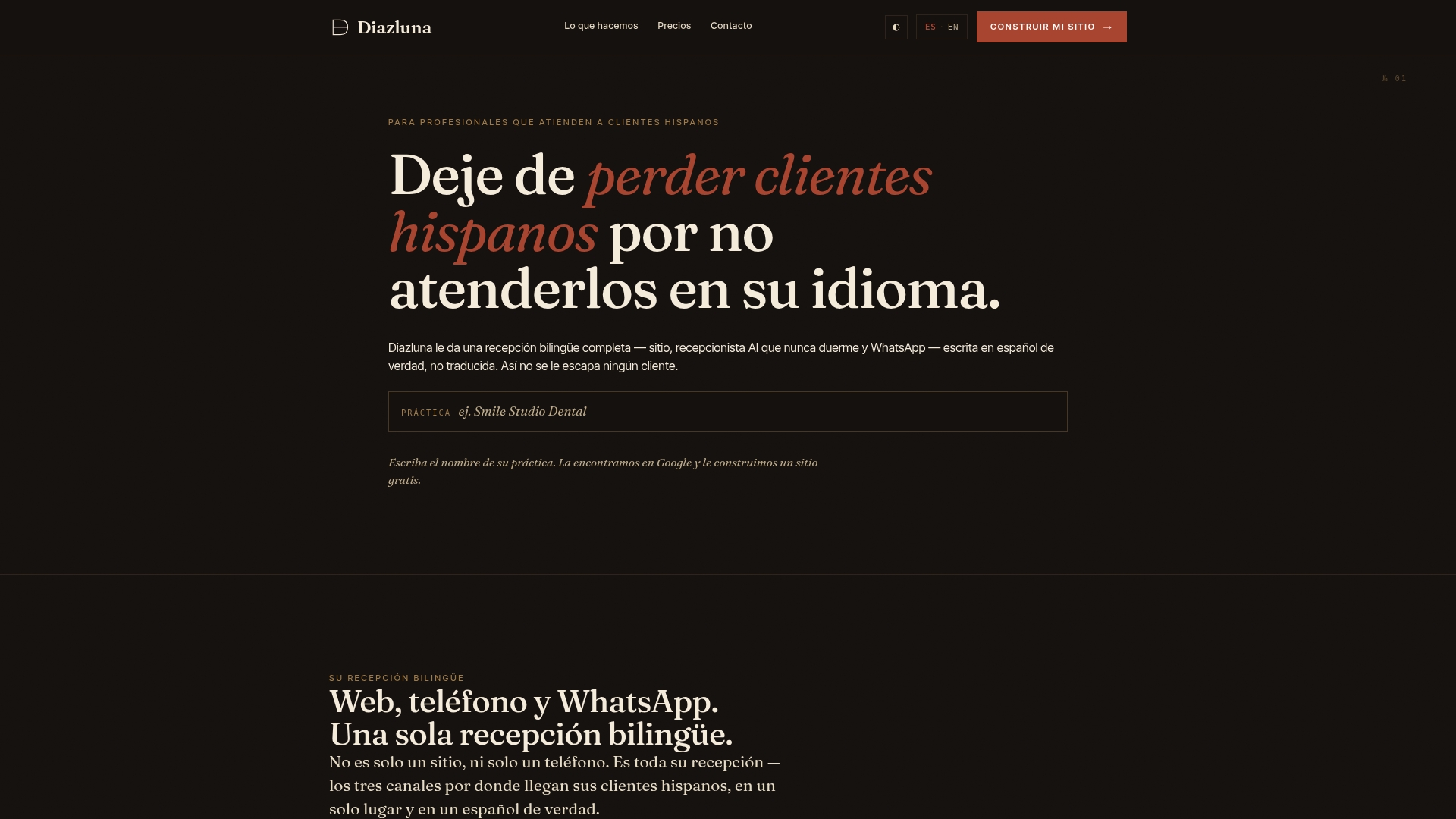
Diazluna provides a bilingual front desk solution built specifically for law firms serving Spanish-speaking clients. The service combines a bilingual website, a 24/7 AI receptionist fluent in both English and Spanish, and WhatsApp integration, all in one package. Clients get a response in their language at any hour. Attorneys get accurate intake information without acting as translators. Diazluna indexes with Google within 24 hours and delivers all three services at a fraction of what traditional agencies charge. No client is lost because of a language barrier at the front desk.
FAQ
What is a bilingual legal receptionist?
A bilingual legal receptionist is a front-office professional who manages legal administrative duties, including client greeting, call handling, and scheduling, while communicating fluently in both English and Spanish.
What does a bilingual legal receptionist do on a daily basis?
Daily tasks include answering multi-line phones in both languages, greeting clients, managing attorney calendars, processing client intake forms, and using legal practice management software such as Clio or MyCase.
What qualifications does a bilingual legal receptionist need?
Most law firms require one to two years of legal or administrative experience, full verbal and written bilingual fluency in English and Spanish, and familiarity with legal terminology in both languages.
Why is bilingual communication important in legal settings?
Clients who cannot communicate clearly in their primary language are more likely to misunderstand legal advice, miss appointments, and disengage from the process. A bilingual receptionist prevents those breakdowns from the first point of contact.
Can a virtual service replace an in-office bilingual legal receptionist?
A virtual bilingual receptionist can cover the same core functions, including call handling, intake, and scheduling, as long as the service provides genuine bilingual fluency and cultural competence, not scripted responses.