September 29, 2026
Start a Bilingual Website Budget: $3,000

A small bilingual practice website typically costs thousands of dollars for the initial build, while mid-size business sites cost several times more depending on page count and translation quality. Estimate your own project by multiplying your total word count by your chosen translation rate, then adding development, integration, and first-year maintenance. The biggest swing factors are translation method, language pair, and how many pages need ongoing updates.
TL;DR:
- Most small practice bilingual websites cost between a few thousand and over ten thousand dollars, depending on page count, languages, and complexity.
- Machine translation is the least expensive option but requires human review for client-facing content like legal disclaimers and intake forms to avoid costly errors.
- Translation is only a third to half of the total budget; additional costs include site architecture, CMS integration, localization, SEO setup, and ongoing content updates.
- Budget estimates should include total word count, translation rates, development costs, localization, QA, and first-year maintenance, with higher costs for larger, more complex sites.
- Bundled services combining translation, website, and bilingual reception can simplify management and reduce costs, especially for practices serving Hispanic clients.
Table of Contents
- Quick cost breakdown by site size
- What translation method does to your budget
- What drives cost beyond translation itself
- Ongoing costs after launch
- Building your own budget: a step-by-step estimator
- How to save money without cutting corners
- How Diazluna approaches bilingual site costs
- What actually matters when you budget
- Getting a bundled bilingual solution instead of building your own
- Where to check current rates and tools
- Sources
- FAQ
Quick cost breakdown by site size
Most U.S. small business owners fall into one of three budget bands, and knowing which one applies to you before you call a vendor saves time on quotes that don’t match your actual needs.
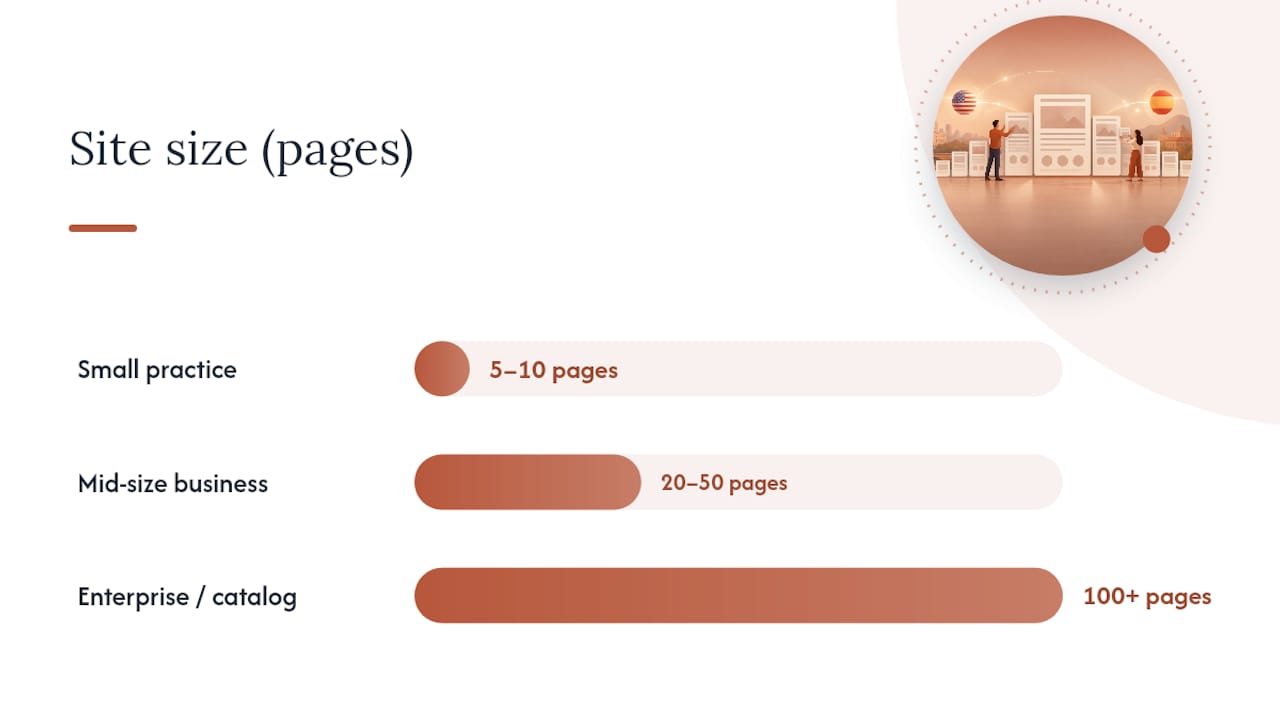
A small practice site (5 to 10 pages, one additional language) generally costs thousands of dollars for the full build, including translation, basic SEO setup, and quality checks. A mid-size business site (20 to 50 pages, possibly two languages beyond English) typically costs more, with more complex navigation, forms, and integrations increasing the expense. An enterprise or multilingual catalog site (100+ pages, three or more languages) may cost significantly more once you factor in content management system licensing, dedicated localization workflows, and recurring translation for product updates.
Each band usually includes:
- Translation of core pages (home, services, contact, about)
- Basic development work to support a language switcher and duplicate page structures
- Quality assurance testing across both language versions
- Foundational multilingual SEO setup, including metadata in both languages
A concrete example: a dental practice with a 5-page site (roughly 2,000 words total) choosing professional human translation at a mid-range rate, plus standard development and QA, would land near the middle of the small practice band once integration and testing are added.
What translation method does to your budget
The translation approach you choose affects both quality and cost more than almost any other decision in the project, and picking the wrong one for a given page type creates real risk.
- Machine-only translation costs the least, often just the price of an API subscription. Google Translate offers a widely used engine for quick, low-cost translation, and it works reasonably well for internal reference pages or draft content, but it requires human review before publishing anything client-facing.
- Human translation from a professional translator typically ranges from $0.10 to $0.20 per word for general business content, with legal or medical text often priced higher due to specialized terminology.
- Post-edited machine translation blends the two: a machine engine produces a first draft, then a human editor refines it. This hybrid workflow can cut costs by roughly a third to half compared to pure human translation, while still catching tone and accuracy issues machine output misses.
- AI-assisted workflows using large language model APIs are increasingly used to power higher-quality first-draft translation before human review. OpenAI publishes developer pricing for the models that commonly sit behind these pipelines, and those API costs scale with the volume of content processed.
Deadlines matter too. Rushed turnarounds on human translation often carry a premium, while machine-first workflows can compress timelines significantly since the draft is instant.
Pro Tip: Reserve human translation and review for pages tied directly to revenue or legal exposure, intake forms, service descriptions, contracts, and anything a Spanish-speaking client will act on immediately.
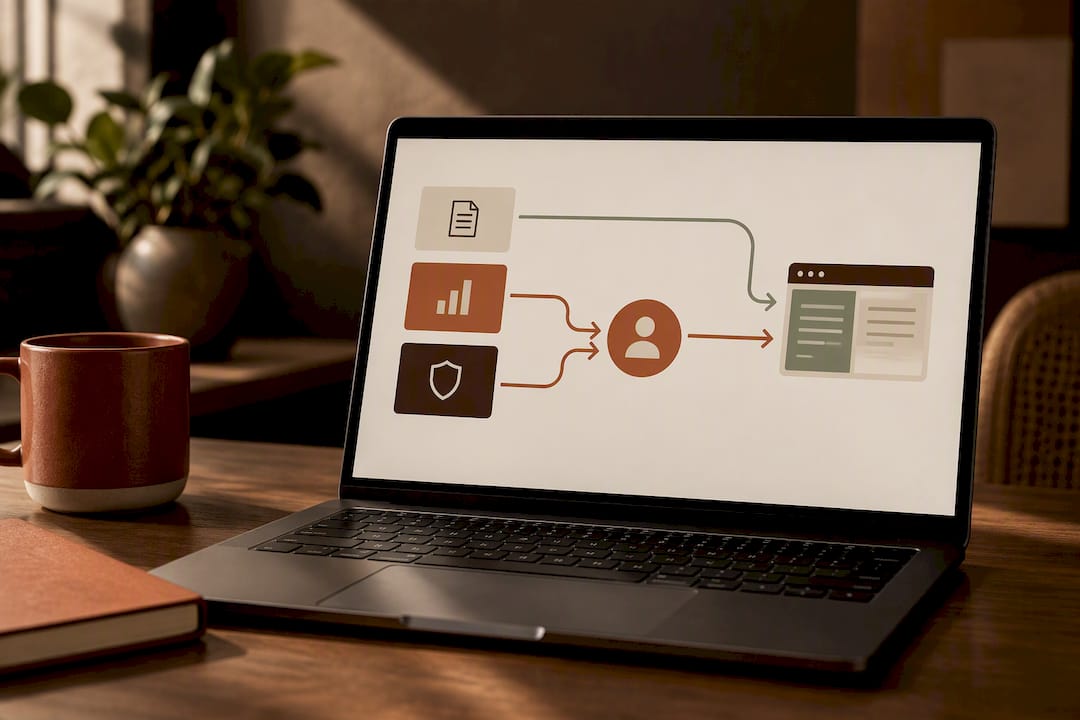
Content types that almost always need a human translator regardless of budget include legal disclaimers, patient or client intake forms, and paid advertising copy, since errors in these areas carry financial or compliance risk that a purely machine-translated page does not.
What drives cost beyond translation itself
Translation is often only a third to half of a bilingual website’s total cost. The rest comes from the technical and design work needed to make two languages function as one coherent site.
- Site architecture matters because a bilingual site needs either duplicated page structures or a content management system built to handle language variants, and retrofitting an existing single-language site is usually more expensive than building bilingual from the start.
- CMS integration costs vary widely: a connector-based translation plugin on an existing platform is cheaper than custom development, but it can limit flexibility for complex layouts or dynamic content.
- Localization depth for images, videos, and culturally specific references adds cost beyond text translation, especially when marketing visuals need to reflect a Hispanic audience rather than a generic stock photo swap.
- Multilingual SEO setup, including hreflang tags and separate metadata for each language, requires technical work that a basic translation plugin often does not handle correctly out of the box.
- Forms and dynamic content (appointment schedulers, chat widgets, downloadable documents) need to function in both languages, which adds development hours that a static page translation does not.
- Accessibility and compliance review for U.S.-facing sites, particularly legal text and disclaimers, often needs a final human pass to confirm both language versions meet the same standard.
None of these line items are optional if the goal is a site that actually converts Spanish-speaking visitors rather than one that merely exists in two languages.
Ongoing costs after launch
The build is only the first year’s expense. Bilingual sites need continuous investment to stay accurate and current, and skipping this line item is the most common budgeting mistake small business owners make.
- Platform or connector subscriptions for translation plugins or multilingual CMS features typically run as a recurring monthly fee separate from hosting.
- API usage costs for machine translation or LLM-assisted workflows scale with how much new content you generate each month.
- Content updates (new services, blog posts, seasonal promotions) each need translation, and the per-word cost repeats every time you publish.
- Translation memory and glossaries, once built, store previously translated phrases and terminology so future updates cost less than the initial build, since translators or systems reuse existing approved text rather than starting from zero.
A practice that adds two new pages per month at roughly 500 words each, using a hybrid translation workflow, adds a modest but predictable annual cost on top of platform fees. Budgeting for this in advance avoids the surprise invoice that comes with treating translation as a one-time project rather than a recurring line item.
Building your own budget: a step-by-step estimator
Here is a formula you can run in five minutes before contacting any vendor.
- Count your total word count across the pages you plan to translate, including navigation, buttons, and form labels, since these add up faster than most owners expect.
- Multiply by your chosen translation rate. Use $0.12 to $0.18 per word as a working range for human translation of general business content, adjusting up for legal or medical terminology.
- Add development and integration costs, which depend on whether you’re using a plugin-based solution or custom build.
- Add localization costs for images, video captions, and SEO metadata in the second language.
- Add quality assurance costs, typically a flat fee or a percentage of the translation cost, to confirm both versions read naturally and function correctly.
- Add year-one maintenance, covering platform subscriptions and the translation of any content added after launch.
Three templates to adapt:
- Solo practice (5 to 10 pages): small word count, human translation for core pages, a language-switcher plugin, and modest first-year maintenance keep this near the lower end of the small practice band.
- Mid-size firm (30 to 100 pages): larger word count and more forms push both translation and development costs toward the mid-size band, especially if the firm serves multiple practice areas.
- Product catalog (500+ pages): high page count almost always requires translation memory tools and a CMS built for multilingual scale, putting total cost well above either smaller band.
Before requesting quotes, collect your total word count, a list of pages by priority, your target language pair, and how often you expect to add new content. Vendors price faster and more accurately with this information upfront.
How to save money without cutting corners
Cost control on a bilingual site comes down to sequencing and reuse, not just picking the cheapest vendor.
- Phase the rollout. Launch your highest-traffic pages (home, services, contact) in both languages first, then add secondary pages over subsequent months rather than translating the entire site at once.
- Build a glossary early. Locking in approved terminology for your practice name, services, and key phrases prevents costly re-translation later and speeds up every future update.
- Reuse translation memory. Once core phrases are translated and approved, a translation memory system applies them automatically to new content, cutting per-word cost on future pages.
- Match the pricing model to your update cadence. A one-time per-project rate works for a static brochure site, but a retainer or subscription model tends to cost less over a year for practices publishing new content monthly.
Pro Tip: If you expect to add more than one new page a month, a subscription-based translation and maintenance model usually beats paying per project each time.
How Diazluna approaches bilingual site costs
Diazluna bundles a bilingual website, a 24/7 AI receptionist fluent in Spanish and English, and WhatsApp integration into a single managed service rather than three separate purchases. For a dental, legal, or healthcare practice, this changes the cost equation: instead of paying separately for translation, a receptionist service, and a messaging tool, the practice pays one recurring fee.
- The bundled model is built specifically for professionals serving Hispanic clients in dentistry, law, and healthcare.
- Bundling these services can help reduce client loss tied to language barriers.
- Content is human-reviewed rather than machine-translated only, aimed at preserving authentic Spanish rather than a literal, awkward conversion.
For a practice already juggling a web developer, a translation freelancer, and a separate answering service, a bundled managed option can reduce coordination overhead even before comparing sticker prices.
What actually matters when you budget
Most practices overspend on the wrong line item. They negotiate hard on the per-word translation rate, then skip the human review pass on their intake forms, the one page where a mistranslation actually costs them a client.
My baseline recommendation for most U.S. practices: put your budget weight behind human review for anything a client acts on directly (service pages, intake forms, contact information), and let machine or hybrid translation handle lower-stakes content like blog posts and FAQs. A starting budget in the $3,000 to $6,000 range covers a solid small practice site for most single-location businesses. Plan for more if you operate across multiple locations or practice areas. Whatever you choose, set aside a portion of that budget every year for updates. A bilingual site that goes stale in one language faster than the other loses credibility fast.
— Francisco
Getting a bundled bilingual solution instead of building your own
If assembling translation, development, and a bilingual receptionist separately sounds like more coordination than your practice has time for, Diazluna packages all three into one subscription built specifically for dentists, lawyers, and healthcare providers serving Hispanic clients.
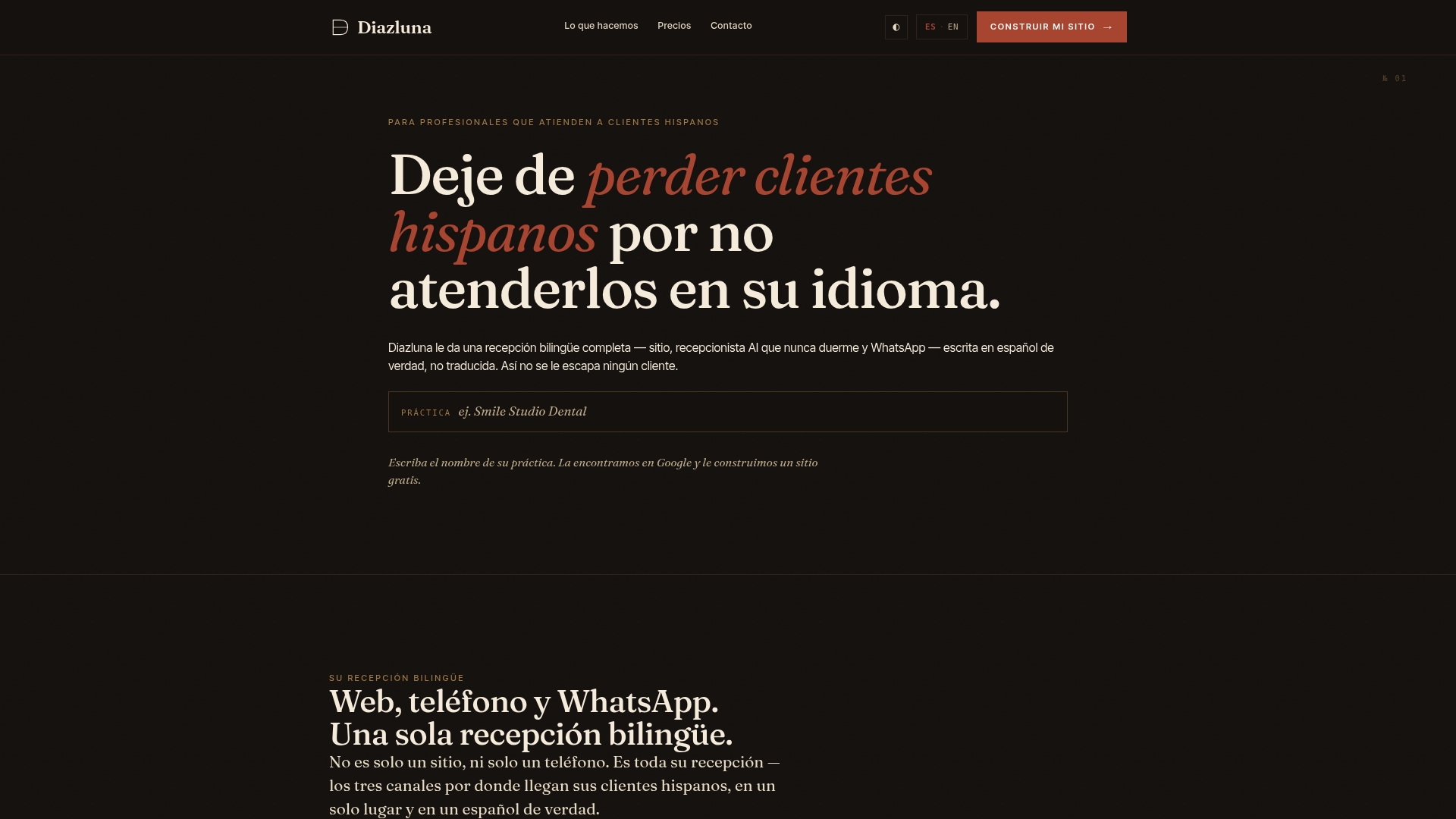
Diazluna’s plans scale with how much support your front desk needs, from a standalone bilingual website to a full package with an AI receptionist and WhatsApp integration.
- Solo Sitio covers the bilingual website itself.
- Sitio + María adds the 24/7 bilingual AI receptionist.
- Sitio + María Pro adds expanded call capacity and ongoing site updates.
| Plan | Monthly price | Annual price |
|---|---|---|
| Solo Sitio | $99 per month | $990 per year |
| Sitio + María | $199 per month | $1,990 per year |
| Sitio + María Pro | $349 per month | $3,490 per year |
A one-time $399 activation fee applies to get set up. Before requesting a quote from Diazluna or any provider, have your page count, target content, and update frequency ready so you can compare it directly against the estimator above.
Where to check current rates and tools
For live pricing on automated translation, check Google Translate for machine translation basics and OpenAI for developer API rates behind higher-quality AI translation pipelines. For multilingual SEO strategy that affects long-term cost, see this multilingual SEO content resource. For the managed bundle discussed above, visit Diazluna’s bilingual front desk page.
Sources
FAQ
Is $1,500 a good price for a bilingual website?
For a single-language site, a very basic build can be low cost, but for a bilingual site it typically only stretches to cover a small number of pages with machine translation and minimal QA. Most small practice bilingual sites cost more once professional translation, development, and testing are included.
How much should I charge for a website?
Pricing depends heavily on scope, but a small bilingual practice site generally costs thousands of dollars for the full build, while mid-size sites run higher. The right number depends on page count, translation method, and how much custom development the site needs.
How much does a 3-page bilingual website cost?
A simple 3-page bilingual site with human translation, basic development, and QA typically falls at the lower end of the small practice budget range, often a few thousand dollars depending on word count and language pair. Adding forms or custom design work increases that figure.
How much should I charge for translation?
Professional human translation for general business content typically ranges from $0.10 to $0.20 per word, with legal or medical content often priced higher due to specialized terminology. Hybrid workflows that combine machine translation with human editing can cost less than pure human translation while still requiring review for accuracy.