September 6, 2026
20–25 Spanish Dental Terms Clinic Teams Should Master
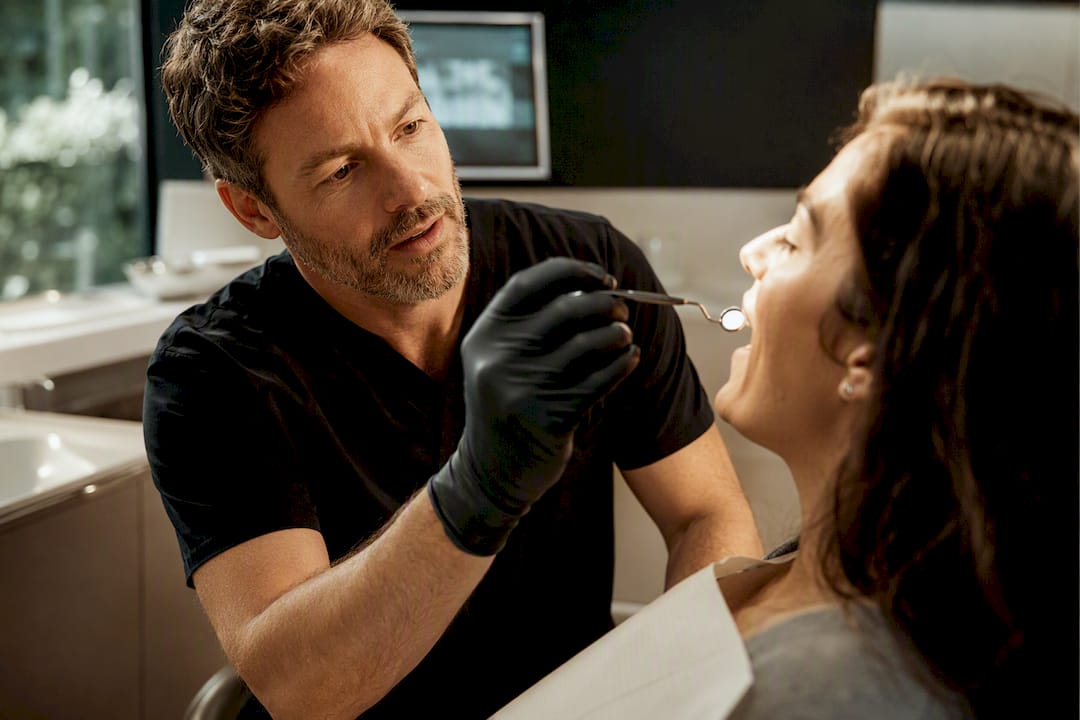
This guide gives you clinic-ready Spanish dental vocabulary, pronunciation cues, and a short training plan you can start using this week. It covers front-desk phrases, tooth anatomy, common conditions, procedure scripts, patient instructions, and instrument names, all built around a compact set of terms dentists, hygienists, assistants, and receptionists can put to work immediately.
TL;DR:
- Accurate pronunciation of key terms like “dolor” and “doctora” is crucial for clear communication and building trust with Spanish-speaking patients.
- Knowing specific tooth types, parts, and regions in Spanish allows quick, precise problem localization and avoids confusion during diagnosis.
- Common condition words such as “caries” and “absceso” need to be memorized to prevent misinterpretation and avoid treatment errors.
- Properly explaining procedures with simple, direct language improves patient understanding and supports informed consent.
- Training the entire dental team in Spanish vocabulary enhances safety, reduces confusion, and creates a more comfortable patient experience.
Table of Contents
- Dental Spanish Terminology for the Front Desk
- Tooth and Mouth Anatomy in Spanish
- How to Describe Common Dental Problems in Spanish
- Dental Treatments and Procedures in Spanish
- Patient Instructions and Chairside Commands in Spanish
- Instrument and Material Names Patients Should Recognize
- Pronunciation Tips and Building Clinical Competence
- Why Practice-Wide Bilingual Capacity Actually Matters
- A Bilingual Front Desk That Covers What Training Can’t Reach
- Sources
Dental Spanish Terminology for the Front Desk
Most patient anxiety in a Spanish-speaking household starts before anyone sits in the chair. It starts with a confusing phone call or a check-in desk where nobody can confirm the appointment time. A handful of exact phrases fixes most of that.
At check-in, staff need to confirm identity, insurance, and appointment details without fumbling. Useful lines include “¿Tiene cita hoy?” (Do you have an appointment today?), “¿Cuenta con seguro dental?” (Do you have dental insurance?), and “Puede esperar aquí, por favor” (You can wait here, please).
Triage requires a different register, since pain assessment drives scheduling priority:
- “¿Tiene dolor?” (Are you in pain?) and “¿Desde cuándo tiene el dolor?” (Since when has it hurt?) establish urgency fast.
- “¿En qué diente le duele?” (Which tooth hurts?) narrows the location before the clinician even walks in.
- “Un momento, voy a avisar al doctor” (One moment, I’ll let the doctor know) is the right escalation line when something sounds serious.
On pronunciation, the biggest stumbling block for English speakers is the rolled or tapped “r” in words like “dolor” and “doctora.” Practicing patient names slowly, syllable by syllable, avoids the kind of mispronunciation that makes patients feel unheard before treatment even starts.
Tooth and Mouth Anatomy in Spanish
Locating a problem accurately depends on knowing which tooth type and which mouth region you’re discussing, in Spanish, on the spot. Spanish groups teeth the same way English does, and the terms map cleanly enough that memorization goes fast.
The four tooth types clinicians reference constantly are incisivo (incisor, the front cutting tooth), canino (canine), premolar (premolar), and molar (molar, the back grinding teeth). A sentence like “El molar superior derecho está afectado” (The upper right molar is affected) gives a precise, chartable location in seconds.
Below the tooth type, staff need the parts of the tooth itself and the structures around it:
- Corona (crown), the visible part above the gumline.
- Raíz (root), anchoring the tooth in the bone.
- Pulpa (pulp), the nerve and blood supply inside the tooth.
- Encía (gum), the soft tissue surrounding the tooth.
- Maxilar (upper jaw) and mandíbula (lower jaw), the two bones that hold the dental arches.
Direction and position phrases round out the picture. “Superior” and “inferior” mean upper and lower; “izquierdo” and “derecho” mean left and right; “cerca de la encía” means near the gumline. Put together, a clinician can say “Tiene una caries en el molar inferior izquierdo, cerca de la encía” (You have a cavity in the lower left molar, near the gumline) and the patient knows exactly where the problem sits, without a single gesture or confused pause.
How to Describe Common Dental Problems in Spanish
Getting symptom vocabulary wrong doesn’t just slow down a visit. It can send a treatment plan in the wrong direction. Language barriers correlate with real clinical risk: nearly half of patients who don’t speak the local language report confusion about their care, and a significant portion report actual negative consequences, like adverse medication reactions, tied to that confusion.
Core condition words worth memorizing first:
- Caries (cavity or tooth decay), the term you’ll use more than any other.
- Absceso (abscess), signaling a possible infection that needs urgent attention.
- Gingivitis and periodontitis, the two stages of gum disease patients need to understand are different.
- Sensibilidad dental (tooth sensitivity), usually to cold, heat, or pressure.
- Mal aliento (bad breath), a symptom patients often underreport unless asked directly.
Temporal and intensity words shape how a symptom gets triaged: “agudo” (sharp or acute), “intermitente” (comes and goes), and “constante” (constant) all change how urgent a visit becomes. A patient who says “dolor agudo y constante” is describing something very different from “dolor intermitente al morder” (intermittent pain when biting down).
One caution worth building into training: regional Spanish varies, and a term common in one country may sound unfamiliar in another. If a patient uses a word your team doesn’t recognize, ask them to point or describe the sensation rather than guessing, and confirm unusual terms with a native speaker when the wording matters for treatment decisions.
Dental Treatments and Procedures in Spanish
Explaining a procedure in a patient’s own language is where informed consent actually happens, not just where a form gets signed. These short two-part templates cover what happens and why, so patients leave the chair understanding their own treatment.
- Limpieza dental (dental cleaning). “Vamos a limpiar sus dientes para quitar la placa” (We’re going to clean your teeth to remove plaque).
- Empaste (filling). “Le pondremos un empaste para reparar la caries” (We’ll place a filling to repair the cavity).
- Extracción (extraction). “Es necesario extraer este diente porque no se puede salvar” (This tooth needs to come out because it can’t be saved).
- Endodoncia (root canal). “Haremos una endodoncia para tratar la infección dentro del diente” (We’ll do a root canal to treat the infection inside the tooth).
- Corona dental (dental crown). “Colocaremos una corona para proteger el diente después del tratamiento” (We’ll place a crown to protect the tooth after treatment).
- Blanqueamiento dental (teeth whitening). “El blanqueamiento aclara el color de sus dientes de forma segura” (Whitening lightens your teeth safely).
Diagnostic steps need their own vocabulary before any of the above makes sense to a patient. Radiografía (X-ray), toma de impresiones (taking impressions), and examen clínico (clinical exam) all precede a treatment plan, and naming each step out loud reduces the “what are you doing to me” anxiety that silence creates.
Risk and aftercare language should stay short and direct: “Puede sentir molestia por uno o dos días” (You may feel discomfort for a day or two) covers most post-procedure expectations without over-explaining.
Patient Instructions and Chairside Commands in Spanish
Chairside commands need to be short enough to say quickly and clear enough that a nervous patient understands on the first try. This is where Spanish dental vocabulary earns its keep every single day, not just during consent conversations.
- “Abra la boca” (Open your mouth).
- “Cierre la boca” (Close your mouth).
- “Inclínese hacia atrás” (Lean back).
- “No mueva la lengua” (Don’t move your tongue).
- “Respire por la nariz” (Breathe through your nose).
Post-op instructions carry more weight because they determine whether recovery goes smoothly. “No fume durante 24 horas” (Don’t smoke for 24 hours), “Evite alimentos duros” (Avoid hard foods), and “Tome el analgésico según lo indicado” (Take the pain reliever as directed) cover the three instructions patients forget most often.
Always close with a comprehension check: “¿Lo entendió?” (Did you understand?) or “¿Tiene alguna pregunta?” (Do you have any questions?) A nod isn’t confirmation. A verbal answer is.
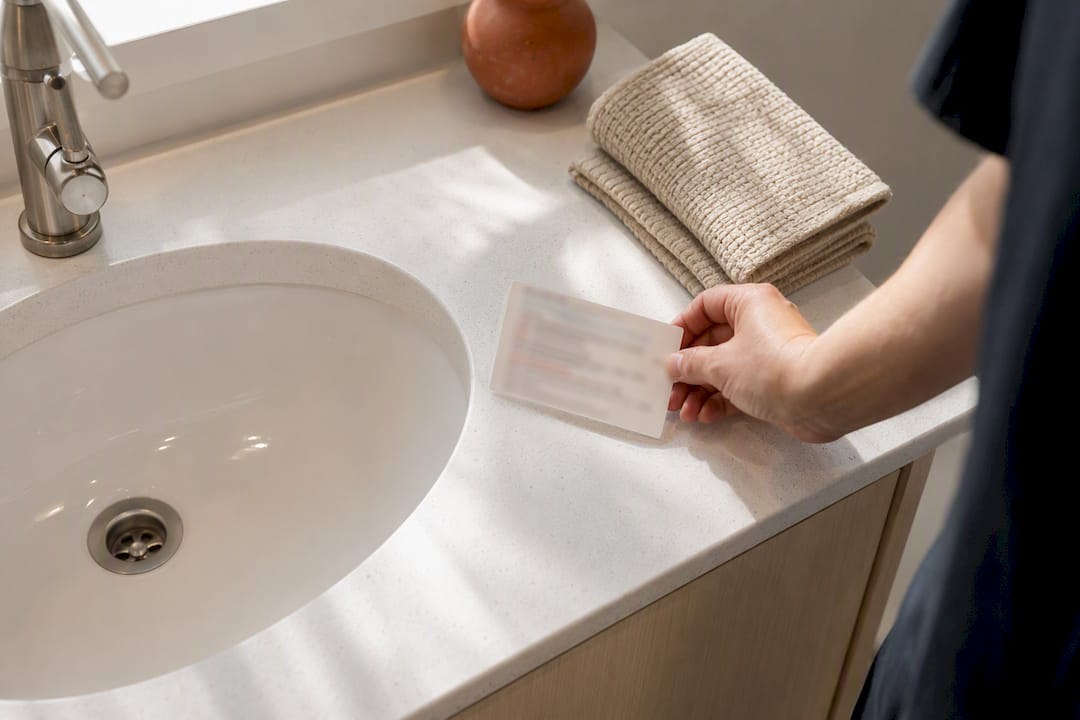
Pro Tip: Write your top ten post-op phrases on a laminated card at the operatory sink. Staff read better under pressure than they recall from memory, and patients notice when instructions are delivered smoothly instead of haltingly translated on the spot.
Instrument and Material Names Patients Should Recognize
Naming the tools in a patient’s mouth, out loud, in their language, does more for cooperation than almost anything else a clinician can say. Silence around unfamiliar metal near someone’s face is exactly what makes dental visits frightening.
- Espejo (mirror), used to see areas that aren’t directly visible.
- Explorador or sonda (explorer or probe), used to check for cavities and gum pockets.
- Turbina or pieza de mano (handpiece or drill), the tool most patients dread by sound alone.
- Succionador (suction), which keeps the mouth dry during treatment.
- Resina (resin), the material used for many fillings.
PPE deserves a mention too, since gloves, masks, and gowns look clinical and cold if nobody explains them: guantes (gloves), mascarilla (mask), bata (gown). A simple line like “Voy a usar el succionador para mantener su boca seca” (I’m going to use the suction to keep your mouth dry) turns an unexplained tool into a small moment of trust.
Pronunciation Tips and Building Clinical Competence
The goal here isn’t fluency. It’s clinical competence, meaning enough accurate Spanish to gather a history, explain a plan, and confirm a patient understood their aftercare. That’s a realistic target for a busy practice, and it’s achievable in weeks, not years.
Stress matters more than most English speakers expect, because it changes meaning. “Encía” is stressed on the second syllable (en-SEE-ah), and mispronouncing it can make it sound like an entirely different word. “Empaste” and “endodoncia” both trip up new learners on syllable timing before vocabulary is even the issue.
Experts recommend starting with 20 to 25 core terms covering anatomy, procedures, and basic commands, then folding them into daily huddles until they’re automatic. From there:
- Run five minute role play drills between staff before opening hours.
- Record short audio clips of correct pronunciation for the whole team to reference.
- Escalate to a professional interpreter for informed consent, complex diagnoses, or any moment where understanding is genuinely uncertain, rather than pushing through with limited phrases.
Formal continuing education, like the courses offered through One World Dental, can accelerate this further for practices ready to invest in structured training.
Why Practice-Wide Bilingual Capacity Actually Matters
Every clinic has one bilingual staff member everyone leans on, until that person is out sick or on vacation and a Spanish-speaking patient shows up anyway. Relying on one person is not a language strategy. It’s a single point of failure.
Training the whole team, front desk through clinical staff, closes that gap and cuts down the confusion tied to real safety risk. A shared vocabulary also changes the tone of a visit. Patients relax when the person cleaning their teeth and the person scheduling their next visit both speak to them the same way. Practices that want to go further should pair internal training with bilingual intake support so no call gets lost while the team builds fluency.
— Francisco
A Bilingual Front Desk That Covers What Training Can’t Reach
Staff training closes the gap during office hours. It does nothing for the call that comes in at 8 PM, or the overflow week when three lines are ringing and nobody has a free hand. A bilingual website in Spanish and English, a 24/7 AI receptionist that handles calls and scheduling in both languages, and WhatsApp integration so patients can text instead of waiting on hold serve to fill that gap.
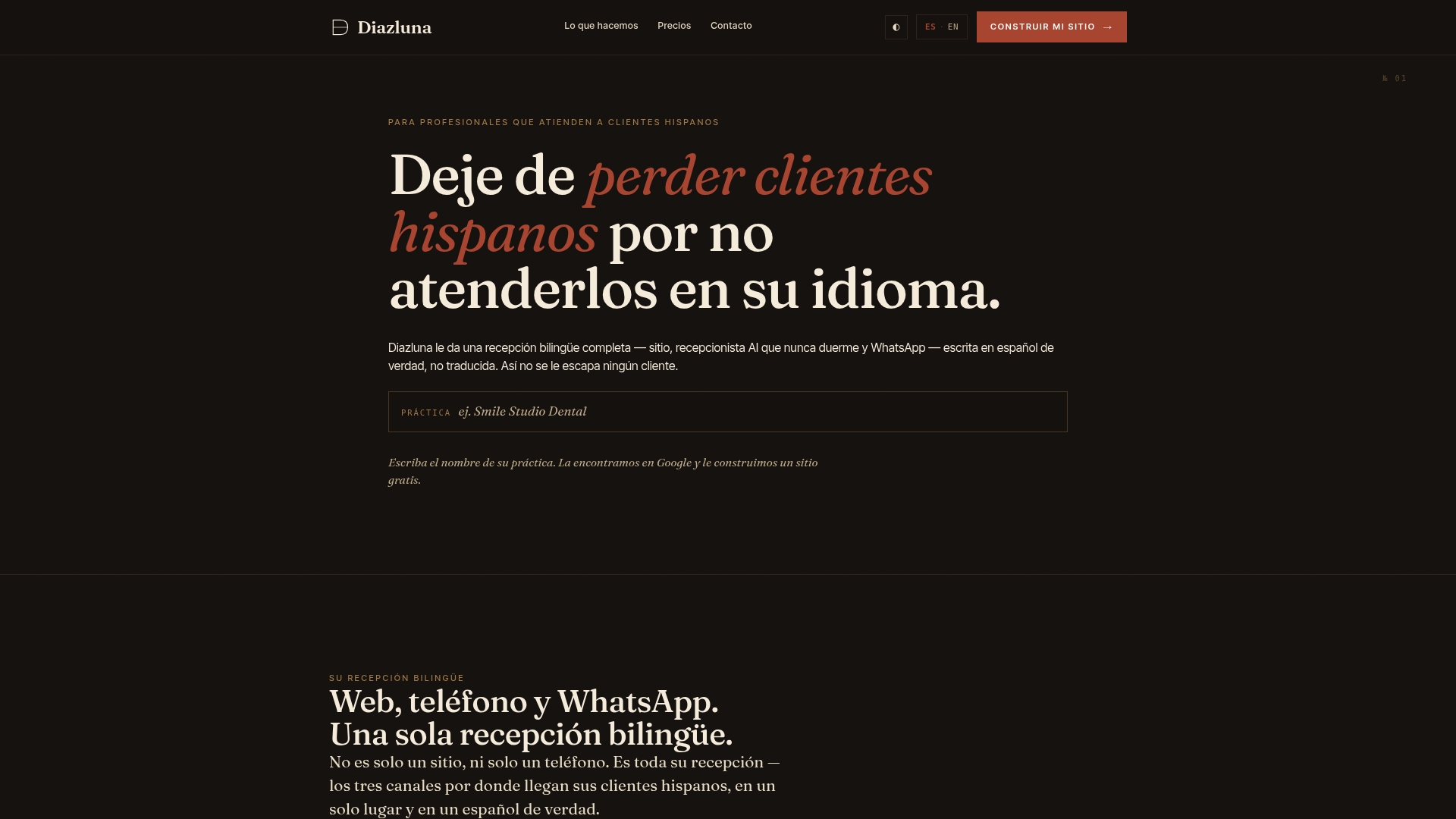
For after-hours emergencies, overflow during busy seasons, or a new patient who only feels comfortable typing in Spanish, Diazluna picks up where a trained front desk leaves off, without needing a second full-time hire. Practices ready to see how bilingual coverage works around their existing team can look at Diazluna’s bilingual front desk platform and check what fits their call volume before deciding.
Sources
- Dental terms in Spanish – essential vocabulary for patient communication
- Dental Terms in Spanish To Help You Connect With Patients