August 25, 2026
What a Dental Spanish Translation Actually Covers
A dental Spanish translation covers six areas: tooth and mouth anatomy, symptom and pain language, common procedures, front-desk and administrative phrases, post-care and discharge instructions, and pronunciation with dialect notes. Miss any one of those, and you get gaps that show up at the worst moments, like when a patient nods “sí” to a consent question they didn’t fully understand.
Each area maps to a real clinical risk. Anatomy terms let you chart and explain findings accurately. Symptom language shapes triage decisions. Procedure vocabulary supports informed consent. Front-desk phrasing keeps insurance and scheduling errors down. Discharge instructions prevent post-op complications. And pronunciation determines whether any of the above actually lands with the patient sitting in your chair.
Nearly 57 million people in the United States speak Spanish, and confusion over medical care is common among patients who don’t speak the clinic’s dominant language. That’s the practical case for building real dental Spanish fluency, not just a phrase or two memorized for emergencies. This guide gives you:
- Core vocabulary organized by appointment stage, not alphabetically
- Pronunciation cues you can use without a linguistics degree
- Chairside sentence templates built around common grammar patterns
- Team training steps that turn a glossary into an actual habit
Key Takeaways
Dental Spanish translation works when clinics organize vocabulary by appointment stage and train every role, not just the front desk or just the clinician.
| Point | Details |
|---|---|
| Six coverage areas | Anatomy, symptoms, procedures, front-desk phrases, discharge instructions, and pronunciation/dialect all need coverage, not just one or two. |
| Clinical and colloquial registers | Use terms like endodoncia for documentation and sacar el nervio for patient rapport, switching deliberately between them. |
| Escalate high-risk conversations | Bring in a certified interpreter for allergy, bleeding-disorder, or infection-related questions rather than relying on staff Spanish. |
| Train the whole team | Short, role-based drills for reception, hygienists, assistants, and clinicians outperform one-time general training sessions. |
| Consider operational tools | Diazluna’s bilingual website, 24/7 AI receptionist, and WhatsApp integration extend team-level Spanish coverage to after-hours and high-volume periods. |
Where to Go Deeper on Dental Spanish
Consult Spanish Terminology for the Dental Team for audio pronunciation and dialect detail, and the University of Minnesota’s phrase guide for ready-to-use chairside templates.
Table of Contents
- What Dental Spanish Translation Covers for Tooth and Mouth Anatomy
- How Do Patients Describe Pain and Symptoms in Spanish?
- Front-Desk Scripts: Booking, Insurance, and Consent in Spanish
- Common Dental Procedures and How to Explain Them Chairside
- What to Say When Sending Patients Home
- Training Your Whole Team, Not Just the Clinicians
- Sources
What Dental Spanish Translation Covers for Tooth and Mouth Anatomy
Anatomy vocabulary is where most clinicians start, and for good reason. You use these words constantly, whether you’re charting, pointing at an X-ray, or telling a patient which tooth needs work.
The core set: tooth is diente (dee-EN-teh), molar is muela (MWEH-lah) in everyday speech though the clinical term is molar, crown is corona (koh-ROH-nah), root is raíz (rah-EES), gum is encía (en-SEE-ah), jaw is mandíbula (man-DEE-boo-lah), palate is paladar (pah-lah-DAR), and tongue is lengua (LEN-gwah).
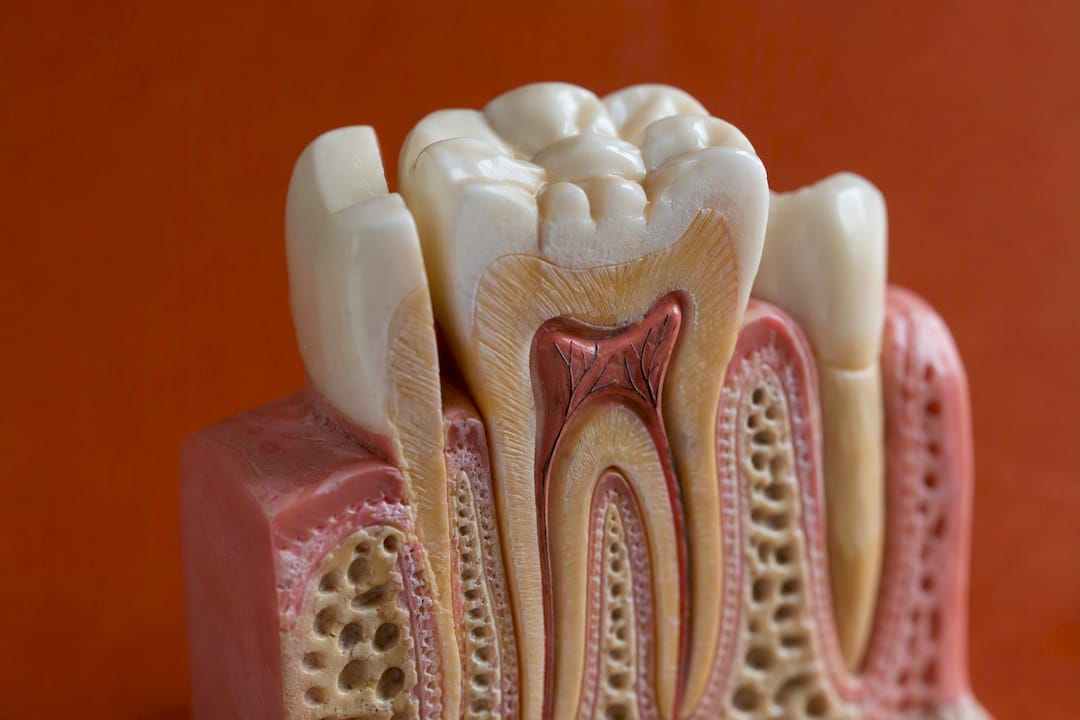
That gap between muela and molar matters more than it looks. Patients almost universally say muela when describing pain, even dentists among themselves in casual conversation slip into it, but molar stays the term you’ll see in clinical documentation and hear from dental Spanish resources. Recognizing both means you’re not stuck translating in your head while a patient is mid-sentence.
A few more high-frequency terms round out the anatomy set:
- Cavity: caries (KAH-ree-es)
- Filling: empaste (em-PAHS-teh)
- Nerve: nervio (NER-vee-oh)
- Cheek (inside): mejilla (meh-HEE-yah)
- Front teeth: dientes delanteros; back teeth: dientes de atrás
Cognates help enormously here. Words like dental, oral, and infección are close enough to English that patients often recognize them even before you finish the sentence, which is one reason dental Spanish vocabulary tends to group into learnable clusters rather than requiring rote memorization of hundreds of unrelated words. Pair anatomy terms with simple pointing and gesture, and most patients will confirm understanding within seconds.
How Do Patients Describe Pain and Symptoms in Spanish?
Symptom intake is where accurate translation prevents the wrong diagnosis path. A patient who says “me duele” (it hurts me) without more detail could mean anything from mild sensitivity to an abscess, so the follow-up questions matter as much as the initial phrase.
- Listen for the core complaint phrases. Me duele (it hurts), tengo inflamación (I have swelling), me sangran las encías (my gums bleed), and se me aflojó un diente (a tooth came loose) cover the majority of walk-in complaints.
- Narrow down the pain type. Dolor agudo is sharp pain, dolor sordo is dull pain, dolor pulsátil is throbbing pain, and sensibilidad covers general sensitivity, especially to hot or cold.
- Ask about severity using a simple scale. “¿Del uno al diez, qué tan fuerte es el dolor?” (On a scale of one to ten, how strong is the pain?) works well because most Spanish-speaking patients are already familiar with numeric pain scales from other medical visits.
- Confirm timing and triggers. “¿Cuándo empezó?” (When did it start?) and “¿Empeora al morder o con el frío?” (Does it get worse when biting or with cold?) help distinguish a cracked tooth from a cavity.
- Escalate when the answer involves allergies, bleeding disorders, or infection signs. If a patient mentions medication allergies, blood thinners, or fever alongside dental pain, bring in a certified interpreter rather than relying on staff-level Spanish. Language barriers are a documented factor in patient safety incidents, and this is exactly the situation those incidents tend to trace back to.
Front-Desk Scripts: Booking, Insurance, and Consent in Spanish
Reception carries more of the language load than most clinics realize, since it’s the first and last point of contact for every visit. A few solid scripts cover most daily interactions.
- Greeting and booking: “Buenos días, ¿en qué le puedo ayudar?” (Good morning, how can I help you?) followed by “¿Qué día le queda bien para su cita?” (What day works for your appointment?)
- Confirming identity: “¿Me puede confirmar su nombre completo y fecha de nacimiento?” (Can you confirm your full name and date of birth?)
- Insurance questions: “¿Tiene seguro dental? ¿Me puede mostrar su tarjeta?” (Do you have dental insurance? Can you show me your card?)
- Medical history intake: “¿Toma algún medicamento actualmente?” (Are you currently taking any medication?) and “¿Es alérgico a algún medicamento?” (Are you allergic to any medication?)
- Consent conversations: “Voy a explicarle el procedimiento antes de que firme” (I’m going to explain the procedure before you sign) signals that consent isn’t a formality, it’s a conversation.
- Escalation rule: if a patient’s Spanish is noticeably different from what staff are trained in, or the topic involves financial consequences or medical risk, loop in a bilingual staff member or professional interpreter before proceeding.
A set of ready-made phone scripts built specifically for dental reception can save your front desk from improvising these conversations on the fly, especially during the first few weeks of adopting Spanish workflows.
Common Dental Procedures and How to Explain Them Chairside
Procedure names are the vocabulary patients remember longest, mostly because they’re tied to anxiety. Getting these right, and explaining them calmly, does more for patient trust than almost anything else on this list.
Core procedure terms: cleaning is limpieza, filling is empaste or obturación in clinical documentation, extraction is extracción, root canal is endodoncia (though many patients just say “me van a sacar el nervio,” literally “they’re going to take out the nerve”), crown is corona, implant is implante, and braces are aparatos or brackets.
Chairside, the phrase that does the most work is “voy a,” meaning “I’m going to.” Spanish speakers use the ir + a + infinitive construction to describe near-future actions, and it reads as calm and direct rather than clinical or cold. A few ready-to-use templates:
- “Voy a tomar unas radiografías.” (I’m going to take some X-rays.)
- “Voy a aplicar anestesia local.” (I’m going to apply local anesthesia.)
- “Va a sentir presión, pero no dolor intenso.” (You’re going to feel pressure, but not intense pain.)
- “Esto va a tomar unos veinte minutos.” (This is going to take some time.)
Pro Tip: Switch registers deliberately. Use the clinical term once for documentation and comprehension (“endodoncia”), then immediately follow with the phrase patients actually use (“sacar el nervio”) so nobody feels talked over.
What to Say When Sending Patients Home
Discharge instructions are where vague translation causes the most preventable harm, since patients act on what they remember, not what was technically said.
- Diet restrictions: “No coma alimentos duros ni calientes por 24 horas” (Don’t eat hard or hot foods for 24 hours).
- Medication schedule: “Tome esta pastilla cada ocho horas con comida” (Take this pill every eight hours with food).
- Hygiene care: “No se cepille la zona por hoy, pero puede usar enjuague suave” (Don’t brush the area today, but you can use a gentle rinse).
- Red flags: “Si tiene sangrado que no para, fiebre, o hinchazón que empeora, llame de inmediato” (If you have bleeding that won’t stop, fever, or worsening swelling, call immediately).
Document whether instructions were delivered in Spanish directly or through an interpreter. That single note protects both the patient and the practice if questions come up later, and it’s a habit worth building into every chart, not just the complicated cases. A ready-made discharge template system can standardize this across your whole team so nobody’s improvising the wording at 5:45 PM on a Friday.
Pronunciation, Dialect, and Colloquial Terms Patients Actually Use
Stress placement changes meaning fast in Spanish, so inyección (shot) needs stress on the final syllable or it garbles. Patients commonly say pinchazo for an anesthesia shot and muela for molar. Mexican, Caribbean, and Central American patients may use slightly different slang, but clinical terms stay consistent across regions, which is exactly the kind of dialect variation professional glossaries are built to flag.
- Pinchazo = injection/shot
- Muela = molar (colloquial)
- Sacar un diente = pull a tooth (colloquial for extraction)
Training Your Whole Team, Not Just the Clinicians
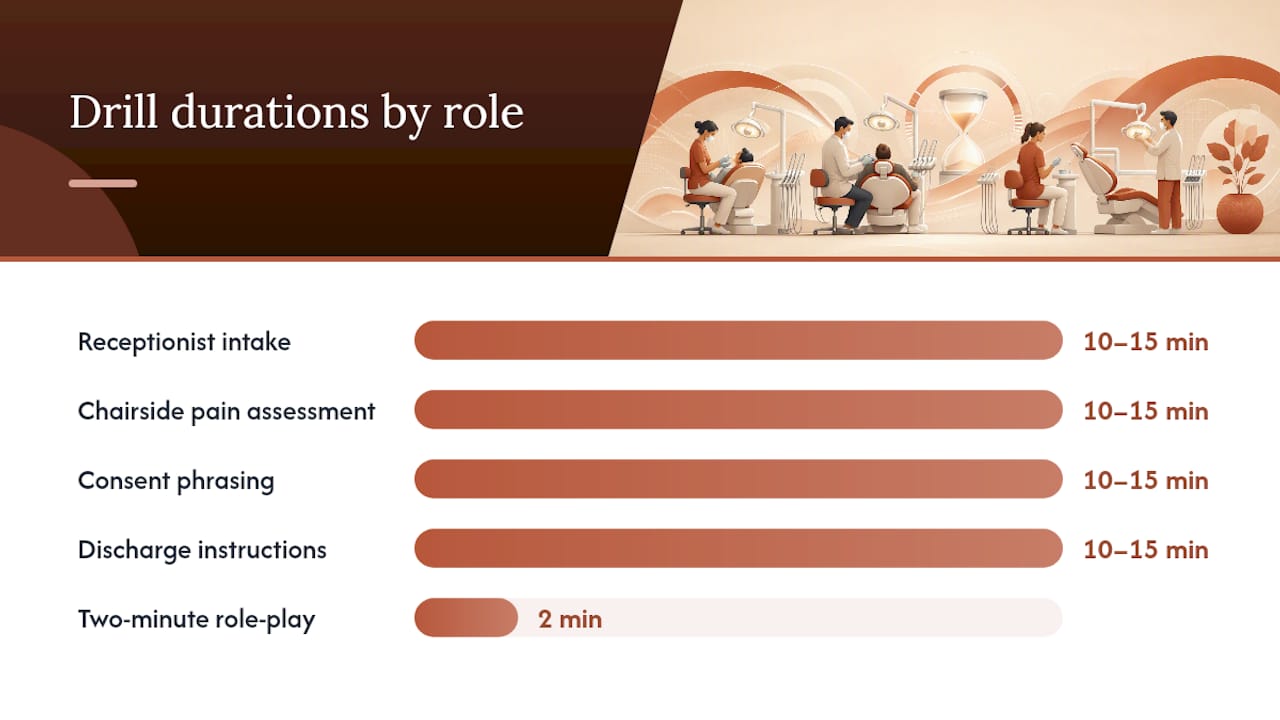
Vocabulary lists don’t change outcomes on their own. Practices that see real results train the entire team, reception through clinicians, using short, role-specific drills rather than one long session everyone forgets by Thursday.
- Run 10 to 15 minute drills: receptionist intake, chairside pain assessment, consent phrasing, discharge instructions.
- Give each role a printable phrase card matched to what they actually say all day.
- Pair phrase training with a workflow fix, like Spanish-language WhatsApp confirmations, so the vocabulary has somewhere to live between visits.
- Track missed follow-ups and whether consent was documented in the patient’s own language.
Pro Tip: Assign one phrase card per role and test it with a two-minute role-play before your first Spanish-speaking patient of the day, not after a mistake happens.
Tools matter here too. A vetted anatomy and health phrase library gives your team a reference that’s already been checked for clinical accuracy, which beats improvising translations mid-appointment.
One Small Change, a Bigger Shift in Consent Quality
I watched a hygienist swap “sacar el nervio” for “endodoncia” back to “sacar el nervio” mid-explanation once, catching the blank look on a patient’s face in real time. Consent conversations got noticeably clearer after that team started deliberately teaching both registers instead of picking one. Try this week: teach your front desk five phrases from this guide, nothing more, and see what changes.
— Francisco
An Operational Path to 24/7 Spanish Coverage
Vocabulary and training close most of the gap, but staffing still runs into limits: nobody bilingual on a Sunday, a receptionist out sick, an after-hours call that needs an answer now. Diazluna is built around exactly that problem for dental, legal, and healthcare practices serving Hispanic clients.
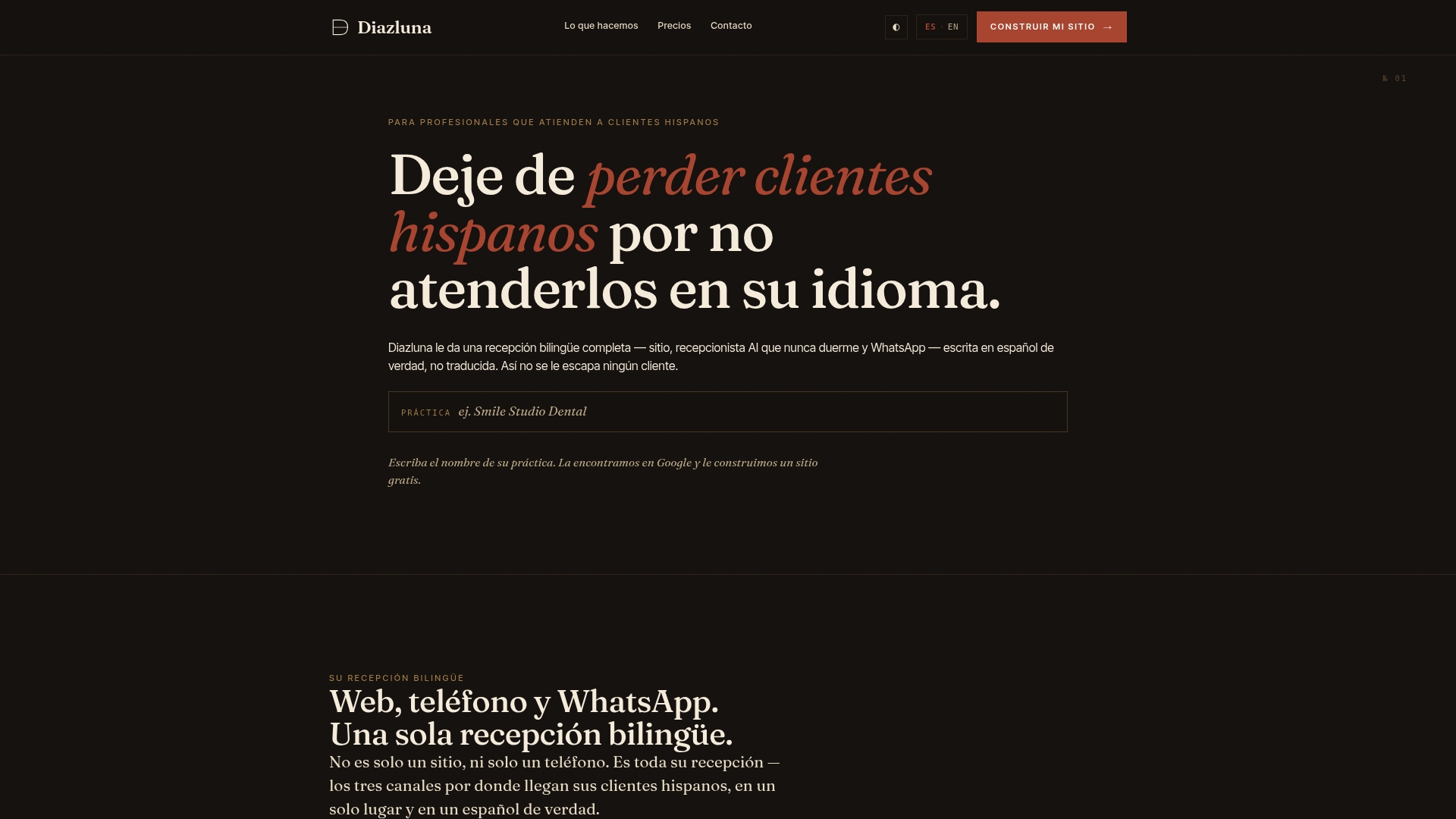
The offering combines a bilingual website in Spanish and English, a 24/7 AI receptionist that handles calls, messages, and scheduling in either language, and WhatsApp integration that flags urgent cases for a real person instead of leaving a patient waiting. Instead of piecing together a translation app, a part-time interpreter, and separate scheduling software, practices get all three in one subscription, at a fraction of what a traditional agency would charge for the same coverage. It’s an option worth checking if your team has the phrases down but still loses patients to a missed call at 7 PM. Visit the Diazluna dental practice page to see how the setup works for a clinic like yours.
Sources
- Spanish language in the United States — Wikipedia
- Spanish Terminology for the Dental Team — Elsevier / Mosby
- Adult Conversational Spanish in Dentistry — University of Minnesota (PDF)
- Dental Terms in Spanish: Clear Vocabulary to Connect with Patients — italki blog