September 23, 2026
Cut No Shows 38–27.6%: U.S. Playbook for Spanish Appointment
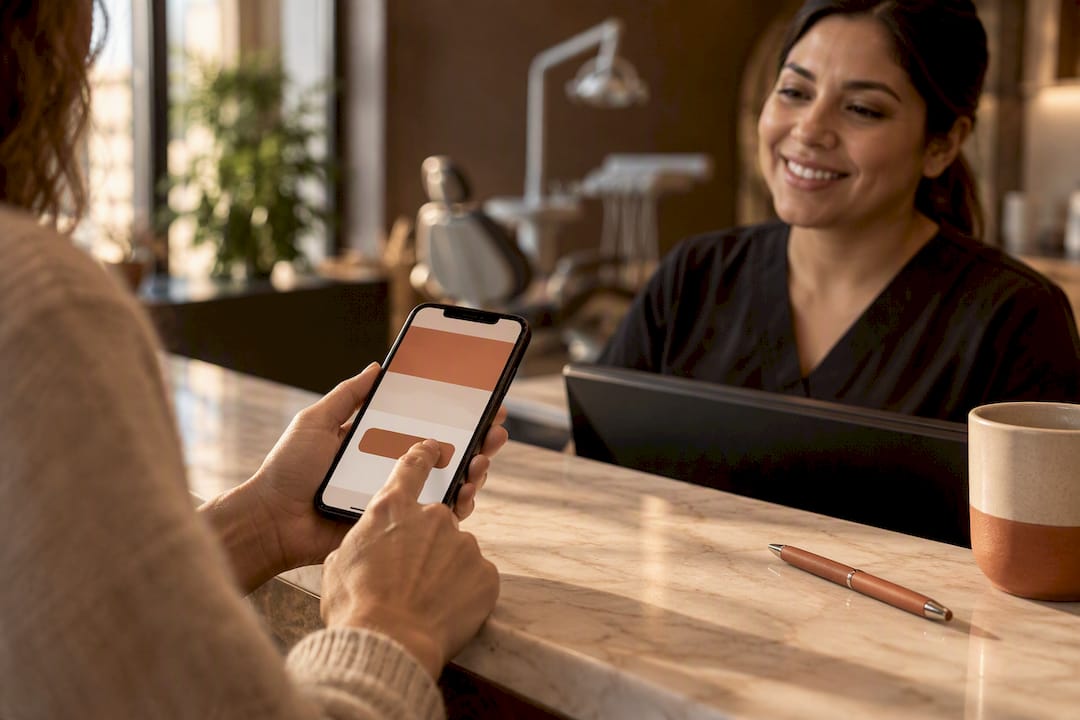
For most practices, automated Spanish SMS (with WhatsApp where clients accept it) plus a documented language preference and consent trail is the fastest, lowest-cost way to lower no-shows among Hispanic clients. Start by capturing language preference at intake, then automate a 7-day and 2-day reminder sequence, and treat a live pilot as your proof before scaling.
TL;DR:
- SMS remains the most reliable channel for Hispanic appointment reminders due to high read rates, but WhatsApp can enhance engagement with richer messaging if clients opt-in.
- Using formal “usted” in reminders generally signals respect and aligns with regional norms unless a client prefers informal “tú.”
- A typical effective reminder sequence involves an opt-in at booking, a 7-day reminder, and a 2-day reminder, with adjustments for high-stakes visits.
- Capturing and syncing language preference and consent at intake, along with testing templates with native speakers, significantly improves engagement and reduces no-shows.
- Combining automated messaging with human follow-up for complex cases or voice preferences ensures coverage and minimizes missed appointments.
Table of Contents
- Which Channels Work Best for Spanish Appointment Reminders?
- What Do Good Spanish Reminder Templates Look Like?
- How Do You Set Up a Reliable Reminder Workflow?
- When Should You Send Spanish Appointment Reminders?
- How Do You Measure Success and Fix Common Problems?
- Why Culturally Accurate Spanish Reminders Build Real Trust
- Set Up Bilingual Reminders Without Managing Three Separate Vendors
- Sources
- FAQ
Which Channels Work Best for Spanish Appointment Reminders?
The channel you pick matters less than matching it to the moment. Different tools solve different problems, and mixing them beats betting everything on one.
SMS reaches almost everyone and gets read within minutes, which is why it’s the backbone of most reminder programs. Keep the message short, skip clinical detail, and give a clear reply option.
WhatsApp works well for practices with a large Hispanic client base, since many families already use it as their default messaging app for everything. It supports richer formatting and two-way replies, but it requires explicit opt-in and adherence to business messaging templates before you send anything automated.
Automated calls and bilingual front-desk staff matter for clients who prefer voice, have complex rescheduling needs, or simply don’t respond to texts. A missed appointment for a legal filing deadline or a dental surgery consult often needs a human follow-up, not another text.
Email and mailed reminders still have a place, but treat them as backup channels. They lack the immediacy that drives confirmations.
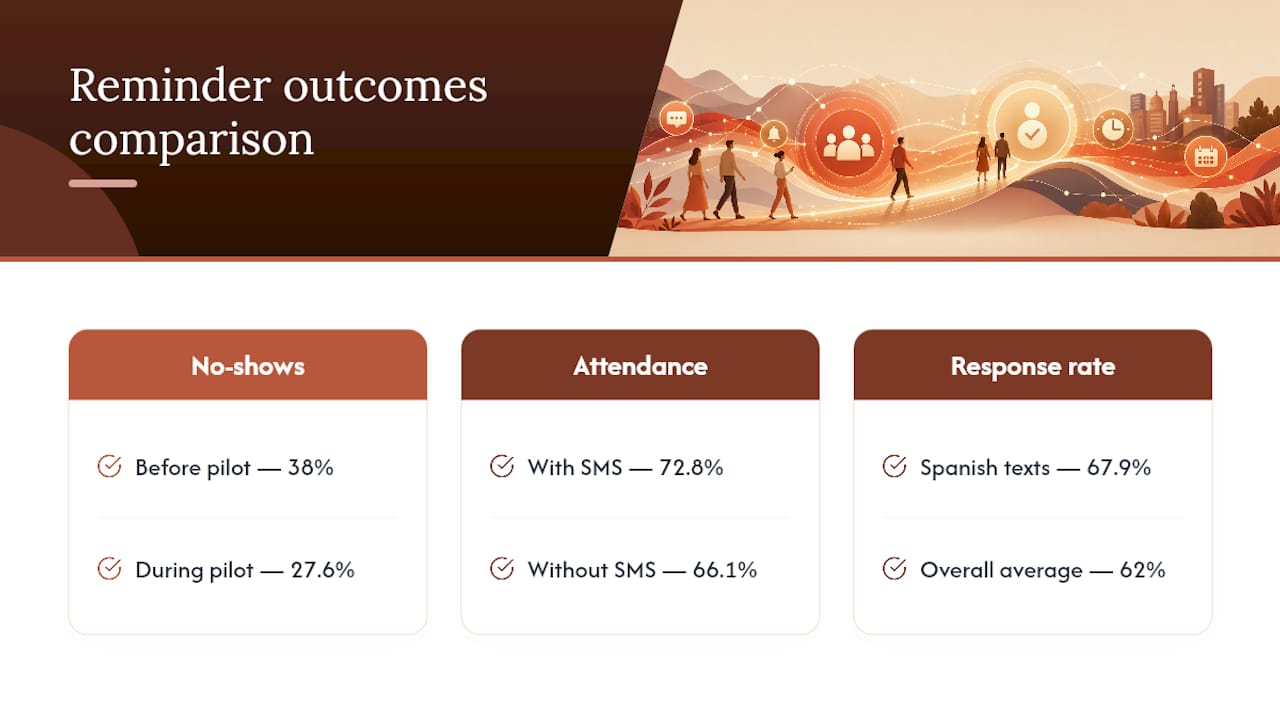
The data backs the text-first approach. A pilot using a bilingual two-reminder SMS protocol saw Spanish-speaking no-show rates drop from 38% to 27.6% during the intervention. Separately, a large safety-net health system found attendance rates of 72.8% among SMS participants versus 66.1% for those without reminders, with Spanish-language texts generating a 67.9% response rate compared to a 62% overall average. If you’re weighing WhatsApp specifically, Diazluna’s breakdown of automating reminders on the platform covers the opt-in mechanics in more depth.
What Do Good Spanish Reminder Templates Look Like?
Wording is where most practices trip up. A message translated word-for-word from English often sounds stiff or even a little strange to a native Spanish speaker, and that mismatch quietly erodes trust before the appointment even happens.
Use usted (formal address) by default in healthcare, legal, and dental settings unless a client has indicated they prefer the informal tú. It signals respect, and it’s the norm in most professional Spanish communication across Latin America and Spain.
A few templates to adapt directly:
- Opt-in invite: “Hola [Nombre], ¿desex reciter recordatorios de cites por message de text? Responda SI para confirmar.”
- 7-day reminder: “Hola [Nombre], le recuerda su cita el [fecha] a las [hora].” Responda SI para confirmar.”
- 2-day reminder: “[Nombre], su cita es en 2 días: [fecha], [hora]. Responda 1 para confirmar o 2 para reprogramar.”
- Day-of alert: “Hoy es su cita a las [hora]. Lo esperamos.”
- Cancel/reschedule: “Su cita ha sido cancelada. Llámenos al [número] para reprogramar.”
- Telehealth: “Su consulta virtual es hoy a las [hora]. Use este enlace: [link].”
Keep every message under 160 characters where possible, and never include diagnosis, medication, or case details in a plain SMS. That’s not just good practice, it directly limits your HIPAA exposure.
Pro Tip: Run every Spanish template past a native speaker or a certified translation service before it goes live. Projects that used certified review through services like Language Line instead of literal machine translation saw noticeably better engagement.
How Do You Set Up a Reliable Reminder Workflow?
Getting the wording right means nothing if the message lands in the wrong inbox or the wrong language. Build the operational layer first.
- Add a preferred-language field to intake and your scheduling system, and make sure it syncs automatically to whatever platform sends reminders. This is the step most practices skip, and it’s the one that breaks everything downstream.
- Document consent at the point of intake. Note whether a client opted into SMS, WhatsApp, or both, and store that record inside your EHR or client file, not on a sticky note at the front desk.
- Decide your PHI policy before you send a single message. Generic reminders with just a date, time, and callback number are generally low-risk under HIPAA, but adding a diagnosis, specialty, or provider name can cross into protected health information and demands an encrypted, compliant platform.
- Validate phone numbers, set retry logic for failed deliveries, and train bilingual staff to handle replies, especially urgent reschedules.
- Run a 2 to 4 week pilot before rolling out practice-wide, and compare no-show rates by language.
One clinic pilot structured this exact sequence, capturing language at scheduling, sending an opt-in invite, then automating 7-day and 2-day bilingual reminders while logging every response to trigger staff follow-up. That structure is what produced the no-show reduction documented in the pediatric no-show study. For practices juggling both languages across scheduling software, Diazluna’s bilingual scheduling guide walks through the EHR integration side in more detail.
When Should You Send Spanish Appointment Reminders?
Timing follows a pattern that’s held up across multiple clinic pilots: an opt-in message at the moment of booking, a reminder 7 days out, and a second one 2 days before the appointment. Add a short day-of alert for high-stakes visits like surgical consults or legal filings.
Adjust that cadence based on appointment type and what your pilot data actually shows. A routine dental cleaning doesn’t need the same frequency as a same-week court filing deadline, and sending too many reminders trains clients to tune them out. Build automated flows that log a “SI” reply as a confirmation and a “2” or “no” as a trigger for staff to call and reschedule, rather than leaving that response sitting unread in a queue.
How Do You Measure Success and Fix Common Problems?
Track five numbers from week one: opt-in rate, confirmation rate broken out by language, cancellation rate, no-show rate, and delivery failure or bounce rate. Response latency, how fast clients reply once a reminder lands, tells you whether your timing windows are actually working.
Most failures trace back to a handful of causes:
- Missing language data at intake sends English texts to Spanish-speaking clients, who often simply ignore them.
- Unvalidated phone numbers cause silent delivery failures that look like no-shows in your data but are really messaging errors.
- No escalation path means a non-response from a high-risk client goes unnoticed until the missed appointment.
Run A/B tests on wording and cadence, and watch your opt-out rate closely. A spike in opt-outs after a template change is usually your clearest signal that something in the wording landed wrong.
Why Culturally Accurate Spanish Reminders Build Real Trust
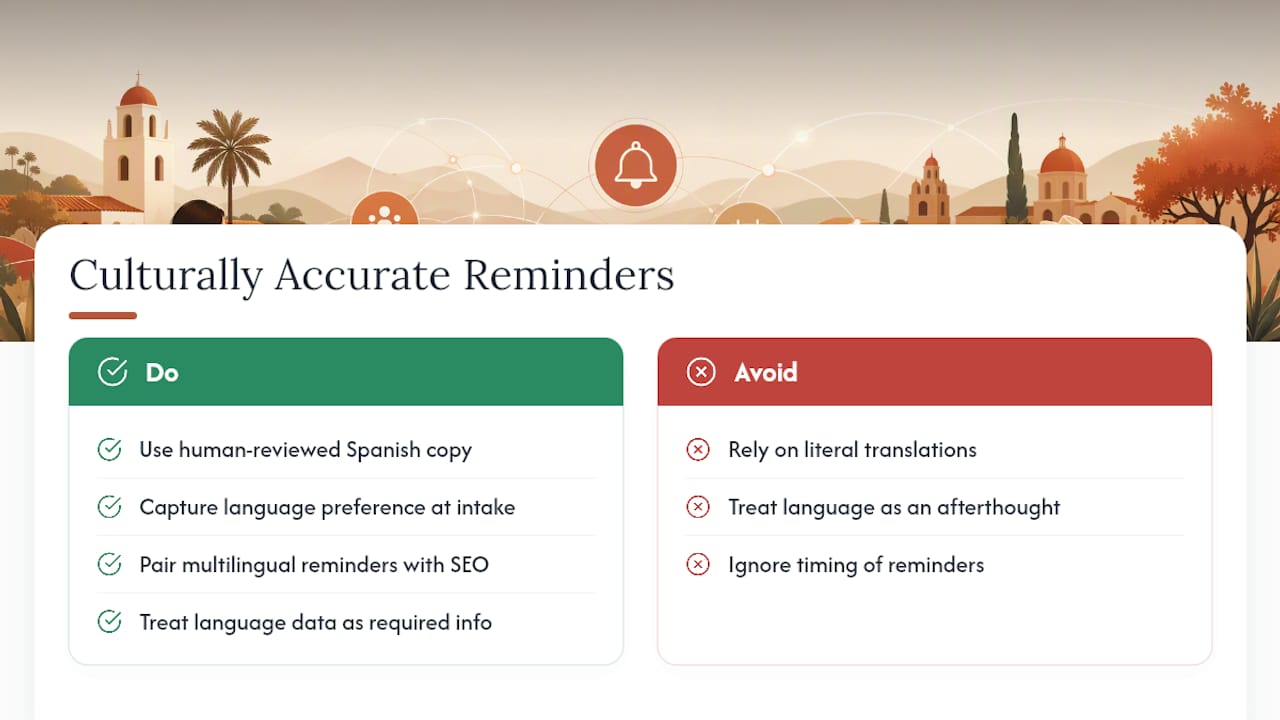
Reminders that read like they were written for Spanish speakers, not translated for them, change how clients experience your practice. That distinction shows up in the numbers: pilots using human-reviewed Spanish wording and correct timing saw measurably fewer missed appointments, not because the technology changed, but because the message finally matched the person reading it.
Capturing language preference at intake isn’t just an operational fix; pairing multilingual reminders with Healthcare SEO Services can also help practices be more findable and increase appointments. It’s how a practice signals that serving Hispanic clients well is a standard, not an afterthought. The clinics that get this right treat language data with the same seriousness as insurance information, because in practice, it’s just as central to whether a client shows up.
— Francisco
Set Up Bilingual Reminders Without Managing Three Separate Vendors
Most practices trying to fix this end up stitching together a texting platform, a translation service, and a separate phone system, then hoping the pieces talk to each other. Diazluna is the alternative to juggling all three: one bilingual front desk that includes a fully built Spanish and English website, a 24/7 AI receptionist named María who handles calls and scheduling in both languages, and WhatsApp integration for the reminders and follow-ups your clients already expect.
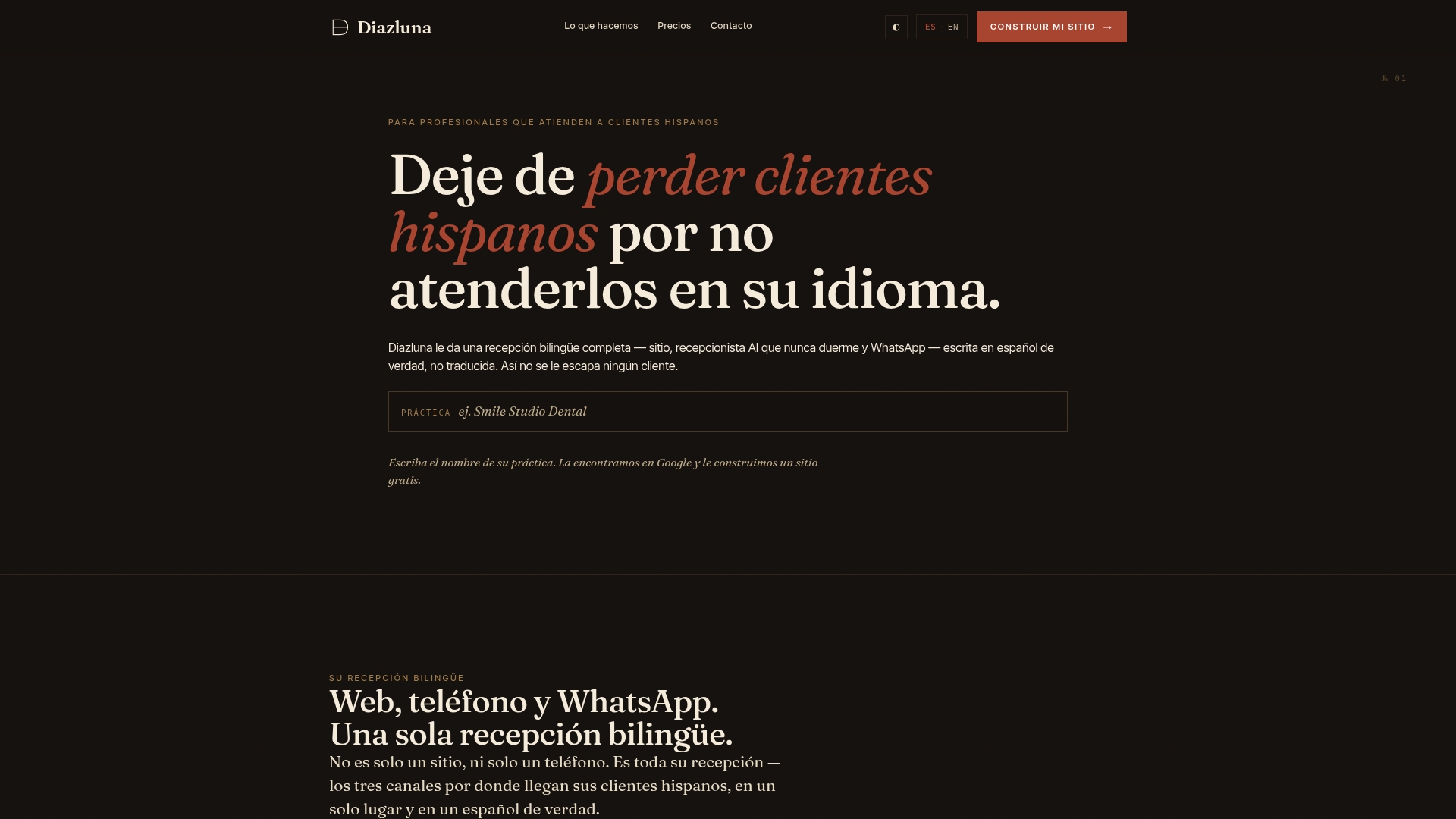
María captures language preference the moment a client calls or books, so the reminder that goes out later is never a guess. Diazluna’s own claim is straightforward: no potential Hispanic client should be lost to a language barrier, and sites typically get indexed by Google within 24 hours of launch. Plans start with a basic monthly subscription for a bilingual website, with additional tiers offering AI receptionist and WhatsApp features, and higher tiers including expanded call capacity and managed updates for extra monthly fees.
Visit the Diazluna product page to see the plans in full or request a demo before you commit to a pilot.
Sources
- Using Text Messages to Reduce Pediatric No-Show Rates in Primary Pediatric Care
- Appointment reminders by text message in a safety net health care system: a pragmatic investigation
FAQ
Is It Legal to Send Appointment Reminders by Text in Spanish?
Yes. Generic reminders with only a date, time, and callback number are generally low-risk under HIPAA regardless of language. The risk increases only when you add clinical details like diagnosis or medication, which then requires a compliant, encrypted platform and documented consent.
Should I Use “Tú” or “Usted” in Reminder Texts?
Use usted by default in healthcare, dental, and legal settings, since it’s the standard formal address across most Spanish-speaking regions. Switch to tú only if a specific client has indicated that preference.
How Often Should I Send Reminders Without Annoying Clients?
Most clinic pilots use a two-reminder pattern: one at 7 days and one at 2 days before the appointment, with an optional day-of alert for high-stakes visits. This cadence was linked to a drop in no-shows from 38% to 27.6% in one pediatric clinic pilot, and adjusting frequency based on opt-out data helps avoid message fatigue.
Does WhatsApp Work Better Than SMS for Hispanic Clients?
WhatsApp often drives richer engagement since many Hispanic households already use it daily, but it requires explicit opt-in and approved business templates before automating anything. SMS remains the more universal starting point, and Diazluna’s WhatsApp integration lets practices run both channels together.
What Does Diazluna Charge for Bilingual Reminder Setup?
Diazluna’s Solo Sitio plan starts at $99 per month for the bilingual website alone, while Sitio + María at $199 per month adds the AI receptionist and WhatsApp reminders. A one-time $399 activation fee applies, and full plan details are available on the Diazluna site.