September 30, 2026
Copy Ready Spanish Greetings for Medical Dental and Legal
Start every call or check-in with a time-based greeting, your business name, your own name, and an offer to help: “Buenos días, [business name], le habla [name], ¿en qué le puedo ayudar?” In person, drop the phone-specific parts and keep the same structure. Use usted, not tú, unless the office culture clearly calls for something more casual. The full scripts below cover phone openings, transfers, holds, messages, and troubleshooting for medical, dental, and legal reception.
TL;DR:
- A professional greeting should include the correct time-based salutation and the office name, with a clear offer to help within the first few words.
- Using usted and adding a respectful title and surname enhances formality, especially with first-time callers or visitors in medical, dental, and legal settings.
- Confirming the caller’s or visitor’s identity and intent, then routing or messaging them, should follow a consistent script to ensure clarity and efficiency.
- Maintaining the same formal greeting tone across all communication channels, including phone, messaging, and in-person, builds trust and professionalism.
- Practicing scripted phrases regularly and listening to recordings improves natural delivery and helps staff handle high-pressure or upset callers with confidence.
Table of Contents
- When to use buenos días, buenas tardes, and formal address
- Phone opening scripts you can use today
- Handling transfers, holds, and messages smoothly
- Clarifying calls and calming upset callers
- Greeting visitors at the front desk
- Getting the sound right: stress, pace, and tone
- Practice drills that build real confidence
- How a bilingual front desk puts these scripts into practice
- What actually matters when you’re the one on the phone
- A practical option: Diazluna’s bilingual front desk
- Sources
- FAQ
When to use buenos días, buenas tardes, and formal address
Spanish greetings are tied to the clock, and getting the window wrong reads as careless in a professional setting. Buenos días covers the morning until midday, buenas tardes runs from noon until the sun goes down, and buenas noches takes over after dark. A caller at 11:45 AM gets buenos días. A visitor walking in at 1:00 PM gets buenas tardes.
The usted versus tú choice matters just as much as timing. Usted signals distance and respect, and in most professional Latin American contexts it functions as the default polite register, particularly with someone you have never met. Receptionists in medical, dental, and legal offices should default to usted for every new caller or visitor, and only shift toward a warmer, more familiar tone if a returning patient or client signals they prefer it. Formal Spanish differs from informal Spanish in more than vocabulary: verb conjugations, pronouns, and even word order shift when you move from tú to usted.
Adding a title and surname sharpens the formality further. “Buenos días, señora López” lands better than a bare “buenos días” in a law office or a clinic, where clients expect to be addressed by name and title rather than treated like a walk-in at a coffee shop.
- Medical: “Buenos días, ¿es usted el señor Ramírez? Un placer atenderlo.”
- Dental: “Buenas tardes, doctora, su paciente de las tres ya llegó.”
- Legal: “Buenas tardes, licenciado, la señora Torres está aquí para su cita.”
Pro Tip: Keep a printed clock next to the phone with the three greeting windows marked, until the timing becomes automatic.
Phone opening scripts you can use today
A phone greeting has one job: identify the business, identify yourself, and offer help, all in the first breath. UT Austin’s guide to telephone Spanish notes that regional answer words like Dígame in Spain, Bueno in Mexico, or Aló in parts of Latin America are common, but a standardized professional opening avoids confusion when your caller pool is mixed and unfamiliar with local habits.
Formal, Spanish-first script: “Buenos días, Clínica Dental Sonrisa, le habla Marta, ¿en qué le puedo ayudar?”
Mixed-language script for bilingual offices: “Buenas tardes, Bufete García, le habla Ana. Good afternoon, this is Ana, how can I help you today?”
Short, friendly variant for returning patients or clients: “Buenos días, señor Ortiz, ¿cómo está? ¿En qué le ayudamos hoy?”
For clarifying calls, a few structured phrases cover most situations:
- To ask for someone specific: “¿Me podría comunicar con el señor Díaz, por favor?”
- To request repetition politely: “Perdón, ¿podría repetirlo, por favor?”
- To confirm you understood: “Entonces, ¿el señor Díaz para las diez de la mañana, correcto?”
- Keep the greeting under ten words when the office is busy: time greeting, business name, your name.
- Avoid slang answer words like Bueno or Aló in a professional setting, even if regionally common; they read as casual for a medical or legal office.
- If a caller answers in English mid-call, switch smoothly rather than forcing them to keep speaking Spanish.
Practicing these lines out loud, not just reading them silently, builds the muscle memory needed to answer calls quickly during a busy morning. UT Austin’s telephone Spanish material recommends short, repeated drills, sometimes called shadowing, where you repeat a native speaker’s phrasing until the rhythm feels natural rather than rehearsed.
Handling transfers, holds, and messages smoothly
Once the greeting is done, the next skill is routing the call correctly without making the caller feel handled rather than helped. Start by confirming exactly who they want to reach, then confirm the spelling of any name or number before you act on it.
- Ask whom they want: “¿Con quién desea hablar?” or “¿Me podría comunicar con la doctora Fernández, por favor?”
- Confirm spelling when needed: “¿Me lo puede deletrear, por favor?”
- Transfer with a clear handoff: “Un momento, por favor, la voy a comunicar.”
- If the person is unavailable: “Lo siento, el doctor no se encuentra disponible en este momento. ¿Le puedo ayudar con algo o prefiere dejar un mensaje?”
- Ask permission before holding: “¿Me permite ponerlo en espera un momento, por favor?”
- Return from hold politely: “Gracias por esperar, señor Ramírez.”
Message-taking benefits from a consistent template, so nothing gets missed when the office is slammed with calls.
| Field | Spanish script |
|---|---|
| Caller name | ”¿Me podría decir su nombre completo, por favor?” |
| Callback number | ”¿Cuál es el mejor número para localizarlo?” |
| Reason for call | ”¿Podría decirme brevemente el motivo de su llamada?” |
| Preferred callback time | ”¿Hay algún horario en que sea mejor devolverle la llamada?” |
| Urgency | ”¿Es esto algo urgente que necesita atención hoy?” |
This structure works the same whether you write the message by hand or enter it into a scheduling system, and it keeps every message consistent no matter who answers the phone that day.
Clarifying calls and calming upset callers
Bad connections, fast talkers, and frustrated callers are part of reception work, and having a few ready phrases keeps you from freezing mid-call. UT Austin’s phone Spanish resource includes a direct line for this: “Perdón, no hablo español muy bien, ¿podría repetirlo por favor?” which works even when the issue is a bad signal rather than a language gap.
- To ask for a slower pace: “¿Podría hablar más despacio, por favor?”
- To confirm a name letter by letter: “¿Me lo puede deletrear, letra por letra?”
- To confirm a number: “Entonces es el cinco, cuatro, dos, correcto?”
- To de-escalate a frustrated caller: “Entiendo su preocupación, permítame ayudarle a resolver esto.”
- To offer a manager or callback: “Si lo prefiere, puedo pedirle a un supervisor que le devuelva la llamada.”
If a caller shifts into English mid-conversation, mirror them rather than forcing the call to stay in Spanish; if you cannot continue comfortably, offer a transfer to a bilingual colleague rather than guessing at unfamiliar vocabulary.
Pro Tip: Write your three most-used clarifying phrases on a sticky note by the phone until they become automatic, then retire the note.
Greeting visitors at the front desk
In-person greetings follow the same skeleton as phone scripts, minus the parts specific to calls: time-based greeting, business name if relevant, and an offer to help. “Buenas tardes, bienvenido a la Clínica Dental Sonrisa, ¿en qué le puedo ayudar?” covers a walk-in visitor in one line.
- Ask a visitor to sit: “Por favor, tome asiento, en un momento lo atendemos.”
- Ask for forms to be completed: “¿Podría llenar este formulario, por favor?”
- Confirm an appointment: “¿Tiene una cita programada para hoy?”
- Hand off to staff: “Permítame avisarle a la doctora que usted ya llegó.”
A dental office might add “¿Es su primera visita con nosotros?” while a law firm leans on “El licenciado lo atenderá en unos minutos.” A medical clinic often needs a quick confirmation of insurance or ID before seating the patient, which fits naturally after the initial greeting.
Getting the sound right: stress, pace, and tone
Clear Spanish on the phone depends less on vocabulary and more on how the words land. Most greeting words carry natural stress on the second-to-last syllable, so “buenos días” and “buenas tardes” should flow evenly rather than getting chopped into separate beats.
- Slow down slightly on names and numbers, since these are the words callers most often ask you to repeat.
- Break long sentences into shorter phrases with a brief pause between them, which helps callers with a weaker connection follow along.
- A common pitfall is flattening the “rr” sound in words like “Ramírez,” which can make names hard to distinguish over the phone.
- Another common slip is rushing the greeting itself, so it comes out as one blurred word instead of “buenos días” cleanly separated.
Pro Tip: Record yourself reading a script aloud, then listen back the next day; problems that are invisible while speaking are usually obvious on playback.
Shadowing, where you repeat after a native speaker’s recording line by line, builds pace and stress patterns faster than reading silently ever will.
Practice drills that build real confidence
Scripts only help once they come out naturally under pressure, which means practice needs to include some friction, not just quiet reading.
- New patient call: Partner up, one person calls in cold, the receptionist practices the full greeting, confirms the caller’s name and reason for calling, and books a placeholder appointment.
- Upset caller: One partner plays a frustrated client complaining about a delay, the receptionist practices the de-escalation phrases and offers a callback.
- In-person check-in: One partner walks in as a first-time visitor, the receptionist greets them, hands over a form, and confirms the appointment time.
A short daily drill, about ten minutes, keeps these scripts sharp: read the day’s three most likely scenarios aloud, then repeat the trickiest phrase five times before the first call comes in. After each real call, a quick self-check helps too: did I greet correctly, confirm the name, and offer help clearly?
How a bilingual front desk puts these scripts into practice
A consistent greeting only helps if every channel uses the same one, and that is where most offices lose the thread. A phone script that works well on a landline often gets forgotten on WhatsApp, where staff default to casual shorthand instead of the same formal opening used on calls.
Diazluna’s AI receptionist for medical Spanish patients applies the same time-based greeting and formal register across phone calls and WhatsApp messages, so a patient texting at 2:00 PM gets the same “buenas tardes” tone as one calling the office. The Spanish used in these automated flows is human-reviewed rather than machine-translated, which matters for a legal or medical office where a stiff or literal translation can undercut trust with a Hispanic client. For an office building its own script sheet, the practical move is pairing a written greeting script with a matching WhatsApp template, so every channel sounds like the same person answered, whether or not a person actually did.
What actually matters when you’re the one on the phone
Clarity beats vocabulary every time. A receptionist with a small working script and confident delivery outperforms one who knows more words but hesitates on the greeting. Consistency matters almost as much: a caller who hears the same opening on Monday and Friday trusts the office more than one who gets a different tone each time.
Respect is the part that gets skipped under pressure. Defaulting to usted, using a title with a surname, and asking permission before a hold or transfer are small moves, but they are the ones a client remembers. Before rolling out any script office-wide, run it by a native Spanish speaker and test it on a handful of real calls. Phrasing that reads fine on paper sometimes lands stiff or unnatural out loud, and the only way to catch that is to hear it used. Practice the lines until they stop sounding rehearsed.
— Francisco
A practical option: Diazluna’s bilingual front desk
Writing and memorizing scripts gets an office most of the way there, but keeping them consistent across a busy phone line, WhatsApp, and a front desk that changes staff every shift is a different problem. Diazluna builds a bilingual front desk that keeps the same greeting standard everywhere a client reaches your practice.
[Image not supported]
The service combines a fully bilingual website, a 24/7 AI receptionist that answers calls and messages in Spanish and English, and WhatsApp integration so a client gets the same formal, time-based greeting whether they call, text, or walk in. Instead of juggling a translation service, a separate answering service, and a website vendor, one platform covers all three.
- The AI receptionist uses human-reviewed Spanish, not machine translation, so greetings sound natural rather than stiff.
- WhatsApp and phone scripts stay consistent, which matters for offices serving Hispanic clients who expect the same tone across channels.
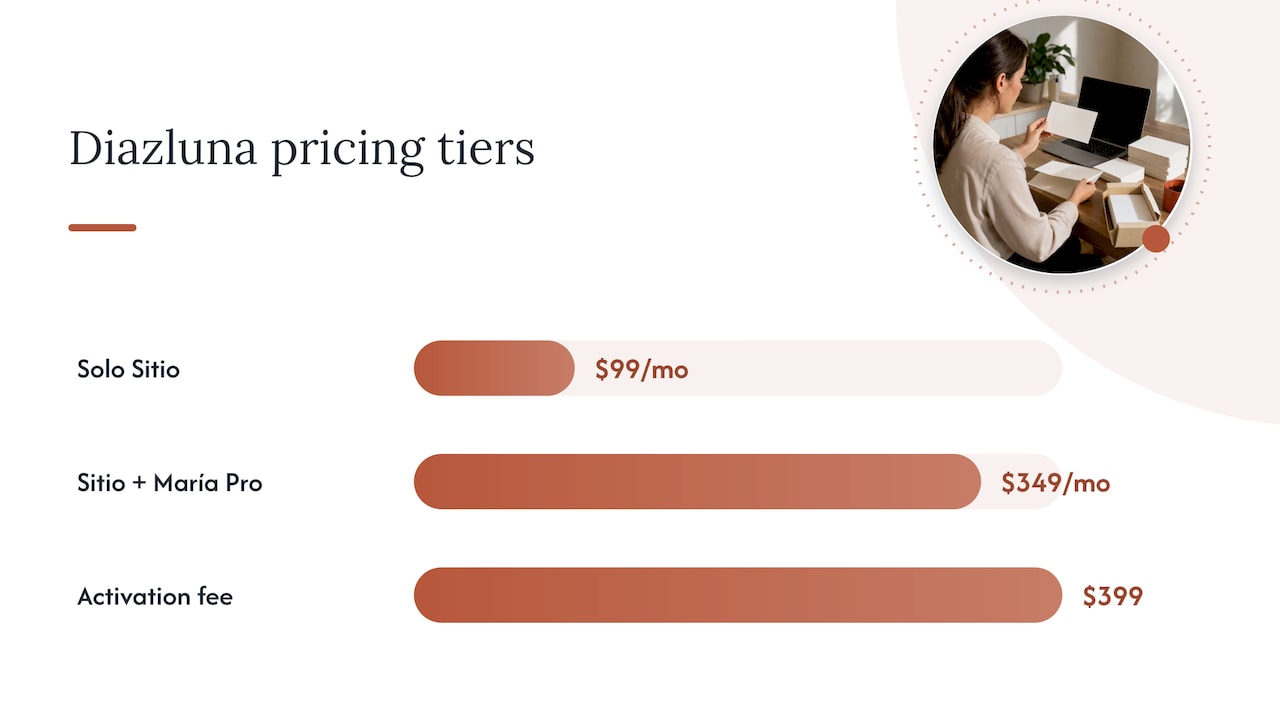
- Plans range from Solo Sitio at $99 per month for a bilingual website alone up to Sitio + María Pro at $349 per month for the full site, AI receptionist, and expanded call handling, with a one-time $399 activation fee.
Practices dealing with a steady volume of Hispanic clients and inconsistent front-desk coverage can see the current plans on the Diazluna site to check which tier fits their call volume.
Sources
For readers who want to go deeper: OpenLearn’s guide to formal and informal address covers usted versus tú in detail, UT Austin’s telephone Spanish page has full phone-call phrasing and drills, and WorldLangs’ greetings table breaks down register by time of day. Practices weighing a broader front-desk overhaul may also find value in a healthcare-focused SEO resource on improving appointment visibility.
FAQ
What are some useful Spanish greetings for a receptionist?
The core set is buenos días (until midday), buenas tardes (noon to sunset), and buenas noches (after dark), each paired with usted for a professional tone. Adding a title and surname, like “buenos días, señor López,” makes the greeting sound more polished in medical, dental, and legal settings.
What’s a good opening line in Spanish for answering the phone?
A strong opening combines the time-of-day greeting, the business name, your own name, and an offer to help: “Buenos días, [business], le habla [name], ¿en qué le puedo ayudar?” This structure works for formal calls and adapts easily to a bilingual variant by adding a short English line afterward.
How do you greet someone professionally in Spanish?
Use usted rather than tú, pair it with the correct time-based greeting, and add a title and surname when you know the person’s name. This combination signals respect and formality, which matters most on a first call or first visit before any rapport is established.
What are some common phrases receptionists use to handle calls?
Beyond the greeting, receptionists rely on phrases like “¿Me podría comunicar con…?” to ask for someone, “¿Me permite ponerlo en espera?” before a hold, and “¿Podría repetirlo, por favor?” when the connection is unclear. These short, polite requests keep a call moving without sounding abrupt.