October 4, 2026
5 Audit Ready Chart Items for Spanish Telemedicine Consent
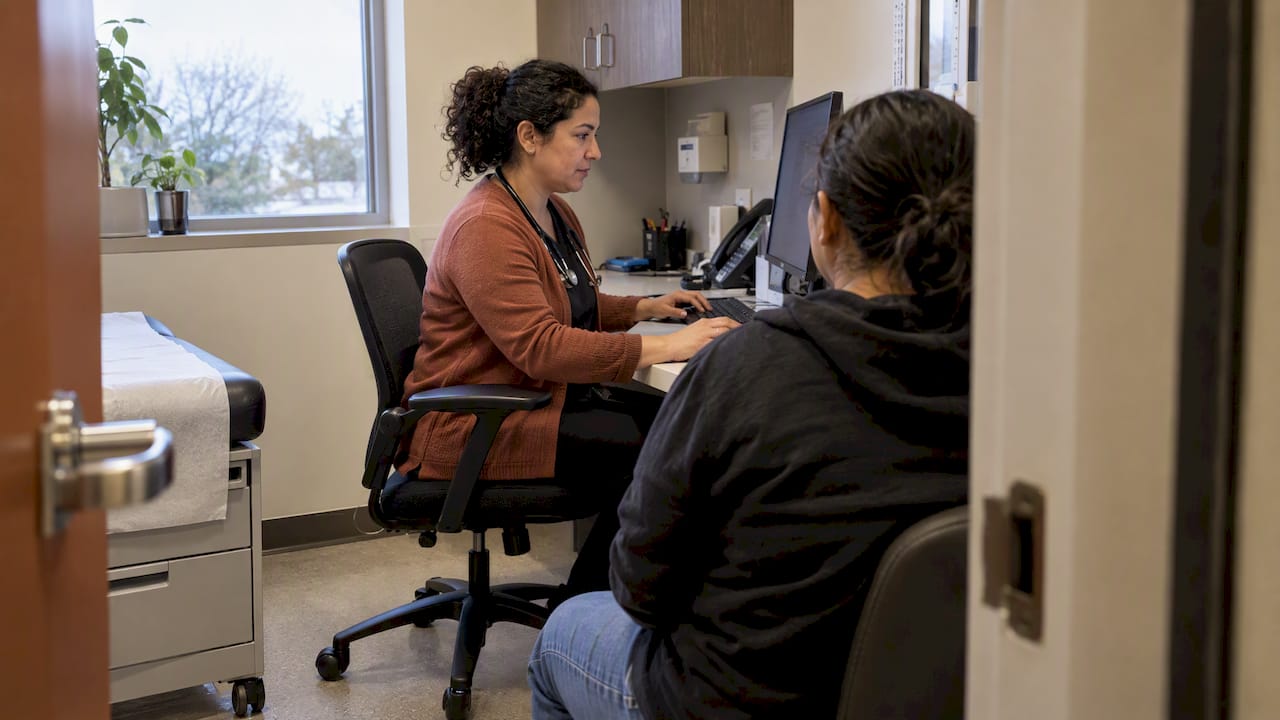
U.S. providers should obtain and document informed consent for telehealth visits, since Medicare requires documented consent and a cost-sharing disclosure for Communication Technology-Based Services. Many states have their own written or verbal consent rules. Plain-language Spanish templates from AHRQ and the University of Utah give you a starting point, but legal counsel should adapt them to your state and specialty before use.
TL;DR:
- Spanish telehealth consent forms should be adapted from official templates like AHRQ or the University of Utah, reviewed by legal counsel for compliance.
- The consent must cover the scope, privacy, technical contingency, billing disclosures, and patients’ right to refuse, with clear documentation in the medical record.
- Proper documentation includes the staff member’s name, date, language, form version, observer presence, and signed or verbal acknowledgment recorded in the chart.
- State and payer rules vary; clinics should maintain a compliance log of consent methods and regularly verify requirements to avoid legal and audit risks.
- Using automated, bilingual front desk tools with teach-back techniques improves consent comprehension and ensures consistent language-appropriate workflows.
Table of Contents
- Where to find Spanish-language telemedicine consent templates
- What belongs in a telemedicine informed consent form
- Checking your state’s rules and Medicare’s CTBS requirement
- How to document consent correctly in the chart
- Making Spanish consent language clear, not just translated
- A check-in script and sample Spanish phrases for consent
- How a bilingual front desk platform supports consent workflows
- Perspective: what actually moves the needle on Spanish telemedicine consent
- A managed alternative for practices that would rather not build this in-house
- FAQ
- Sources
Where to find Spanish-language telemedicine consent templates
You do not need to write a Spanish consent form from scratch. Two public templates cover most of the groundwork, and both are meant to be adapted rather than used as-is.
The AHRQ Easy-to-Understand Telehealth Consent Form is built around plain-language health literacy principles rather than dense legal phrasing. It walks through what telehealth is, what the patient should expect, and what happens if the connection drops or the visit needs to switch to an in-person appointment. AHRQ is explicit that this sample is a checklist and model, not a finished legal document: your counsel still needs to review it against your state’s rules and your specialty’s requirements before you hand it to a patient.
The University of Utah’s Spanish telemedicine consent package takes a different approach: instead of one form, it bundles several documents covering different visit types and scenarios. That makes it a useful reference if your clinic offers more than one kind of virtual visit (behavioral health, follow-up care, remote monitoring) and needs language that fits each one instead of a single generic script.
Once you have a base template, decide how it will actually reach the patient. Three formats cover almost every clinic workflow:
- Editable Word document for staff who print and hand forms to patients at a kiosk or front desk.
- PDF with embedded signature fields for clinics using fillable forms on a tablet or laptop during intake.
- E-sign link through the patient portal for practices that want the form signed before the visit starts, with a timestamped record attached automatically.
Whichever format you choose, give the document a clear name and version number, something like “Consentimiento Telesalud ES v3 (2026)”, and assign one person, usually a compliance officer or office manager, as the owner who updates it when state rules or billing codes change. Without an owner, outdated versions tend to keep circulating long after a rule change, which creates exactly the kind of inconsistency an audit will flag.
If your clinic already handles Spanish-language discharge paperwork, the same intake and version-control habits used for Spanish discharge instructions apply directly here: one named owner, one current version, and a clear retirement date for anything older.
What belongs in a telemedicine informed consent form
A Spanish consent form needs to cover the same ground as its English counterpart, just in language a patient without a medical background can actually follow. HHS telehealth guidance frames consent less as a legal checkbox and more as a conversation that sets expectations before the visit starts, which is a useful lens for deciding what to include.
- Scope and limitations of the visit. Explain plainly that a telehealth visit cannot replace a physical exam, lab work, or emergency care, and describe when the provider will recommend an in-person follow-up instead.
- Privacy and observer disclosure. State who else might be present or listening on either end of the call, whether the session is recorded, and what the patient should do to find a private space for their own side of the conversation.
- Technical contingency plan. Describe what happens if the video or audio connection fails, including a phone number to call and whether the visit will restart, continue by phone, or be rescheduled.
- Billing and cost-sharing disclosure. For Medicare beneficiaries, informed consent is not required for a standard telehealth visit, but it is mandatory for Communication Technology-Based Services such as virtual check-ins and remote patient monitoring, and patients must be told about potential cost-sharing before the service is billed, according to AHRQ.
- Right to refuse and language access. Make clear the patient can decline telehealth and request an in-person visit instead, and confirm that interpreter services or a Spanish-language provider are available if needed.
Pro Tip: Put the billing disclosure in its own short paragraph instead of folding it into the general consent language. It is the line patients remember when a bill arrives later, and it is the one compliance reviewers check first.
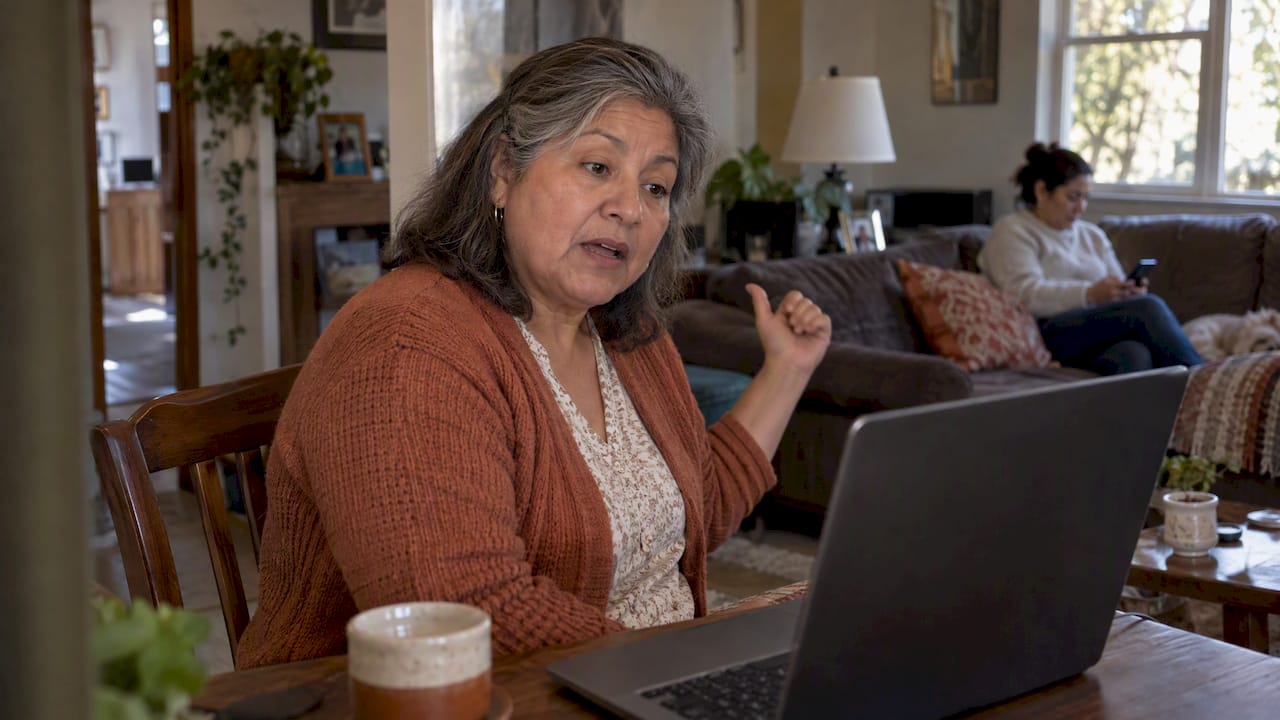
Skipping the observer disclosure is one of the more common gaps in telehealth consent forms, since clinics often focus on the technology and billing pieces and treat privacy as an afterthought. A patient calling in from a shared living room, with a family member in frame, is a routine scenario that the consent language should anticipate rather than discover mid-visit.
Checking your state’s rules and Medicare’s CTBS requirement
Telehealth consent rules are not uniform across the country, and a form that satisfies one state’s Medicaid program may fall short of another’s. Before you finalize any Spanish-language template, confirm what your own state and payer actually require.
- Check the CCHP consent requirements tracker for a state-by-state breakdown of whether written consent, verbal consent, or either is accepted, and whether your state’s Medicaid program has its own documentation rule.
- Review your state Medicaid page directly, since telehealth consent language sometimes lives in provider manuals rather than statute.
- Confirm specialty-specific rules. Behavioral health and substance use treatment carry additional confidentiality requirements under 42 CFR Part 2, which can require separate disclosure and authorization steps beyond a standard telehealth consent.
- For Medicare patients, remember the split: standard telehealth visits do not require a separate informed consent, but Communication Technology-Based Services, like virtual check-ins and remote monitoring, do, along with the cost-sharing notice described above.
According to CCHP, many states fold their telehealth consent requirement into statute, administrative code, or Medicaid policy rather than a single standalone telehealth law, which is part of why a generic national template rarely fits every clinic without some editing. Written or verbal consent is generally acceptable across these frameworks as long as it is properly documented, but “properly documented” is defined state by state.
The practical fix is a short internal policy log: one page per state you operate in, noting the consent method required, the Medicaid citation if one exists, and the date you last confirmed it. Update the log whenever your compliance officer reviews state telehealth rules, and route any ambiguous case to legal counsel rather than guessing. If your clinic also handles broader language-access obligations, the operational steps described for Section 1557 compliance overlap closely with this same review cycle, since both hinge on knowing which rules apply to your specific patient population.
How to document consent correctly in the chart
Both written and verbal consent are generally acceptable for telehealth in the United States, as long as the provider documents the consent in the patient’s medical record, including whether any third party was observing the call on either end, according to CCHP. The documentation step, not the method itself, is what makes consent defensible later.
- Record who obtained consent. Note the staff member’s name, role, and whether an interpreter was present for the conversation.
- Log the date, time, and language used. A chart entry that simply says “consent obtained” without a language note is a gap if the patient later disputes understanding the form.
- Note the form version discussed. Reference the version number of the Spanish template used, so an audit can confirm the patient saw the current language, not an outdated draft.
- Document observer presence. State plainly whether anyone besides the patient and provider was present or visible during the call.
- Attach or link the signed artifact. Scan a signed paper form into the chart, attach the portal e-sign confirmation, or paste the verbal consent script actually read to the patient.
For verbal consent, a short, consistent script works better than an improvised explanation, because it gives you something exact to document. A sample line a provider might read in Spanish: “Antes de comenzar, ¿me confirma que acepta recibir esta consulta por video o teléfono, entendiendo que puede pedir una cita en persona en cualquier momento?” Document the response, not just the fact that the question was asked.
Written and verbal consent are both generally acceptable for telehealth in the United States when properly documented in the medical record, including observer disclosure, per CCHP’s state tracker. That flexibility is useful operationally, since it means a rushed intake does not have to mean a compliance gap, as long as the chart entry is complete.
An audit-ready consent entry should let a reviewer answer, in under a minute, who obtained consent, when, in what language, which form version, and whether anyone else was present. If any of those five pieces is missing from your EHR template, that is the field to add first.
Making Spanish consent language clear, not just translated
A Spanish consent form that reads like a direct translation of dense English legal text usually fails the same patients it is meant to protect. HHS’s Spanish-language telehealth resources recommend pairing any written material with step-by-step technical guides, screenshots, and even a short practice session before the actual visit, which tells you something: comprehension, not just translation accuracy, is the real goal.
- Use a professional medical translator rather than a bilingual staff member doing a quick pass, since clinical terminology has specific Spanish equivalents that vary by region and specialty.
- Write short sentences with common, everyday words instead of literal legal phrasing borrowed from the English version.
- Field-test the form with a few Spanish-speaking patients or staff before rolling it out, and adjust any sentence that gets a confused reaction.
- Keep a translation log noting who translated the document, who verified it clinically, and the date, so later revisions do not lose that chain.
Small trials on patient materials suggest that testing Spanish-language documents directly with native speakers, combined with teach-back, improves comprehension more than a literal or machine translation does, according to research on medical translation and readability. Teach-back means asking the patient to explain, in their own words, what they just agreed to, rather than asking a yes-or-no question they might answer out of politeness.
Pro Tip: Read your Spanish consent form out loud to someone outside your clinical staff. If a phrase sounds like it was translated from English rather than written naturally in Spanish, patients will notice the same thing, just with less patience.
Readability and version control go together. If you are overhauling consent language, it is worth running it through the same Spanish readability audit you would use for any other patient-facing document, since the sentence-length and vocabulary standards that make discharge instructions clear apply just as directly to consent forms.
A check-in script and sample Spanish phrases for consent
Most consent breakdowns happen not because the form is wrong, but because the conversation around it gets rushed. A short, repeatable check-in sequence fixes that more reliably than a longer form.
- Confirm identity and language preference. Ask the patient to state their name and date of birth, and confirm whether they prefer to continue in Spanish or English.
- Confirm a private location. Ask directly: “¿Se encuentra en un lugar privado para hablar de su salud?”
- Ask about observers. “¿Hay alguien más con usted ahora, o alguien que pueda escuchar la consulta?”
- Set billing expectations. For services that require a cost-sharing notice, state it plainly: “Este tipo de consulta puede tener un costo adicional según su seguro. ¿Desea continuar?”
- Confirm understanding with teach-back. Ask the patient to repeat back, in their own words, what they are agreeing to, rather than simply asking “¿entiende?”
- Log the outcome immediately. Enter the consent result, language used, and observer disclosure into the chart before moving to the clinical portion of the visit, and attach the signed form or portal confirmation.
If a patient hesitates, asks a legal question your front desk staff cannot answer, or raises a concern about recording or data privacy, that is the point to escalate to a clinical supervisor or compliance officer rather than improvising a response. A consistent escalation rule, written into your staff training, keeps a single awkward moment from turning into a documentation gap.
Clinics that send appointment reminders through WhatsApp can fold the same check-in questions into a pre-visit message, confirming language preference and private location before the patient even logs on. Examples of how that works in practice are covered in WhatsApp consent messaging, which walks through wording that holds up for both scheduling and consent reminders.
How a bilingual front desk platform supports consent workflows
Collecting and documenting Spanish-language consent is a staffing problem as much as a forms problem. Diazluna’s bilingual front desk platform is built around the same tasks this guide walks through: sending the right document, in the right language, at the right moment, and capturing proof that it happened.
- A 24/7 AI receptionist, available in Spanish and English, can confirm a patient’s language preference at the first point of contact, before a human staff member is even involved.
- WhatsApp integration can deliver a consent form link or e-sign request ahead of a scheduled visit, with a real-time summary sent to staff when the patient responds.
- Appointment reminders sent through the same channel can repeat the private-location and observer questions covered earlier, helping reduce the chance that a consent step gets skipped during a rushed check-in.
- When language preference and message history are captured automatically, that information can be available to front desk staff without a separate manual intake step.
For a small clinic without a dedicated compliance team, the appeal is less about any single feature and more about consistency: the same questions get asked the same way, every time, in whichever language the patient actually prefers. That matters more for consent than for most other front desk tasks, since a missed or garbled consent conversation is one of the harder gaps to fix after the fact.
Perspective: what actually moves the needle on Spanish telemedicine consent
The templates matter less than most clinics assume. A polished AHRQ-based form does nothing if the front desk staff reads it in a monotone and moves on before the patient actually understands what they agreed to. The real priority is making sure the patient can repeat back, in their own words, what telehealth does and does not cover, and that someone writes down that it happened.
I would start with the highest-volume workflow in your clinic, usually scheduling and check-in, and automate the parts that do not need a human judgment call: sending the Spanish form link, confirming language preference, flagging observers. Save staff time for the parts that do need a person, like answering a patient’s question about whether their insurance covers a virtual check-in.
Templates from AHRQ or the University of Utah are a fine starting point, but treat them as a draft, not a finished product. Have legal counsel check them against your state’s rules and your specialty’s extra requirements before anything goes in front of a patient. A generic form reviewed by no one is a bigger liability than a plain, honest conversation documented well.
— Francisco
A managed alternative for practices that would rather not build this in-house
Building a reliable Spanish consent workflow from scratch means sourcing templates, training staff on scripts, setting up e-sign delivery, and keeping version control straight across every form you use. Some services package those pieces into one bilingual front desk solution so a practice does not have to assemble them separately.
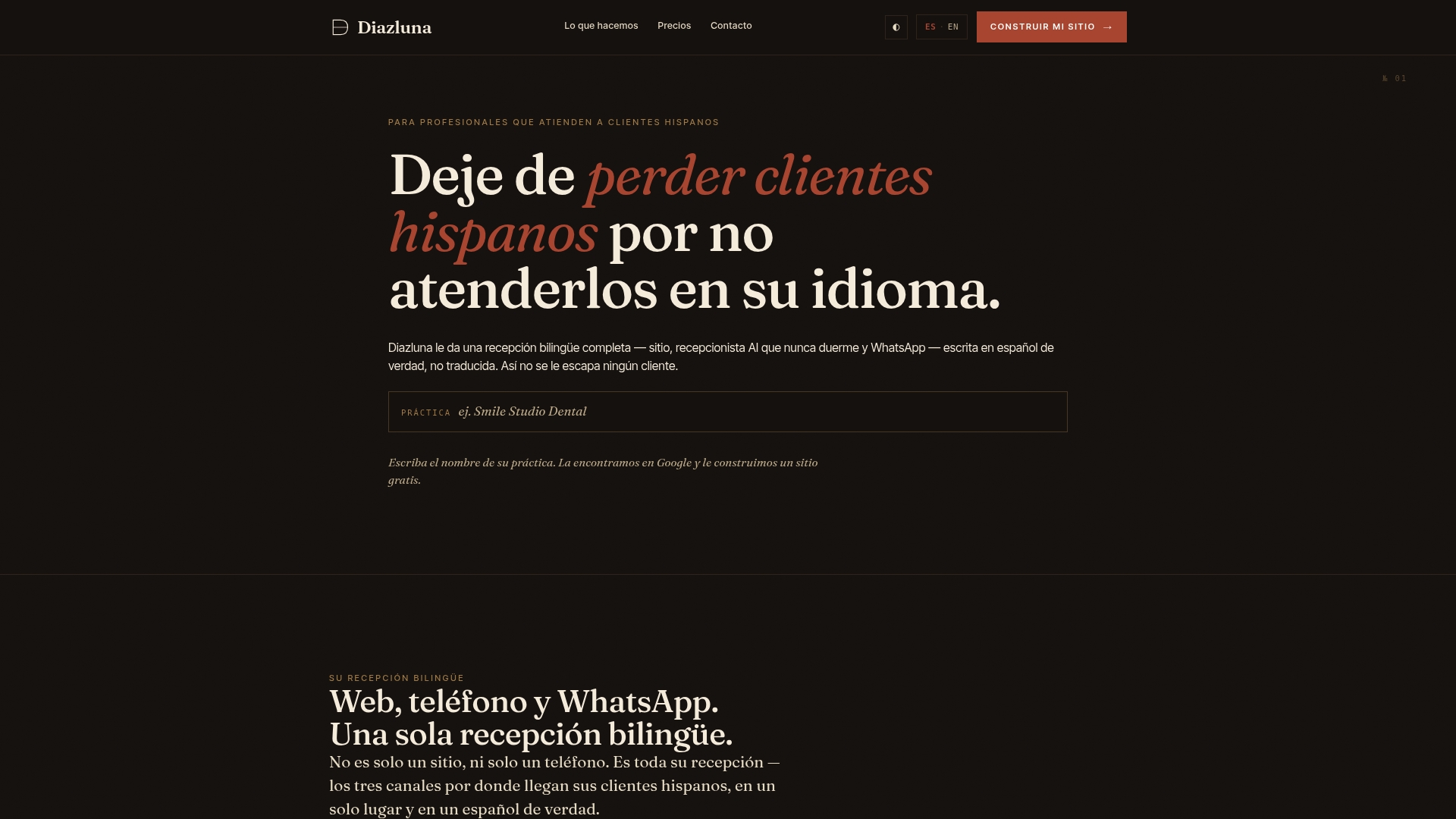
- A bilingual website in Spanish and English that can host consent forms and intake materials in one place.
- A 24/7 AI receptionist in both languages that confirms patient preferences and routes urgent calls to staff in real time.
- WhatsApp integration for sending consent links, reminders, and follow-up messages directly to patients in their preferred language.
If your practice already has staff and systems to manage translation, version control, and e-sign delivery internally, the AHRQ and University of Utah templates covered earlier may be enough on their own. If you would rather not manage three separate vendors for your website, phone line, and messaging, Some plans bundle those functions for a flat monthly subscription. Visit Diazluna to see Spanish-language form examples or request a demo.
This article is general information, not a substitute for advice from a qualified doctor. Consult a qualified healthcare professional about your own circumstances before acting on anything here.
FAQ
Do you need consent for telehealth?
Yes, in practice most U.S. providers should obtain and document consent for telehealth visits, though the exact requirement depends on your state and payer. For Medicare, standard telehealth visits do not require a separate informed consent, but Communication Technology-Based Services like virtual check-ins do, according to AHRQ.
What is the medical consent form called in Spanish?
It is usually called a “formulario de consentimiento informado” or “consentimiento para telesalud” when it specifically covers telehealth visits. The University of Utah’s Spanish telemedicine consent package is one example built specifically for this purpose.
Can you do telehealth from a different country?
This depends on licensing rules that vary by state and by the location of both the patient and the provider, so it is not a simple yes or no answer. Check your state medical board’s telehealth licensing rules and consult legal counsel before offering a visit across a state or national line.
What are the new telehealth guidelines for 2026?
There is no single national telehealth guideline; rules come from a mix of state law, Medicaid policy, and Medicare billing rules that each change on their own schedule. The most reliable way to confirm current requirements for your state is to check the CCHP consent requirements tracker directly rather than relying on a general guide.
Sources
- AHRQ’s Easy-to-Understand Telehealth Consent Form | Agency for Healthcare Research and Quality
- Telehealth
- Consent Requirements - CCHP
- spanish-telemedicine-consent-package.pdf (University of Utah)
- Confidentiality regulations FAQs | SAMHSA