October 10, 2026
Bilingual Law Firm Website

A bilingual law firm website is not just a translated homepage. It is an integrated bilingual front desk: a fully optimized Spanish and English website paired with a 24/7 bilingual AI receptionist and WhatsApp messaging. For practices serving Hispanic clients, we recommend deploying all three together, with human-reviewed Spanish content, rather than running a translated site alone. We build this combination specifically for small practices.
TL;DR:
- Spanish and English pages need separate indexed URLs and mobile first design, with fluent human review of legal terminology, intake forms, and receptionist scripts.
- Inbound AI calls still need disclosure; outbound calls using synthetic voices require prior express consent, and firms remain responsible for accurate client communications.
- A small firm can typically launch in two to four weeks if forms and scripts are ready early; delayed translation review can extend the timeline.
- WhatsApp reaches more than half of U.S. Latinos; use approved templates, obtain client consent, and keep a clear path to human help.
- Track Spanish page traffic, contact and appointment conversion, response speed, and retention; review weekly in month one, then compare later months with missed call baselines.
Table of Contents
- Core components of a bilingual digital front desk
- Compliance and disclosure rules for AI and messaging
- How to launch a bilingual front desk, step by step
- Measuring results: KPIs and a 90-day ROI check
- Why an integrated bilingual front desk, not a translated page
- How Diazluna builds this for small practices
- FAQ
- Sources
Core components of a bilingual digital front desk
A bilingual website only works when the Spanish content is written and reviewed by a human, not run through machine translation. Legal terminology carries real consequences, and a mistranslated phrase on an intake form can confuse a client or create liability. The site itself should be mobile-first, since most visitors will reach it from a phone, and both language versions need their own indexed pages so each shows up correctly in search results.
The bilingual AI receptionist handles the next step: answering calls, triaging new matters, and scheduling consultations in whichever language the caller prefers. It can summarize a call in both languages for the attorney and flag urgent matters for immediate human transfer, but the scripts it follows should be drafted and approved by someone fluent in legal Spanish, not generated on the fly.
WhatsApp fills the gap that calls and web forms leave open. Many Hispanic clients already use WhatsApp as their default messaging app, and a firm that answers there captures leads who would otherwise never pick up the phone.
- Enable WhatsApp Business templates for appointment confirmations and intake follow-up.
- Build in a clear path to a human agent for sensitive or urgent cases.
- Keep in-chat summaries available to staff so no conversation gets lost between shifts.
Pro Tip: Review your AI receptionist’s Spanish scripts the same way you would review a paralegal’s intake notes, with a native or fluent speaker checking tone and accuracy before launch.
Compliance and disclosure rules for AI and messaging
Using AI voice and messaging tools comes with specific regulatory guardrails. The FCC’s 24-17 declaratory ruling confirmed that AI-generated voices used in outbound calls fall under the Telephone Consumer Protection Act, which means outbound calls using synthetic voices require prior express consent from the recipient. An inbound AI receptionist that answers calls a client initiates sits in a different category, but firms should still disclose that the caller is interacting with an AI system.
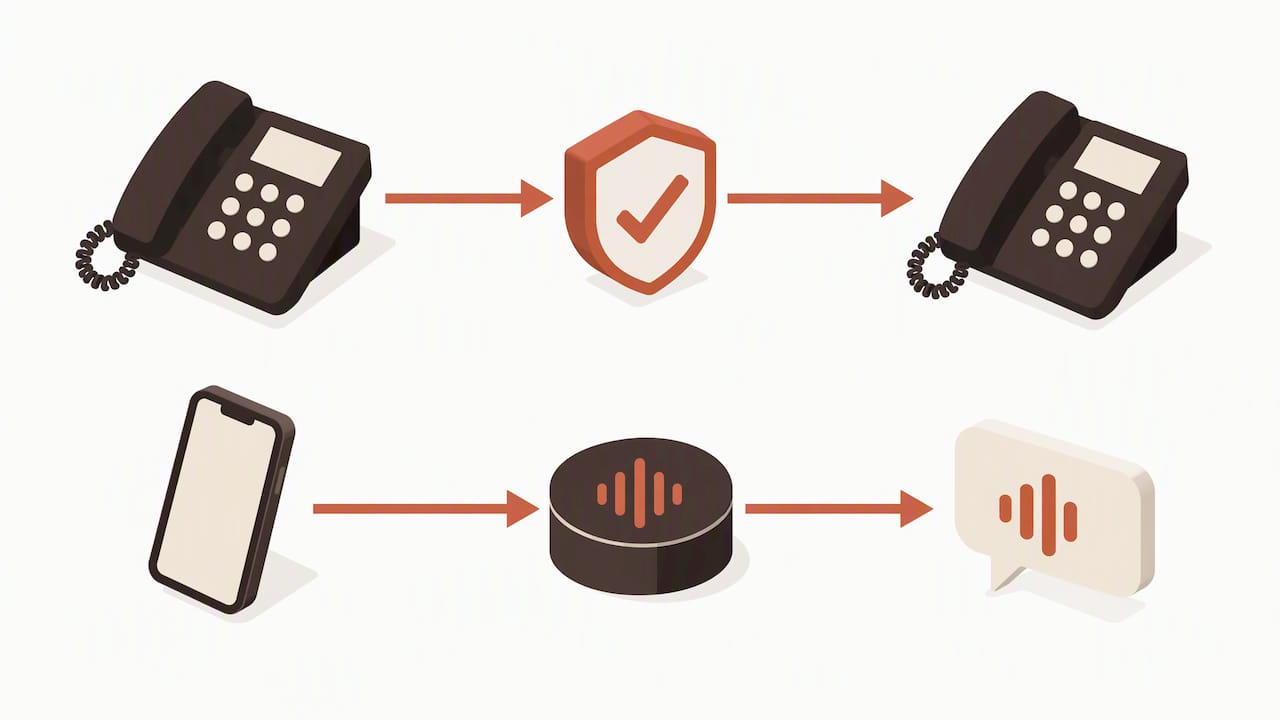
The FTC’s policy statement on AI adds that any AI tool used in client-facing communication needs a clear and conspicuous disclosure, and firms remain responsible for the accuracy of what the AI says.
A sourced reminder: the FTC’s guidance places the burden on the business, not the AI vendor, to avoid misleading claims in automated interactions.
Practical controls worth putting in place:
- Add a short, visible AI disclosure on the website and at the start of receptionist calls.
- Document consent before placing any outbound AI-voice call.
- Have a licensed attorney or senior staff member review every intake script.
- Follow WhatsApp’s business messaging policy for template approval and opt-in requirements.
How to launch a bilingual front desk, step by step
Launching this setup does not require a long build cycle, but it does require sequencing the work correctly.
- Define your Spanish-speaking audience. Identify the practice areas (family law, immigration, personal injury) where Spanish-speaking clients are most common.
- Collect and translate intake forms. Have a fluent reviewer check every form and script before it goes live, not after.
- Designate a human reviewer. One staff member should own final sign-off on Spanish content and AI scripts.
- Build the bilingual page set. Mirror your English pages in Spanish with their own URLs so search engines index them separately.
- Set up WhatsApp Business. Create message templates for confirmations, reminders, and after-hours responses.
- Configure the AI receptionist workflow. Map out which calls it handles directly and which it transfers to a human.
- Run roleplay tests. Have staff call in as mock clients in both languages to catch gaps before go-live.
- Soft launch and monitor. Track early calls and messages closely for the first two weeks before full rollout.
A realistic timeline runs two to four weeks from kickoff to go-live for a small firm, assuming forms and scripts are ready early. Firms that drag out the translation review step are usually the ones that slip past that window.
Pro Tip: Run your soft launch during a slower week so staff have time to catch and fix scripting issues before your full client volume hits the new system.
Measuring results: KPIs and a 90-day ROI check
The fastest signal that a bilingual front desk is working is search visibility. New Spanish pages built for this purpose have been indexed by Google within 24 hours in deployments built around this model.
Track these metrics from day one:
- Spanish-language traffic to your bilingual pages, week over week.
- Inbound contact rate from Spanish-speaking callers and WhatsApp messages.
- Appointment conversion rate for Spanish-language leads versus English-language leads.
- Speed-to-contact, meaning how quickly a new lead gets a response.
- Client retention among Spanish-speaking clients after the first consultation.
Hispanic adults are heavy digital device users: Pew Research reports that 87% often or sometimes get news from digital devices, and 74% use search engines at least sometimes. That behavior pattern explains why indexing speed and mobile usability matter as much as the content itself.
Structure your first 90 days as a test: launch, measure weekly for the first month, then compare month two and three against your baseline missed-call and lead-loss numbers. A meaningful early win looks like fewer missed Spanish-language inquiries and a visible uptick in bookings traced back to WhatsApp or the Spanish pages.
Why an integrated bilingual front desk, not a translated page
A translated homepage with no phone or messaging follow-through solves almost nothing. The real failure point for most firms is not the website copy, it is what happens in the thirty seconds after a Hispanic client tries to reach someone and gets voicemail or a form that never gets answered in Spanish. WhatsApp usage data shows that a majority of U.S.-based Latinos already use the app, which means a firm without a WhatsApp channel is asking clients to change their habits just to become a client.
What gets underestimated is the supervision piece. An AI receptionist or a WhatsApp bot that improvises legal language without human review creates more risk than it removes. The firms that see the best results treat the AI layer as a fast, consistent front door, with a person checking the scripts and intake language behind it.
— Francisco
How Diazluna builds this for small practices
We built our platform specifically for practices that cannot justify hiring three separate vendors for a website, a call service, and a messaging tool. Our bilingual digital front desk combines a human-reviewed Spanish and English website, a 24/7 bilingual AI receptionist, and WhatsApp integration in one subscription, designed to prevent losing Hispanic clients to language gaps or unanswered calls.
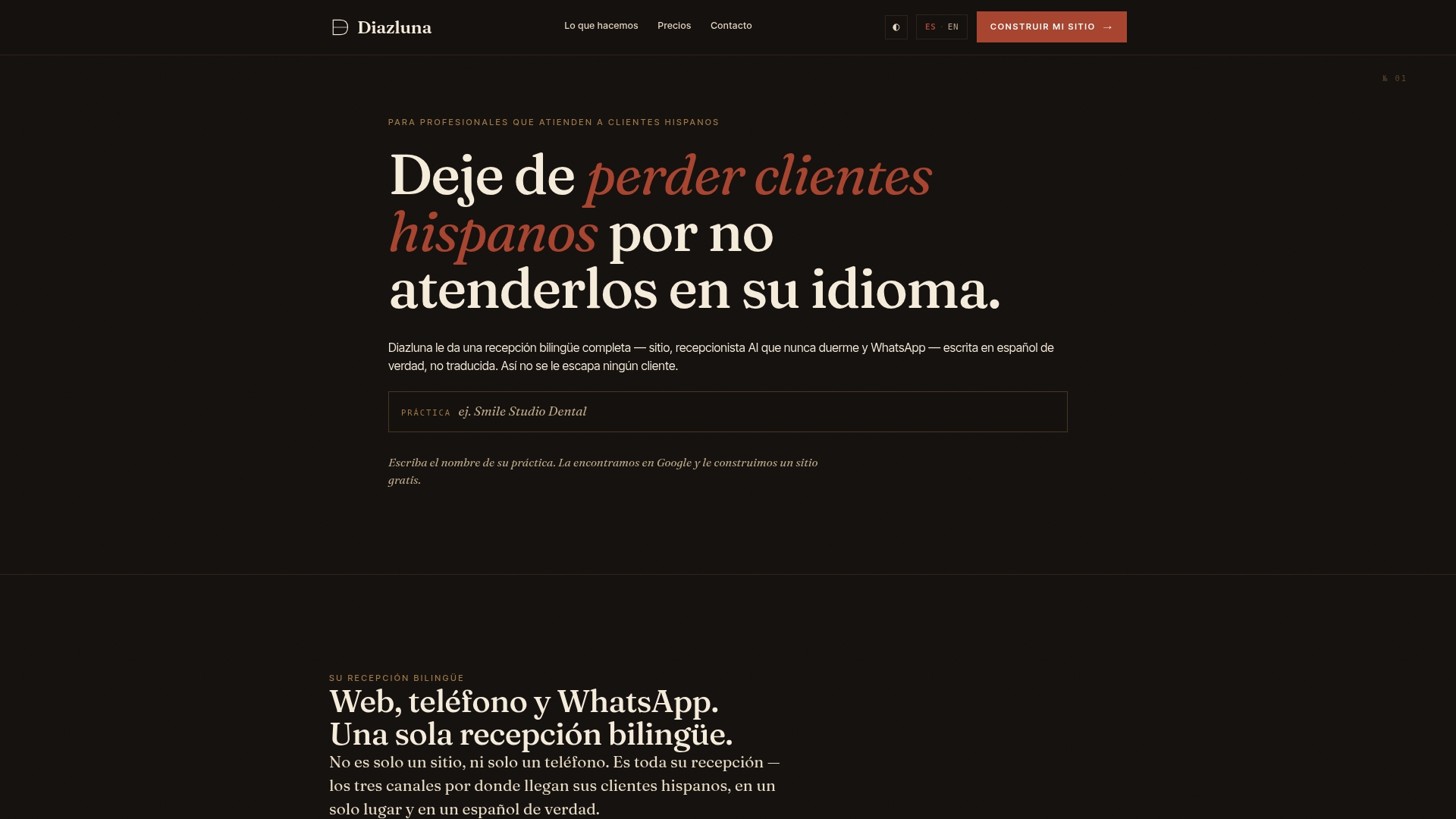
New sites built using this model have been indexed by Google within 24 hours, and some firms using a full setup report a drop in missed Spanish-language inquiries.
- There are website-only, receptionist-added, or full-service managed plans available, depending on the level of support needed.
- There is typically a one-time setup fee covering initial activation before monthly plans begin.
- Spanish content should be written and reviewed by fluent speakers rather than machine-translated.
For up-to-date details on plans and pricing, please consult the provider’s website.
Activation runs a one-time fee. If your practice is ready to stop losing Spanish-speaking leads to a language gap, see pricing and request a demo.
FAQ
What makes a website count as truly bilingual for a law firm?
A truly bilingual site has fully separate Spanish and English pages with their own URLs, written and reviewed by a fluent speaker rather than machine-translated. It should pair with a bilingual AI receptionist and WhatsApp so clients get full language support beyond the homepage.
How fast can a bilingual AI receptionist handle a new client call?
A bilingual AI receptionist can answer immediately, in either language, and triage the call to intake, scheduling, or a human attorney in real time. Setup guidance shows most firms can configure core workflows within a couple of weeks.
Is using an AI voice for client calls legal?
Inbound AI receptionists that answer calls a client initiates are treated differently from outbound AI-voice calls, which the FCC has ruled fall under TCPA consent rules. Firms should still disclose that callers are interacting with an AI system, per FTC guidance.
Why should a law firm prioritize WhatsApp over just phone and email?
More than half of U.S.-based Latinos already use WhatsApp, so answering there meets clients where they already communicate instead of asking them to switch channels. Firms that enable WhatsApp tend to see faster engagement than phone or email alone.
How much does a bilingual front desk setup cost for a small firm?
Diazluna’s plans have a range of monthly fees starting from a lower-priced website-only package up to a higher-cost full managed service with an AI receptionist, along with an activation fee. Pricing and plan details are listed at Diazluna.
Sources
- WhatsApp power and perils for U.S. Latinos
- U.S. Hispanics’ news habits and sources | Pew Research Center
- FCC 24-17 Declaratory Ruling
- FTC proposed policy statement on AI accuracy and disclosures