October 13, 2026
Clinic Spanish Phrases: What to Say and When to Call
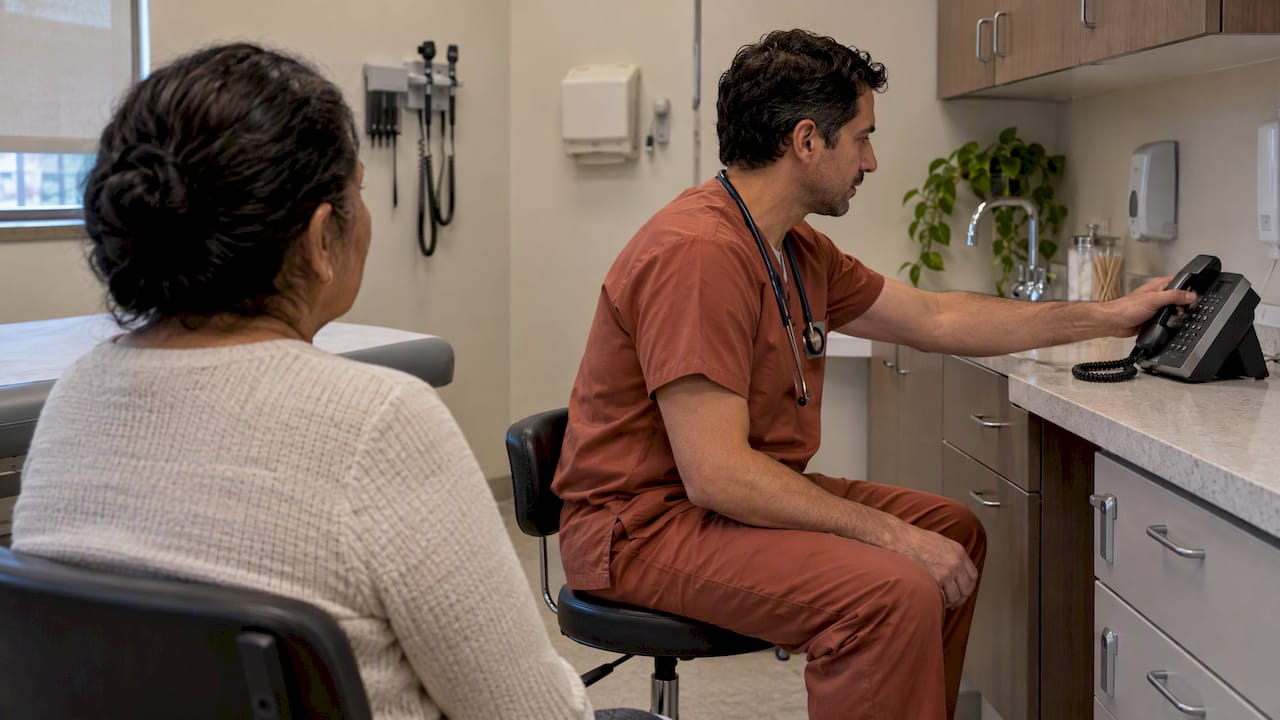
This page gives clinic staff a ready-to-use Spanish phrase cheat sheet for intake, history-taking, symptoms, exams, instructions, appointments, and emergencies. The single rule that governs all of it: these phrases cover routine, low-risk interactions, but consent, discharge, medication reconciliation, or any moment where meaning truly matters call for a qualified interpreter. Always record the patient’s language preference and any interpreter use in the medical record.
TL;DR:
- Use a qualified interpreter for consent, medication reconciliation, discharge, critical decisions, or red flags such as chest pain, breathing trouble, confusion, or sudden weakness.
- Record each patient’s preferred language at every intake, document interpreter use, and note whether follow up should happen by phone or WhatsApp.
- For discharge, ask patients to explain one or two specific instructions in their own words, then document their response instead of requesting a full discharge recap.
- Clinics must offer language assistance at no cost, inform patients of that right verbally and in writing, and use competent interpreters, not untrained relatives.
Table of Contents
- Greeting, identification, and basic intake phrases
- Questions to collect medical history and current medications
- Symptom assessment: what, where, when, how bad
- Phrases for physical exam, procedures, and consent checks
- Instructions, discharge, and follow-up language
- Appointments, pharmacy, and test-result communication
- Emergency phrases and comforting, reassuring language
- Best practices, legal obligations, and how to use interpreters
- Making these scripts stick on a busy shift
- A bilingual front desk that handles this for you
- FAQ
- Sources
- Authoritative resources: CLAS, AHRQ, and interpreter registries
Greeting, identification, and basic intake phrases
The first thirty seconds set the tone for the whole visit. A warm, correctly gendered introduction and a quick language check prevent confusion later.
- “Hola, soy su enfermero/enfermera” or “soy su doctor/doctora” (Hello, I’m your nurse or doctor, adjusted for gender).
- “¿Cómo se llama y cuál es su fecha de nacimiento?” (What’s your name and date of birth?)
- “¿Cuál es su dirección y número de teléfono?” (What’s your address and phone number?)
- “¿Prefiere hablar en español o en inglés?” (Do you prefer Spanish or English?), offering an “I Speak” card when the answer is unclear.
Document the preferred language in the electronic health record along with whether the patient prefers phone calls or WhatsApp for follow-up contact.
Questions to collect medical history and current medications
Medication errors are among the most preventable, and the most common, risks in bilingual care. A few direct questions catch most problems before they start.
- “¿Es usted alérgico a algún medicamento?” (Are you allergic to any medication?) followed by “¿Qué le pasa cuando lo toma?” (What happens when you take it?)
- “¿Qué medicamentos toma usted ahora?” (What medications do you currently take?)
- “¿Cuántas veces al día lo toma y en qué dosis?” (How many times a day, and what dose?)
- “¿Me puede mostrar el frasco?” (Can you show me the bottle?) when a name is uncertain.
Whenever possible, verify medication names with teach-back or by asking the patient to show the actual bottle rather than relying on pronunciation alone.
Symptom assessment: what, where, when, how bad
Triage runs on speed and precision. These templates get to the clinical picture fast while flagging anything that needs escalation.
- “¿Cuál es su problema principal?” (What’s your main problem?) opens the conversation without assuming a diagnosis.
- “¿Dónde le duele?” (Where does it hurt?) paired with a gesture toward a body chart speeds accuracy.
- “¿Cuándo empezó?” (When did it start?) and “¿Es constante o va y viene?” (Is it constant or does it come and go?) establish the timeline.
- “En una escala de cero a diez, ¿qué tan fuerte es el dolor?” (On a scale of zero to ten, how severe is the pain?) gives a quick severity marker.
- Any mention of chest pain, trouble breathing, confusion, or sudden weakness should trigger an immediate interpreter call rather than continued phrase-based questioning.
Phrases for physical exam, procedures, and consent checks
Short commands work better than full sentences during a hands-on exam, and consent language deserves extra care because the stakes are higher.
- “Respire profundo, por favor” (Breathe deeply, please).
- “Muéstreme dónde le duele” (Show me where it hurts).
- “¿Puedo examinar esta área?” (May I examine this area?) asked before touching, with a gesture toward clothing that needs to move.
- “¿Entiende lo que le voy a hacer?” (Do you understand what I’m about to do?) followed by “Dígame con sus palabras qué va a pasar” (Tell me in your own words what’s going to happen) as a quick teach-back consent check.
Pro Tip: Keep sentences to one idea each; a interpreter or bilingual staff member translates a short, plain phrase far more accurately than a long clinical sentence packed with jargon.
Instructions, discharge, and follow-up language
Discharge is where misunderstandings turn into readmissions. Clear, simple phrasing paired with a verification step closes that gap.
- “Tome una pastilla cada ocho horas por siete días” (Take one pill every eight hours for seven days) states dose, frequency, and duration in one line.
- “Limpie la herida con agua y jabón dos veces al día” (Clean the wound with soap and water twice a day).
- “Regrese si tiene fiebre, más dolor, o si la herida se pone roja” (Return if you have fever, more pain, or if the wound turns red) covers the warning signs that matter most.
- “Dígame cómo va a tomar este medicamento” (Tell me how you’re going to take this medicine) applied as teach-back.
Low and inconsistent use of teach-back remains common even among clinicians who otherwise speak simply, which is why AHRQ’s teach-back resources recommend limiting each teach-back check to a small number of specific instructions rather than asking patients to repeat an entire discharge plan. Document that the check happened and what the patient reported back. For written take-home materials, a quick readability audit of translated handouts helps confirm the wording matches what staff actually say at the bedside, and detailed discharge instruction templates can standardize this step across a clinic.
Appointments, pharmacy, and test-result communication
Scheduling and results are often where patients disengage, especially when a callback goes to voicemail in a language they don’t use daily.
- “¿Qué día y hora le conviene para su próxima cita?” (What day and time works for your next appointment?)
- “¿Prefiere que lo llamemos o le escribamos por WhatsApp?” (Would you prefer a call or a WhatsApp message?)
- “Sus resultados estarán listos en un plazo determinado; le llamaremos” (Your results will be ready in three days; we’ll call you), adjusted to the actual turnaround time.
- “La farmacia está a la izquierda, cerca de la entrada principal” (The pharmacy is on the left, near the main entrance).
Note the preferred contact method in the chart and offer translated written instructions alongside the verbal explanation whenever one is available, a practice that also supports engagement through a bilingual clinic website.
Emergency phrases and comforting, reassuring language
In urgent moments, short, repeatable commands matter more than vocabulary range, and reassurance keeps a frightened patient cooperative while help arrives.
- “Quédese aquí” (Stay here) and “No se mueva” (Don’t move) are the two commands to memorize first.
- “Vamos a conseguir ayuda ahora mismo” (We’re going to get help right now) signals action without overstating what’s happening.
- “Estoy aquí con usted, no está solo” (I’m here with you, you’re not alone) reduces distress while clinical help is on the way.
- The moment a critical care decision needs to be made, switch to a professional interpreter rather than continuing with improvised phrases.
Best practices, legal obligations, and how to use interpreters
Phrase lists solve routine moments, but language access is a compliance issue as much as a communication one. The National CLAS Standards require offering language assistance at no cost, informing patients of that right both verbally and in writing, and making sure interpreters are actually competent, not just bilingual; untrained staff or family members, including minors, should not fill that role.
Ad hoc interpreters, including untrained staff and family members, increase the risk of clinically significant errors, while professional interpreters improve communication and patient outcomes. AHRQ patient safety net
Title VI of the Civil Rights Act backs this up with legal weight: clinics serving patients with limited English proficiency carry an obligation to provide language assistance, and gaps here create both clinical risk and liability. AHRQ’s health literacy toolkit recommends documenting language preference at intake and keeping phone or video interpreter access ready at all times. For clinics coordinating remote interpretation, a HIPAA-compliant interpretation checklist is a useful reference for keeping those calls compliant.
A practical checklist:
- Record preferred language at every intake, not just the first visit.
- Auto-flag interpreter booking for consent, discharge, and any high-risk visit type.
- Keep phone or video interpreter access on standby, not just in-person scheduling.
- Train staff on teach-back so verification happens consistently, not occasionally.
Making these scripts stick on a busy shift
The phrases above only work if staff reach for them automatically, not after fumbling for a card mid-visit. Printing short phrase templates at the front desk and loading them onto exam-room tablets keeps them within reach. Registration workflows should include a mandatory language-preference field that automatically triggers interpreter scheduling for flagged visit types, rather than leaving that judgment call to whoever is at the desk that day. A short round of role-play, five minutes with a colleague before a shift, builds enough comfort with the scripts that staff aren’t reading them for the first time in front of a patient.
— Francisco
A bilingual front desk that handles this for you
Phrase sheets and teach-back scripts help in the exam room, but the front desk is where language gaps usually cause a patient to disappear before the visit even happens. We built Diazluna around that gap: a bilingual website in Spanish and English, a 24/7 AI receptionist fluent in both languages, and WhatsApp integration so a patient can message in the language they’re comfortable with and get a real response.
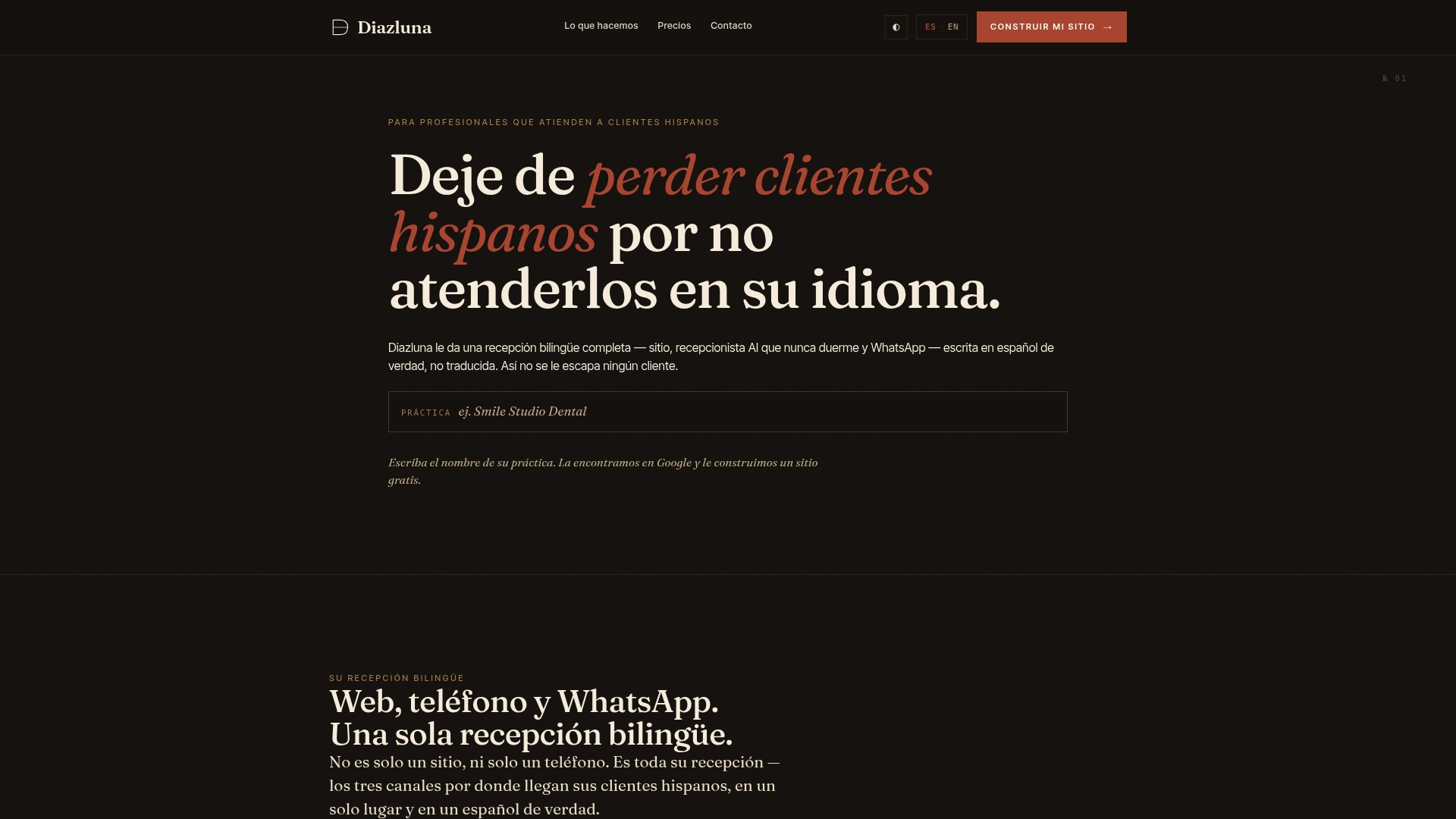
That combination captures language preference automatically at first contact, books and reschedules appointments without a staff member picking up the phone, and flags urgent messages for a human to handle right away. For clinics tired of losing Hispanic patients to a missed call or a confusing automated menu, our plans at Diazluna start with a bilingual website and scale up to full AI reception and managed service, with setup designed to go live fast.
- A bilingual website that’s quickly indexed and visible shortly after launch.
- An AI receptionist that answers, schedules, and triages in Spanish and English around the clock.
- WhatsApp integration so patients can reach a clinic the same way they already talk to everyone else.
See current plans, including Solo Sitio and Sitio + María, at Diazluna.
This article is general information, not a substitute for advice from a qualified doctor. Consult a qualified healthcare professional about your own circumstances before acting on anything here.
FAQ
What’s the safest way to handle a complex medical conversation in Spanish?
Use a professional, trained interpreter rather than relying on phrase cards or family members for anything involving consent, diagnosis, or discharge. The National CLAS Standards specifically call for interpreter competence, not just bilingual ability.
When should clinic staff call an interpreter instead of using these phrases?
Call a qualified interpreter for consent discussions, medication reconciliation, discharge planning, or any time the clinical stakes are high enough that a misunderstanding could cause harm. Routine intake, basic symptom questions, and scheduling can typically be handled with the phrases above.
How does teach-back actually work in a Spanish-language visit?
Ask the patient to repeat back one or two specific instructions in their own words, such as how they’ll take a medication, rather than asking them to summarize the whole visit. AHRQ’s teach-back guidance recommends this narrow, specific approach because it catches misunderstandings without overwhelming the patient.
Is it legal to rely on a bilingual staff member instead of an interpreter?
A bilingual staff member can assist with routine conversations, but federal guidance under Title VI expects clinics to use verified, competent language assistance for anything clinically significant, not simply whoever happens to speak some Spanish. Clinics should document how language proficiency was confirmed before relying on staff for interpretation.
Can a tool like an AI receptionist replace a clinical interpreter?
No. An AI receptionist like the one we offer at Diazluna helps capture language preference, answer calls, and schedule appointments in Spanish and English, but clinical interpretation for exams, consent, or diagnosis still requires a trained human interpreter.
Sources
- National CLAS Standards
- AHRQ teach-back resources
- AHRQ patient safety net — case and guidance on interpreter use