October 2, 2026
3 HIPAA Safe Spanish Phone Etiquette Skills Clinics Should
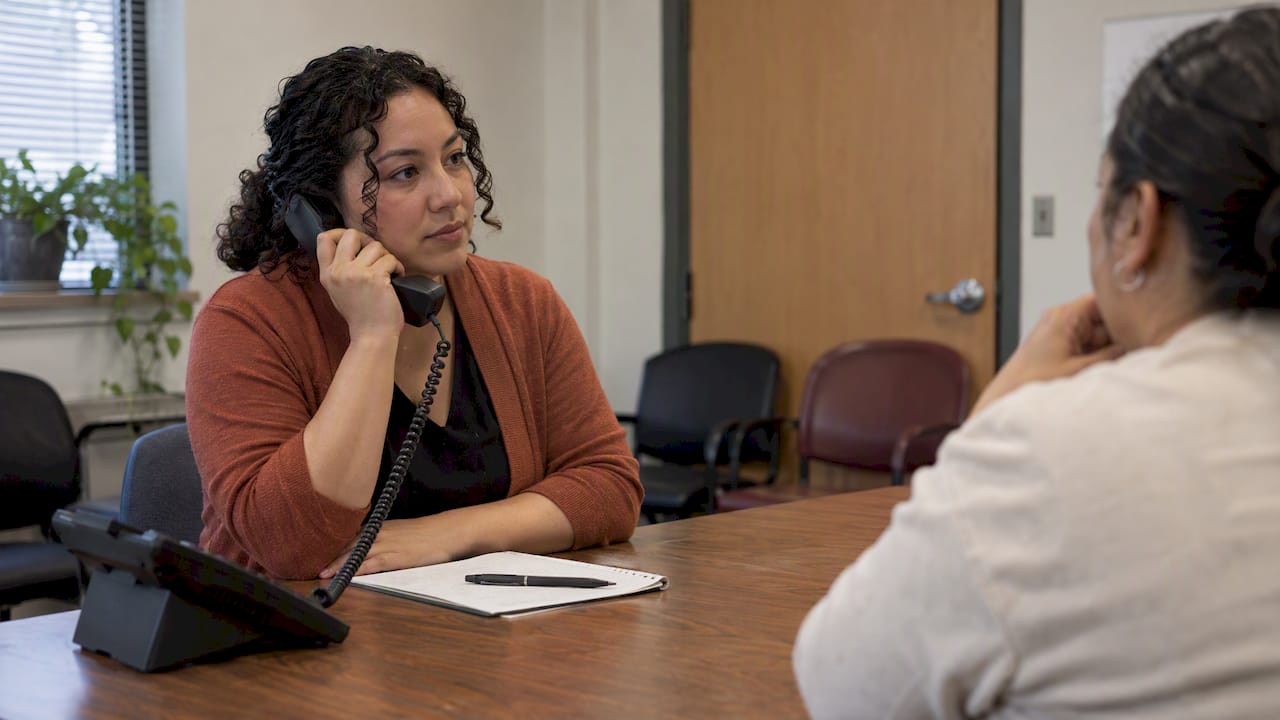
Teach three things first: a neutral formal greeting, a short verification script, and a clear rule for when to bring in a professional interpreter. Those three skills cover most of what a phone etiquette clinic needs to build. Diazluna and Francisco both offer accessible starting points for clinics that want ready-made scripts rather than building a training program from scratch.
TL;DR:
- Staff should verify caller identity using at least two identifiers like full name and date of birth before discussing any protected health information.
- Transfers and interpreter requests must be brief, clear, and follow a set script to avoid clinical details or confusion.
- Voicemail messages should contain only the clinic name and callback number, avoiding any clinical or appointment details to protect privacy.
- Bilingual systems with AI reception and a clear website can significantly reduce missed calls and improve scheduling rates for Spanish-speaking patients.
- Phone etiquette training must be prioritized as a key access measure, focusing on comprehension and correct workflows rather than just politeness or script recitation.
Table of Contents
- Standard Greetings and Openings for Clinic Calls
- Collecting Patient Information Without Overstepping HIPAA
- Scheduling, Transfers, and Bringing in an Interpreter
- Voicemail, Callbacks, and Message-Taking That Protect Privacy
- Cultural Humility and the Standards Behind Good Phone Practice
- Role-Play Drills That Build Real Phone Confidence
- How a Bilingual Digital Front Desk Reduces Lost Spanish Callers
- Why Phone Etiquette Training Is an Access Issue, Not a Politeness Issue
- Keeping Spanish Callers From Slipping Through the Cracks
- Sources
- FAQ
Standard Greetings and Openings for Clinic Calls
The opening line sets the register for the whole call. Clinics dealing with the public should default to formal Spanish, using “usted” instead of “tú,” because it signals respect regardless of the caller’s age or relationship to the practice. A neutral, professional greeting also protects staff from guessing wrong about a caller’s comfort level.
A workable clinic opener sounds like this: “Buenos días, consultorio del Doctor García, habla María. ¿En qué puedo ayudarle?” That single sentence names the clinic, gives the staff member’s name, and invites the reason for the call. For afternoon or evening calls, swap “buenos días” for “buenas tardes” or “buenas noches.”
Different call types call for small variations:
- New patients: “Bienvenido, ¿es la primera vez que nos visita?” opens the door to registration questions.
- Appointment confirmations: “Le llamo para confirmar su cita del [day] a las [time]” states the purpose immediately.
- Brief triage: “¿Puede decirme brevemente el motivo de su llamada?” keeps the question open without inviting clinical detail the receptionist shouldn’t collect.
Pronunciation trips up even confident learners in two places: names and numbers. Spanish vowels are shorter and more consistent than English vowels, so a name like “Juan” should not stretch into two syllables. Numbers cause more errors than names, particularly the teens (dieciséis, diecisiete) and numbers that sound alike over a bad phone connection, such as “sesenta” (sixty) and “setenta” (seventy). Reading a phone number back digit by digit, rather than in pairs, reduces mistakes. A dental-focused set of phone scripts offers more call-type variations if a clinic wants a broader starting library.
Collecting Patient Information Without Overstepping HIPAA
Front-desk staff should collect identifying and scheduling information: full name, date of birth, phone number, and reason for the visit at a general level (“consulta de rutina” versus “seguimiento”). Clinical detail, such as symptoms, diagnoses, or medication changes, belongs to clinicians, not reception. Keeping that line clear protects the patient and the practice.
A short sequence covers most calls:
- Ask for the full name and spell it back: “¿Me puede deletrear su apellido, por favor?”
- Confirm the date of birth by repeating it: “Entonces, nació el 5 de marzo de 1990, ¿correcto?”
- Confirm a callback number the same way, digit by digit.
- Ask the general reason for the call without probing for symptoms.
- Summarize back what was collected before ending that part of the call.
Verification scripts should confirm identity without exposing protected health information to the wrong person. A safe pattern asks the caller to state two identifiers, such as full name and date of birth, before any account information is discussed, rather than reading information aloud and asking the caller to confirm it. Guidance aimed at clinicians recommends exactly this approach: verify first, disclose only what is necessary, and avoid volunteering details the caller hasn’t already provided, since HIPAA-focused guidance for clinicians treats minimum-necessary disclosure as a standard practice, not an optional precaution.
Escalation triggers matter as much as the scripts themselves. Transfer the call or bring in an interpreter when the caller describes symptoms that need clinical judgment, when the conversation moves faster than the receptionist’s Spanish can track, or when the caller sounds distressed or confused by the exchange.
Pro Tip: Keep a laminated card at the front desk with the verification sequence and three interpreter-request phrases. Muscle memory beats recall under pressure.
Scheduling, Transfers, and Bringing in an Interpreter
Booking calls need precise, repeatable language. A solid confirmation line states the day, date, and time together: “Su cita es el martes 14 de abril a las tres de la tarde.” Asking for a preferred contact method up front, “¿Prefiere que le llamemos o le enviemos un mensaje de texto?”, avoids a second call later.
Transfers should be brief and give the next person just enough context to pick up smoothly:
- State the reason for the transfer in one sentence before connecting the call.
- Give the caller’s name and callback number to the next staff member in case the call drops.
- Tell the caller who they’re being transferred to and why, so the handoff doesn’t feel abrupt.
- Avoid repeating clinical details the caller has already shared; pass them along privately instead.
Introducing a professional medical interpreter follows a specific order: identify the need, ask the caller’s consent, then bring the interpreter on. A workable script: “Voy a incluir a un intérprete profesional para asegurarme de que toda la información sea clara, ¿está de acuerdo?” Only after the caller agrees should the interpreter join the line and introduce themselves directly to the patient.
Staff-led Spanish should stop the moment a call moves into clinical explanation, informed consent, or anything involving a diagnosis or treatment plan. Front-desk Spanish is built for scheduling, histories intake, and general navigation, not for explaining medical findings. A syllabus for a medical Spanish elective draws this same line, separating administrative language goals from clinical communication goals, which is a useful boundary for any clinic building its own training.
Voicemail, Callbacks, and Message-Taking That Protect Privacy
Voicemail is where privacy mistakes happen most easily, because the message sits on a system the clinic doesn’t fully control. The safe pattern names the clinic, gives a callback number, and says nothing about why the patient is being contacted.
A minimum-necessary voicemail script: “Buenos días, le llamamos del consultorio del Doctor García. Por favor devuelva la llamada al [number] cuando pueda. Gracias.” No mention of test results, appointment reasons, or account status.
- Never state a diagnosis, medication name, or test result on voicemail, even in general terms.
- Avoid phrases like “sobre sus resultados” (about your results), which imply clinical content exists.
- Log the urgency level and preferred callback channel (call or text) every time a message is taken.
- For anything urgent or unclear, escalate immediately rather than leaving a callback message and waiting.
An escalation line for urgent voicemails: “Es importante que nos regrese la llamada lo antes posible” communicates urgency without disclosing why. Clinics handling written communication and stored messages alongside voicemail should also look at how they manage documentation retention and access; HIPAA-compliant document management options cover that adjacent problem well.
Pro Tip: Treat every voicemail script as if the wrong person might hear it first, because sometimes they do.
Cultural Humility and the Standards Behind Good Phone Practice
Front-desk phone etiquette isn’t just about sounding polite. It sits inside a broader set of expectations for language access. The Enhanced National CLAS Standards call for care that is effective, understandable, and respectful in a patient’s preferred language, and they require that anyone providing language assistance actually be competent to do it. That last point rules out pulling a bilingual staff member into clinical interpretation just because they speak Spanish at home.
A few practices keep a clinic aligned with that standard:
- Offer language assistance at no cost and say so clearly, rather than waiting for the caller to ask.
- Reserve untrained bilingual staff for administrative Spanish only, never clinical interpretation.
- Post and state available language options both verbally on calls and in writing on intake materials.
- Track whether callers actually understood their next steps, not just whether the script was followed.
The standard worth remembering: the Enhanced National CLAS Standards frame language access as a quality measure tied to patient outcomes, not a courtesy add-on. That reframes training success: a script recited perfectly means little if the patient hangs up unsure when their appointment is. A readability audit checklist offers a practical way to check comprehension rather than just accuracy.
Role-Play Drills That Build Real Phone Confidence
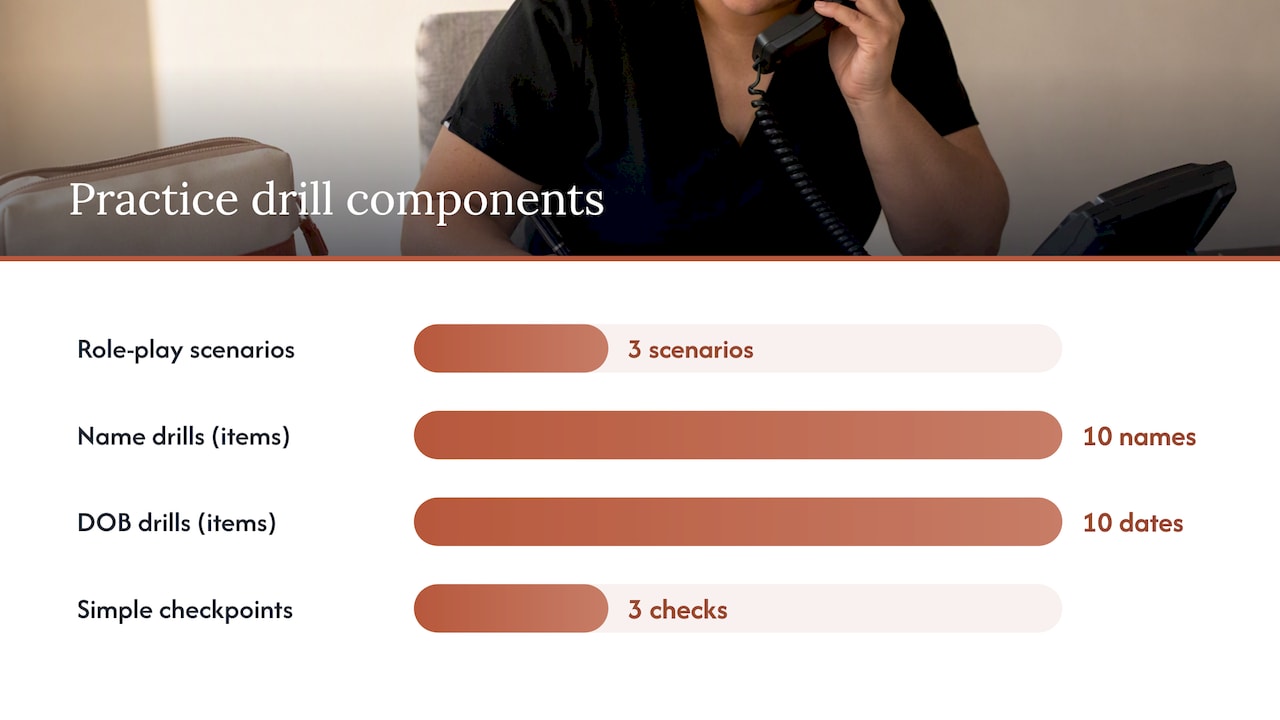
Scripts only stick when staff practice them out loud, under mild pressure, with feedback. Three scenarios cover most of what a clinic needs.
- New patient intake call: the trainee greets a caller, collects and spells back a name, confirms a date of birth, and books a first appointment, with the trainer playing a caller who mumbles or speaks quickly.
- Confused or upset caller: the trainee handles a caller who’s frustrated about a scheduling mix-up, practicing calming language and a clean handoff to a supervisor if needed.
- Interpreter introduction: the trainee identifies a call that has moved beyond administrative Spanish, asks the caller’s consent for an interpreter, and brings a trainer playing the interpreter role onto the line.
Number and name drills should run separately from role-play. Pull ten common Spanish surnames and ten sample dates of birth, and have trainees spell and repeat each one back at a natural speaking pace. Interpreter simulation works best when the interpreter actor stays silent until the receptionist explicitly introduces them and asks for consent, which models the professional boundary correctly from the first practice run.
Simple checkpoints keep the drills measurable: did the trainee spell the name correctly on the first attempt, confirm the date of birth without error, and check comprehension before ending the call (“¿Lo entendió?” or “¿Quiere que lo repita?”). Workshops built around simulation and interpreter practice, rather than vocabulary memorization alone, show measurable gains in staff confidence: a 2024 study on medical interpreter training found statistically significant improvements in confidence and self-assessed skill after a two-hour workshop combining simulation, short lectures, and interpreter practice.
How a Bilingual Digital Front Desk Reduces Lost Spanish Callers
A useful applied example: some clinics now pair phone training with a bilingual digital front desk that combines a Spanish-and-English website, a 24/7 Spanish-speaking AI receptionist, and WhatsApp messaging, so calls that come in outside staffed hours don’t simply go unanswered. An AI receptionist built for medical Spanish patients illustrates how that kind of system fits into an existing clinic workflow rather than replacing it.
Clinics running this kind of setup should track a few outcome metrics:
- Missed-call rate before and after adding after-hours Spanish coverage.
- Scheduling conversion: how many Spanish-language calls end in a booked appointment.
- Caller comprehension, checked through short follow-up questions rather than assumed from a completed call.
An integrated system also gives training continuity: new staff can listen to how the automated receptionist handles common openings and verification steps as a live reference alongside the practice’s own script library.
Why Phone Etiquette Training Is an Access Issue, Not a Politeness Issue
I’ve watched clinics treat phone Spanish as a nice-to-have, something for staff who happen to be bilingual. That framing misses the point. A caller who can’t get a clear answer on the phone doesn’t file a complaint, they just don’t show up. Comprehension, not politeness, is the real measure of a good call.
Start small: one greeting, one verification script, one clear rule for calling in an interpreter. Build from there, and never let front-desk enthusiasm substitute for professional interpretation when a call turns clinical.
— Francisco
Keeping Spanish Callers From Slipping Through the Cracks
Clinics that lose Spanish-speaking callers usually lose them at the same points: no answer after hours, a rushed verification, or a handoff that never happens. Some bilingual front desk services pair a fully bilingual website with a 24/7 Spanish-and-English AI receptionist and WhatsApp messaging, so a call at 9 PM gets the same clear response as one at 9 AM.
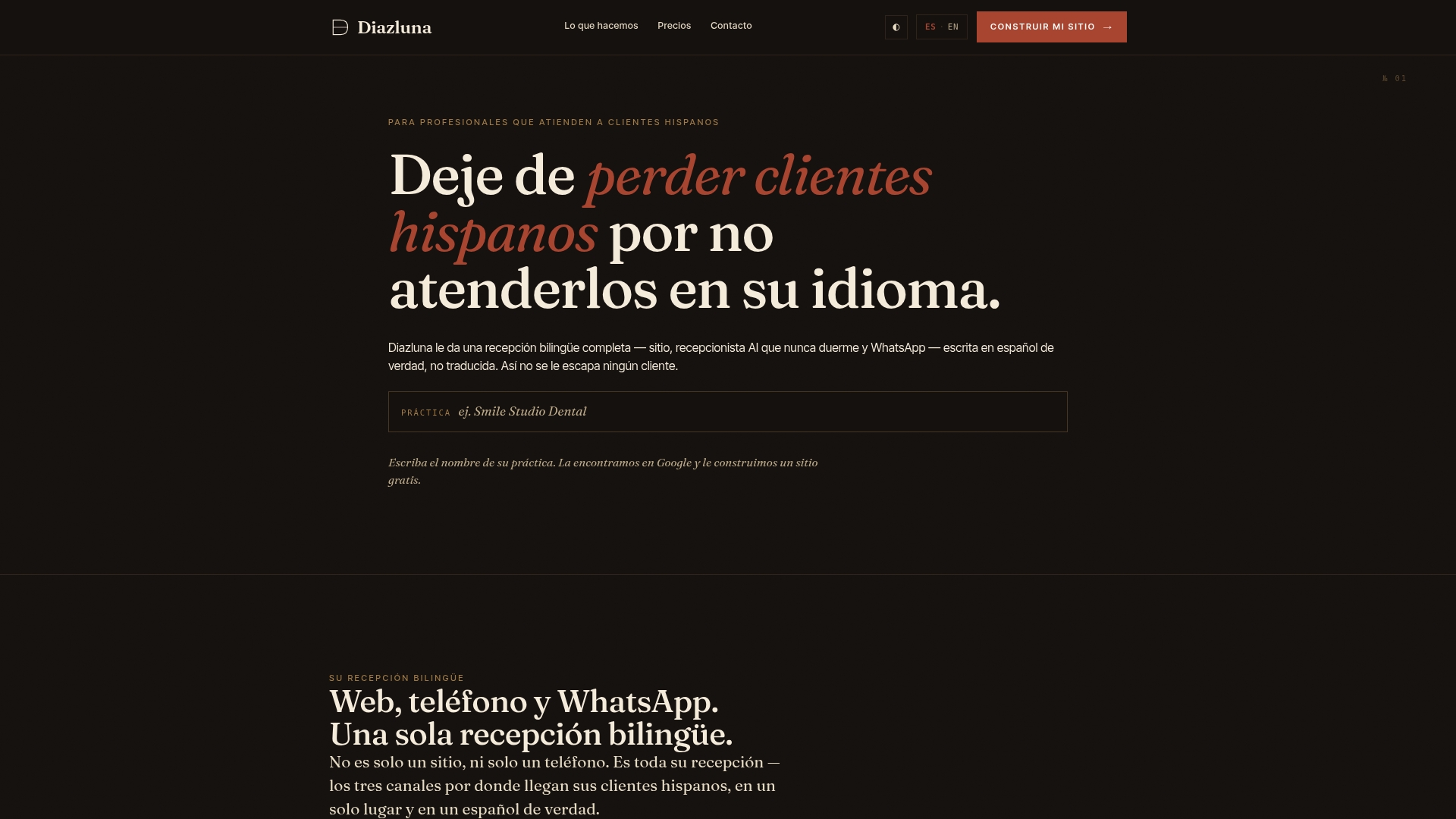
- A bilingual website that’s actually written for Spanish speakers, not machine-translated.
- An AI receptionist that manages calls, messages, and scheduling in both languages around the clock.
- WhatsApp integration so patients can follow up in the channel they already use.
Clinics that want to see how this fits their own call volume can review plans and pricing directly at Diazluna.
This article is general information, not a substitute for advice from a qualified doctor. Consult a qualified healthcare professional about your own circumstances before acting on anything here.
Sources
- Enhanced National CLAS Standards (Revised June 2025)
- Communicating effectively with limited English proficiency patients: incorporating training on working with medical interpreters in the undergraduate medical curriculum
- FCM 590: Medical Spanish | Syllabus | SS26
- HIPAA guidance for clinicians (overview)
FAQ
What are the 5 P’s of telephone etiquette?
Definitions of the “5 P’s” vary across training programs, but common versions include being prompt, polite, professional, personal, and prepared when answering a call. Clinics can adapt these into Spanish-specific habits, such as prompt greetings and prepared verification scripts.
What are the etiquette rules for using the phone in a medical office?
Medical office phone rules generally require verifying the caller’s identity before sharing information, using minimum-necessary disclosure, and keeping voicemail messages free of clinical detail, as outlined in HIPAA clinician guidance. Staff should also know when to transfer a call or bring in a professional interpreter rather than handling clinical content themselves.
What do Spanish speakers say when picking up the phone?
In many Spanish-speaking contexts, callers or receptionists answer with “¿Aló?”, “¿Bueno?”, or “¿Diga?” depending on the region, though a clinic setting typically uses a fuller formal greeting that names the practice and offers help. A clinic-appropriate version sounds like “Buenos días, consultorio del Doctor García, ¿en qué puedo ayudarle?”
What are the 7 P’s of phone etiquette?
Like the 5 P’s, the “7 P’s” framework isn’t a fixed industry standard and versions differ by trainer, often expanding on politeness, promptness, and professionalism with added ideas like patience and personalization. Clinics are better served focusing on measurable skills such as accurate verification and caller comprehension than memorizing a specific numbered list.
How can clinics measure if phone etiquette training worked?
The clearest measure is whether callers understood their next steps, such as when and where to show up, rather than whether staff recited a script correctly, an approach the Enhanced National CLAS Standards recommend. Tracking scheduling conversion and missed-call rates over time also shows whether training is translating into fewer lost patients.