September 7, 2026
5 Clinical Tasks: Shift Ready Medical Spanish Terms
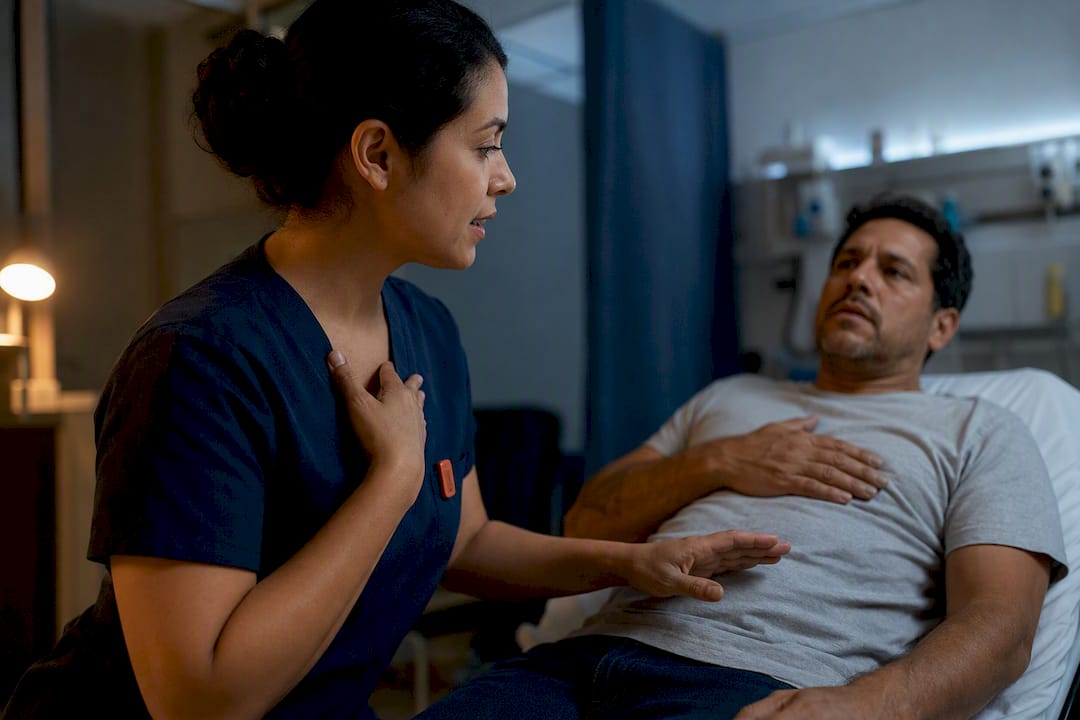
This guide organizes clinical Spanish by function: body systems and vitals, high-frequency intake and discharge phrases, pronunciation habits, and regional variants that trip up even experienced staff. Every phrase set is built for bedside use, not academic study. None of it replaces a certified medical interpreter when consent, diagnosis, or mental health status is on the line.
TL;DR:
- Most medication instructions must be clearly vocalized with precise timing and units to prevent errors that could send patients back to emergency care.
- Clinicians should master around eight to twelve short, high-frequency phrases for each clinical task rather than attempting extensive vocabularies.
- Certified medical interpreters are essential for legal, consent, mental health, or serious diagnoses, as standard Spanish phrases are insufficient for medicolegal conversations.
- Recognizing regional slang and varying patient vocabulary improves communication but should not overshadow consistent, formal language use and patient mirroring.
- Focused pronunciation practice and simplified, rapid commands help ensure effective emergency communication, even when language barriers are present.
Table of Contents
- Medical Spanish Terminology by Category
- What Are the Most Common Medical Spanish Phrases for Patient Care?
- How Do You Improve Medical Spanish Pronunciation?
- Do Spanish Medical Terms Change by Region?
- When Should You Call a Certified Medical Interpreter?
- Where Can You Find Medical Spanish Terminology Resources?
- Who Wrote This and How Does It Apply in Practice?
- Common Abbreviations and Acronyms in Medical Spanish
- Cultural Considerations in Medical Spanish Communication
- Handling Emergencies: Urgent Spanish Terminology That Matters
- A Clinician’s View on Learning Medical Spanish Realistically
- Turning Medical Spanish Phrases Into a Working Front Desk
- Sources
Medical Spanish Terminology by Category
Clinical Spanish sticks better when it’s grouped the way you actually use it, not alphabetized like a dictionary. The categories below cover what comes up most on a typical shift, drawn from the same structure used in the English-Spanish Medical Terminology Glossary, which organizes terms by exam section, symptoms, procedures, and medications.
Body systems and organs:
- Corazón (heart), pulmones (lungs), estómago (stomach), hígado (liver), riñones (kidneys)
- Piel (skin), huesos (bones), articulaciones (joints), sistema nervioso (nervous system)
Vital signs and measurements:
- Presión arterial (blood pressure), pulso (pulse), temperatura (temperature), frecuencia respiratoria (respiratory rate)
- ¿Cuánto pesa? (How much do you weigh?) and ¿Cuánto mide? (How tall are you?) cover the two intake questions nurses ask most.
Common symptoms and conditions:
- Dolor (pain), mareo (dizziness), nausea (nausea), fiebre (fever), tos (cough), Malta de aire (shortness of breath)
- Diabetes, presión alta (hypertension), asma (asthma), and infección (infection) come up constantly across specialties.
Medication categories and dosing phrases:
- Antibióticos (antibiotics), analgésicos (pain relievers), antiinflamatorios (anti-inflammatories), insulina (insulin)
- Dosing phrases patients need to hear correctly: dos veces al día (twice a day), cada ocho horas (every eight hours), con coming (with food), en arenas (on an empty stomach).
Medication phrases carry the highest stakes in this list. A missed “cada ocho horas” versus “cada ocho Dias” is the kind of error that lands a patient back in the emergency department. Say the number and the unit slowly, then have the patient repeat it back. Category-based vocabulary pages like Medicalspanish organize similar term sets with audio, which is worth bookmarking alongside a printed glossary for quick cross-reference.
What Are the Most Common Medical Spanish Phrases for Patient Care?
The phrases you actually need map to five clinical tasks: intake, pain assessment, allergy and medication review, instructions, and discharge. This encounter-based structure follows the same logic used in ClinicalIngo’s phrase guide for emergency nurses, which groups language by what’s happening in the room rather than by grammar topic.
- Intake: “¿Cuál es el motivo de su visita?” (What brings you in today?) / “¿Cuándo comenzó eso?” (When did this start?) / “¿Cómo se llama?” (What’s your name?)
- Pain assessment: “¿Done le duele?” (Where does it hurt?) / “¿Cómo describe el dolor, aged o Gordo?” (Is the pain sharp or dull?) / “En una escalade cero a died, ¿Que tan fuerte es el dolor?” (On a scale of zero to ten, how bad is the pain?) / “¿Qué lo empeora o lo major?” (What makes it worse or better?)
- Allergies and medications: “¿Es alérgico a algún medicamento?” (Are you allergic to any medication?) / “¿Qué medicinas toma actualmente?” (What medications are you currently taking?) / “¿Puede repetir el nombre del medicamento?” (Can you repeat the name of the medication?)
- Instructions and discharge: “Tome esta medicina dos veces al día” (Take this medicine twice a day) / “Regrese si tiene fiebre o el dolor empeora” (Come back if you have a fever or the pain gets worse) / “Su próxima cita es el…” (Your next appointment is on…)
Pro Tip: Keep every phrase under ten words and end with a yes/no or numeric answer whenever possible. Patients under stress process short, closed questions far faster than open ones, even in their first language.
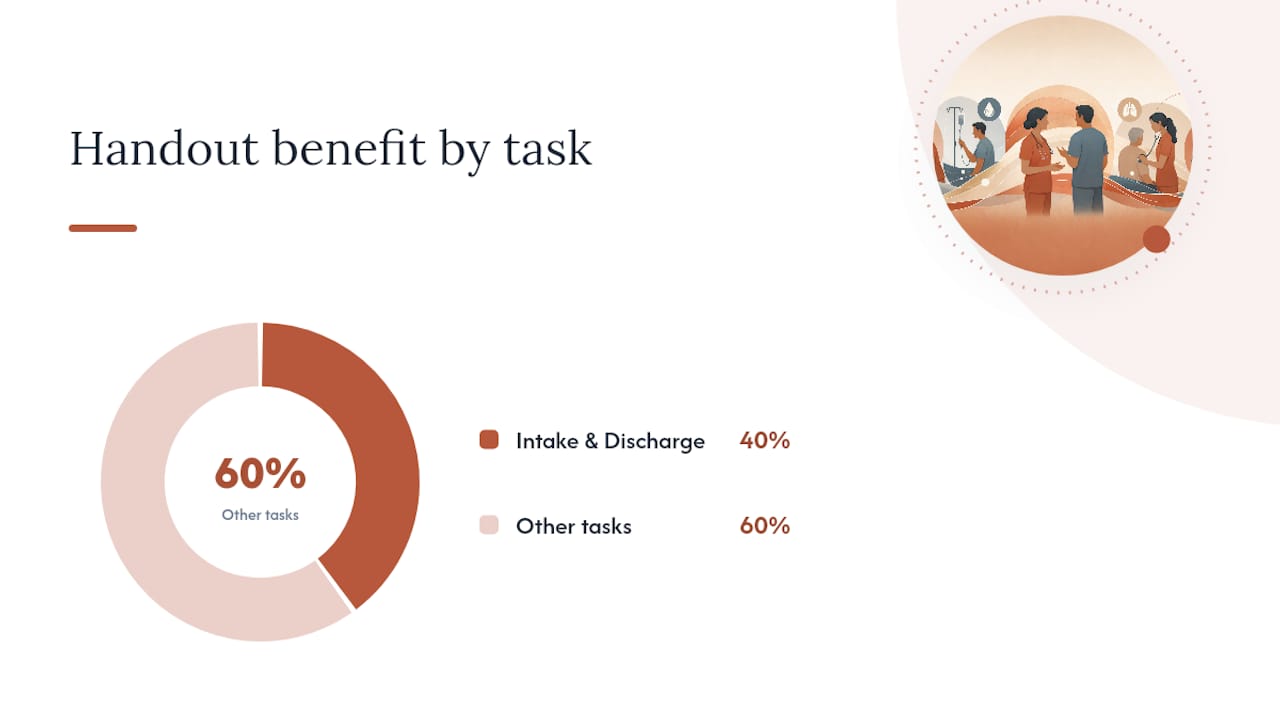
Intake and discharge phrases benefit most from a written backup. A one-page handout with these exact lines, translated once and reused every visit, cuts down on the improvised phrasing that causes misunderstandings.
How Do You Improve Medical Spanish Pronunciation?
Two sounds cause most of the confusion clinicians create without realizing it: the rolled r in words like dolor and the soft j sound in words like Jo (eye), which is nothing like the English “j.” Watch for false friends too. “Embarazada” means pregnant, not embarrassed, and “constipate” means having a cold, not constipation.
A five to ten minute daily routine works better than occasional long study sessions. Say five phrases from your discharge list out loud, record yourself, and compare against a native audio clip. Flashcard apps with spaced repetition and phrase audio, paired with printed phrase sheets like the ones in the ClinicalIngo emergency phrase guide, build retention faster than passive reading.
Do Spanish Medical Terms Change by Region?
Yes, and the differences show up constantly in triage. Some patients say presión for high blood pressure instead of presión alta; others use aseguranza as a folk variant of seguro médico (health insurance). Recognizing these patterns matters more than memorizing every regional term, since pediatric-focused glossaries confirm patients often use lay or folk vocabulary rather than clinical terms.
Default to formal usted with adult patients rather than tú, then mirror the patient’s own language as the conversation develops. When a term sounds too clinical, translate it: “anticoagulantes” becomes “medicina para que la Sanger no se le coagulate” (medicine so your blood doesn’t clot), which patients retain and follow far better. For deeper guidance on formal versus informal register, see why formal Spanish differs from informal Spanish.
When Should You Call a Certified Medical Interpreter?
Clinician Spanish covers routine intake, vitals, and basic instructions. It stops being appropriate the moment the conversation involves consent, a serious diagnosis, mental health, or anything with legal weight.
Call a certified interpreter for:
- Informed consent for procedures or surgery
- Delivering a new or serious diagnosis
- Mental health assessments or crisis intervention
- Any medicolegal conversation, including guardianship or end-of-life decisions
The quick rule: if it affects consent, diagnosis, or safety, get an interpreter. Provider guides consistently note that even solid phrase lists are not a substitute for a certified interpreter once the stakes rise. For facility-level policy on safety-critical communication, CDC’s Project Firstline offers infection-control training resources that translate well into structured Spanish-language protocols.
Where Can You Find Medical Spanish Terminology Resources?
A few sources are worth keeping on hand as printable or downloadable references:
- The English-Spanish Medical Terminology Glossary covers exam terms, symptoms, procedures, and medications in one downloadable PDF.
- ClinicalIngo’s 50 phrases for ED nurses includes pronunciation glosses and dialect notes, ideal as a laminated shift-pocket sheet.
- Medicalspanish offers category pages with audio for ongoing pronunciation practice.
- For checking whether your own patient materials read clearly in Spanish, a clinic audit checklist for Spanish readability walks through common gaps.
Who Wrote This and How Does It Apply in Practice?
This guide comes from Francisco, who covers bilingual clinical communication for Diazluna. The phrase categories here reflect what actually shows up in day-to-day intake and discharge conversations, not textbook Spanish. A front desk that already runs bilingual scheduling and messaging tends to catch fewer dropped appointments and cleaner intake data, simply because the same terminology gets used consistently call after call.
Common Abbreviations and Acronyms in Medical Spanish
Medical Spanish carries its own set of shorthand, and mixing up an English abbreviation with its Spanish equivalent causes real confusion on a chart or a verbal handoff.
Some translate directly with a different order: TA (tensión arterial) for blood pressure, FC (frecuencia cardiac) for heart rate, and FR (frecuencia respiratoria) for respiratory rate. Others carry entirely different letters than their English counterparts: Dx stays the same for diagnosis in both languages, but tx for treatment appears as tto. (tratamiento) in Spanish-language charting. Sx for symptoms often shows up as sínt. in shorthand notes.
A few more worth knowing: EKG becomes ECG (electrocardiograma) in most Spanish-language contexts, IV stays IV (intravenous), and ER becomes urgencies or salade emergencias depending on region. AM and PM function the same way they do in English, but many Spanish-speaking patients are more familiar with 24-hour time, so a discharge instruction reading “tome a las 20:00” avoids the ambiguity of “8:00 PM.”
When documentation crosses between English and Spanish-speaking staff, standardize on one abbreviation style per chart rather than mixing systems.
Cultural Considerations in Medical Spanish Communication
Language accuracy solves half the communication problem. The other half is cultural context, and it shows up in ways that have nothing to do with vocabulary.
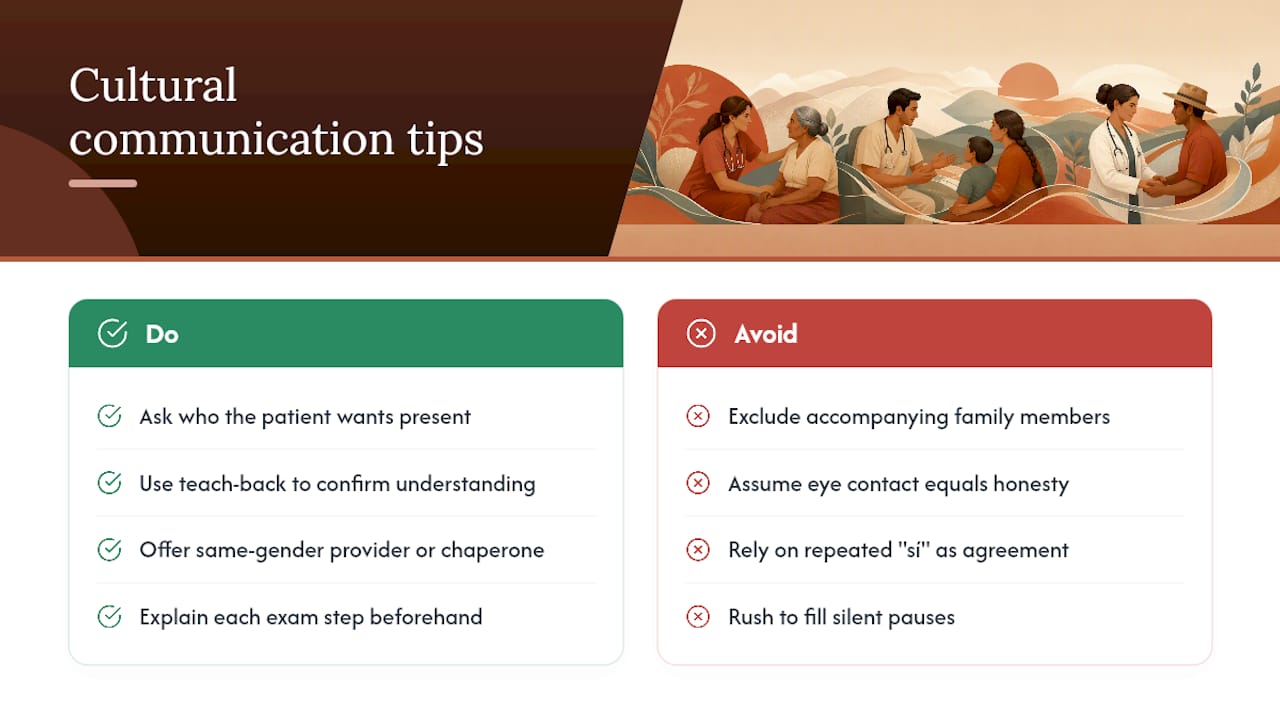
Family involvement is often expected, not optional. Many Hispanic patients bring a spouse, adult child, or extended family member into appointments, and excluding that person from the conversation, even when speaking directly to the patient, can read as dismissive. Ask who the patient wants present rather than assuming a one-on-one format is preferred.
Eye contact and directness vary by background too. Some patients avoid direct eye contact with authority figures as a sign of respect, not evasiveness or dishonesty. A patient who nods and says “sí” repeatedly may be being polite rather than confirming understanding. Confirm comprehension by asking the patient to repeat instructions in their own words instead of relying on a simple yes.
Modesty and gender preferences matter more in physical exams than many providers expect. When possible, offer a same-gender provider or chaperone, and explain each step of a physical exam before doing it. Silence after a diagnosis doesn’t always mean confusion. It can reflect a cultural pause for processing serious news, and rushing to fill that silence often does more harm than good.
Handling Emergencies: Urgent Spanish Terminology That Matters
Emergency situations compress the timeline for communication, and that’s exactly when precision matters most. A handful of phrases need to be second nature, not looked up.
“¡Necesito Audi!” (I need help!) and “Llame al 911” (Call 911) top the list for immediate escalation. For assessing consciousness and breathing fast: “¿Me such?” (Can you hear me?), “¿Puede respirar?” (Can you breathe?), and “¿Le duel eel echo?” (Does your chest hurt?) cover the first thirty seconds of a cardiac or respiratory event.
Allergic reactions move fast, so “¿Tiene una reaction America?” (Are you having an allergic reaction?) and “¿Tiene difficult para radar o respirar?” (Do you have trouble swallowing or breathing?) need to come out without hesitation. For stroke recognition, “¿Puede sourer?” (Can you smile?), “¿Puede levanter los dos brazos?” (Can you raise both arms?), and “¿Puede hangar claramente?” (Can you speak clearly?) mirror the FAST stroke assessment in plain, fast Spanish.
In a true emergency, grammar takes a back seat to speed and clarity. Short commands work better than full sentences: “¡No se Maéva!” (Don’t move!) or “¡Queues aqua!” (Stay here!) get compliance faster than a polite, complete request. If a certified interpreter isn’t immediately available and the situation is life-threatening, use the clearest phrase you know and call for interpreter support the moment the immediate crisis is stabilized, not after.
A Clinician’s View on Learning Medical Spanish Realistically
Pick eight to twelve phrases per scenario and role-play them until they’re automatic, not fifty. Most clinicians overreach: they build long sentences instead of short ones, translate idioms literally, or skip pronunciation practice entirely and wonder why patients look confused. Phrase competency isn’t about vocabulary size. It’s about a small set you can say correctly under pressure, paired with a clear plan to call an interpreter the moment a conversation moves past your comfort zone.
— Francisco
Turning Medical Spanish Phrases Into a Working Front Desk
Phrase lists solve the exam-room conversation. They don’t solve what happens before the patient ever reaches you: the missed call, the appointment request left unanswered because nobody on staff was confident enough in Spanish to call back. A bilingual digital front desk service is an alternative to hiring and training multilingual front-desk staff for practices serving Hispanic patients. It combines a bilingual website, a 24/7 AI receptionist fluent in Spanish and English, and WhatsApp messaging so intake, scheduling, and follow-up happen in whichever language the patient prefers.
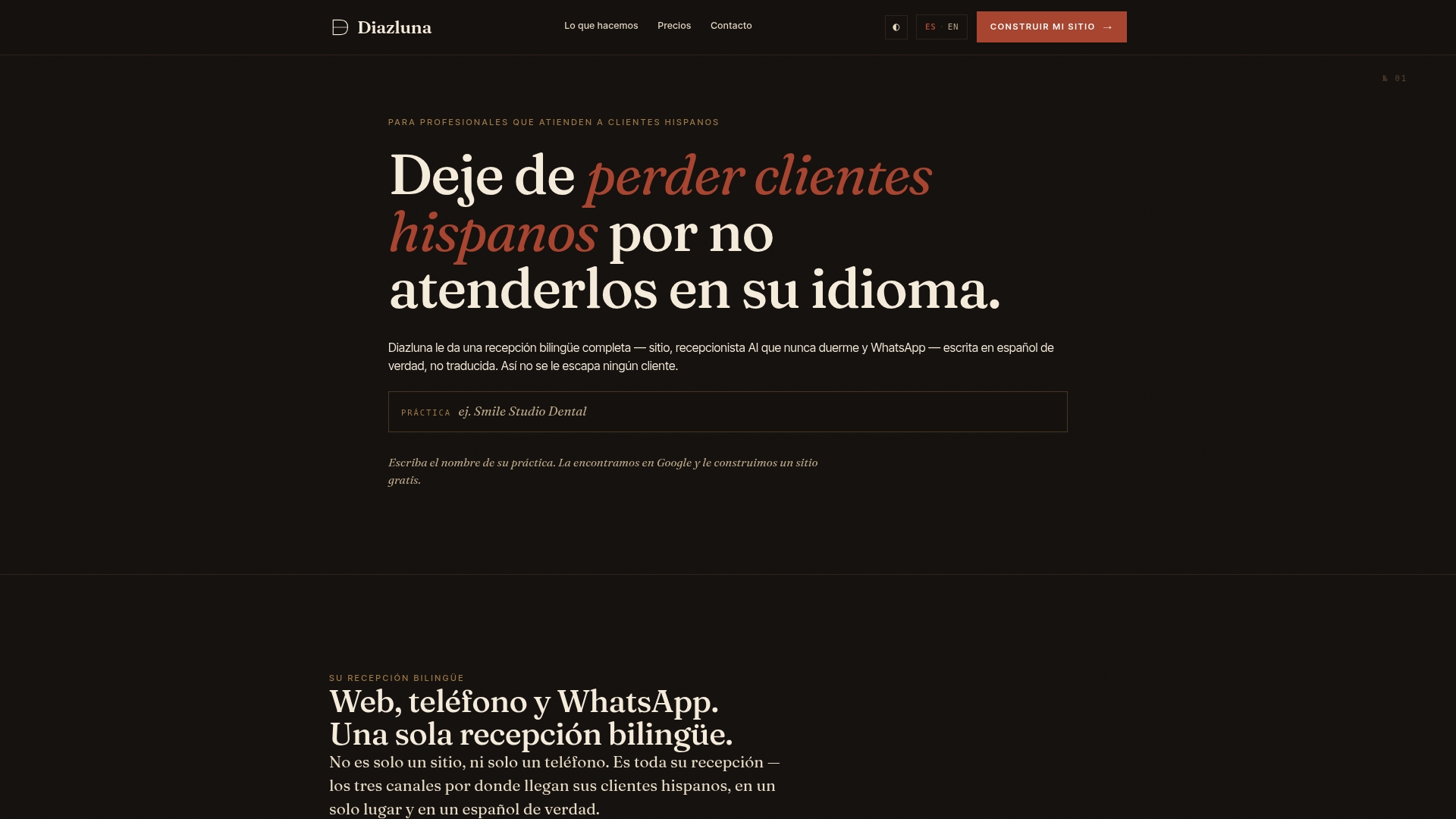
Practices using this kind of bilingual front desk typically see fewer patients lost simply because a call went to voicemail in the wrong language, and cleaner intake since questions get answered consistently every time, not just when a bilingual staffer happens to be at the desk. Pair it with a how a bilingual AI receptionist handles Spanish patient intake walkthrough to see how it fits into daily scheduling. If your waiting room signage also needs a Spanish-language pass, the patient privacy signage guidance from CrispSign is a useful reference for wording and placement. To see how the setup would work for your own practice, visit Diazluna’s bilingual front desk page and check what a working setup looks like for your patient volume.
Sources
- English-Spanish Medical Terminology Glossary (California / CMHI)
- 50 Spanish phrases every ED nurse should know (ClinicalIngo PDF)
- Project Firstline — CDC
- Medical Spanish terminology commonly used in pediatrics (LSUHSC PDF)
- 35 essential medical Spanish phrases (MedTreks)