September 3, 2026
Track Spanish Callers for Practices With Diazluna in 4 Weeks
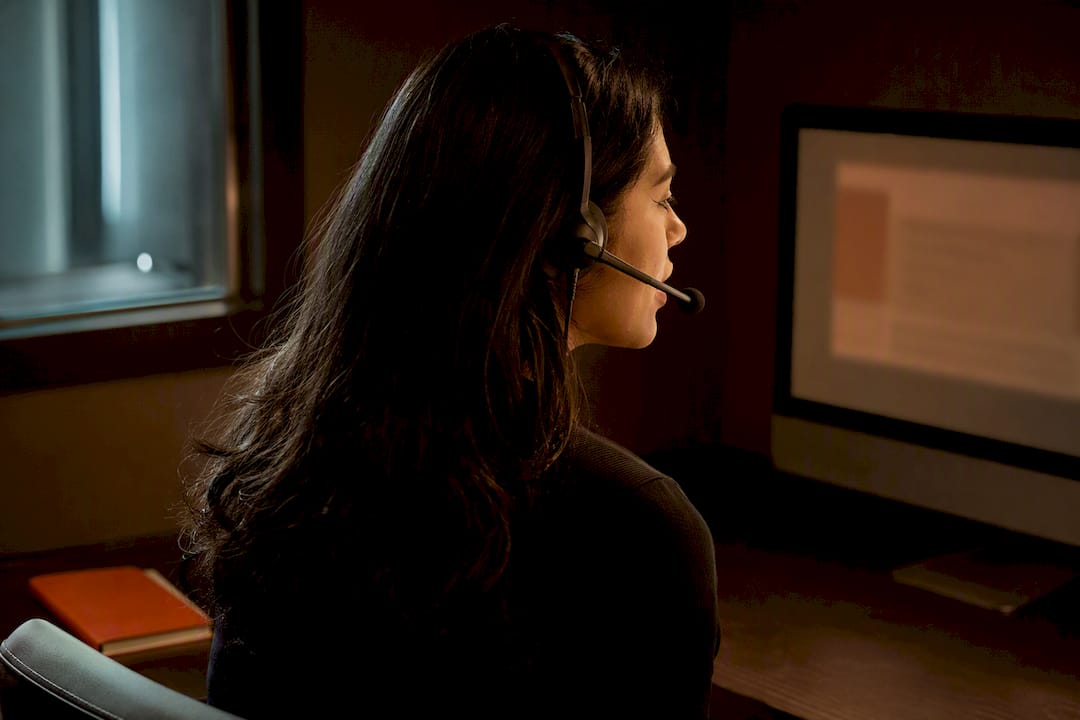
A bilingual digital front desk, combining an optimized Spanish and English website, a 24/7 AI receptionist, and WhatsApp, is the practical way to capture and convert Spanish-speaking marketing calls. Practices that build this pipeline report meaningfully fewer lost inquiries. Diazluna packages all three pieces into one system worth evaluating before you build anything from scratch.
TL;DR:
- Using a fully integrated bilingual website, AI receptionist, WhatsApp, and CRM tagging system significantly reduces lost Spanish-speaking inquiries and increases appointment conversions.
- Building an effective pipeline requires language detection at contact and routing through translation APIs, with proper storage of original and translated texts in the CRM.
- Launching a bilingual system effectively involves auditing call data, selecting compatible tools, training domain-specific AI, and testing around 100 calls before full deployment.
- Key metrics to track include containment rate, escalation accuracy, Spanish appointment conversion, and precise channel attribution to measure system performance.
- Failures often occur due to bottleneck staff, inconsistent messaging across channels, or neglecting text channels, emphasizing the importance of tone, consistency, and cultural nuances in scripting.
Table of Contents
- What Does a Bilingual Digital Front Desk Do for Spanish Marketing Calls?
- How Do You Build the Intake and Routing Workflow?
- What Belongs on a 2 to 4 Week Launch Checklist?
- Which Metrics Prove the Pipeline Is Actually Working?
- Where Do Bilingual Call Systems Usually Break?
- Why Tone Matters More Than the Words You Choose
- See How Diazluna Builds This for You
- Sources
What Does a Bilingual Digital Front Desk Do for Spanish Marketing Calls?
Every dollar spent driving Spanish-speaking callers to your practice gets wasted the moment that caller hits voicemail, a confusing menu, or a receptionist who can’t finish the conversation in their language. A bilingual digital front desk closes that gap with four connected pieces working together.
- Bilingual website: A Spanish version of your site that mirrors the English one, not a machine-translated afterthought, so paid and organic traffic lands somewhere the caller can actually read.
- 24/7 AI receptionist: Detects the caller’s language automatically, holds a full scheduling conversation in Spanish, and logs a transcript for review, cutting after-hours abandonment that would otherwise go straight to a competitor.
- WhatsApp integration: Meets Spanish-dominant callers on the channel they already use daily for confirmations and quick questions.
- CRM tagging: Writes both the original Spanish text and an English summary into the same record, so no detail gets lost in translation and staff can still work the file.
The distinction between translation and localization matters more than most practices assume. A browser widget that swaps words word-for-word produces stiff, sometimes clinically wrong phrasing that a native Spanish speaker notices instantly. A caller who senses they are talking to a bad translation, human or automated, tends to hang up rather than correct it.
How Do You Build the Intake and Routing Workflow?
The mechanics behind a working pipeline are straightforward once you see them laid out. The pattern below is the one recommended in Spanish-language intake playbooks, adapted for phone-first practices.
- Detect language at first contact. Use a language field on your intake form or an auto-detect header on your phone system so every lead carries a language tag from second one.
- Route through a translation layer. A webhook sends the raw input to a translation API (DeepL and Google Translate both work; DeepL tends to produce more natural phrasing for conversational Spanish). If you don’t have engineering resources, a Zapier automation connecting your form to the translation API and your CRM gets you most of the way there in an afternoon.
- Write bilingual fields to the CRM. Store the original Spanish text and the translated summary in separate fields on the same record, never overwriting one with the other.
- Route to a bilingual queue or the AI receptionist. The AI receptionist picks up scheduling and routine questions immediately; anything flagged urgent escalates to a bilingual staff queue with an alert, not a single person’s phone.
- Trigger Spanish-language follow-ups. Email, SMS, and WhatsApp sequences fire automatically once the language tag is set, so nothing downstream reverts to English by default.
Integration touchpoints usually span your CRM, your calendar or EHR system, and your SMS/WhatsApp provider. A properly configured AI receptionist commonly goes live in two to four weeks, covering discovery, training on your practice’s vocabulary, integration testing, and a soft launch. The full pipeline, website plus receptionist plus WhatsApp plus CRM tagging, typically takes about a month end to end.
Pro Tip: Keep the original Spanish text visible to your English-speaking staff in the CRM, even after translation. Nuance gets lost in summary, and a biller or scheduler reviewing the raw text later can catch details a translation smoothed over.
What Belongs on a 2 to 4 Week Launch Checklist?
Treat the first sprint as a controlled rollout, not a full rebuild. Here’s the order that gets a practice live fastest without breaking anything downstream.
- Audit your current call mix. Pull the last 90 days of call logs and tag what share is Spanish-dominant, what the top five call intents are (scheduling, billing, urgent care, general questions, insurance), and where those calls currently drop off.
- Pick your translation and CRM stack. Confirm your CRM supports custom language-tagged fields, and decide between DeepL and Google Translate based on which handles your specialty’s terminology better.
- Build language-tagged intake forms. Add an explicit language selector or auto-detect logic to every web form, not just the contact page.
- Train the AI receptionist on practice-specific vocabulary. Generic Spanish handles greetings fine; it stumbles on insurance terms, procedure names, and legal phrasing specific to your field. Vertical, practice-trained AI agents consistently outperform generic voice models on this kind of domain-specific intake.
- Set bilingual staff queues, not a single point of contact. Round-robin assignments with escalation alerts prevent one bilingual employee’s sick day from becoming a service outage.
- Test the first 100 calls before calling it done. Monitor transcripts closely during this window and adjust phrasing, escalation triggers, and hold messaging based on what actually happens, not what you assumed would happen.
Skipping the audit step is the most common shortcut practices regret. Without knowing your actual intent mix, you’ll train the AI receptionist on assumptions instead of your real callers. If your practice serves attorneys’ clients specifically, a Spanish legal digital front desk setup differs slightly from a medical one mainly in the vocabulary and escalation rules, not the underlying pipeline.
Which Metrics Prove the Pipeline Is Actually Working?
Call volume alone tells you almost nothing. The metrics that matter are the ones that isolate what happened to Spanish-specific traffic once it reached your system.
- Containment (capture) rate: The percentage of Spanish calls the AI receptionist handles fully without human escalation.
- Escalation accuracy: How often urgent cases get flagged and routed correctly versus missed or over-flagged.
- Booked-appointment conversion: The share of Spanish calls that convert to a scheduled visit, tracked separately from your English conversion rate.
- Channel attribution: UTM parameters combined with a language tag and a link to the call transcript, so a Spanish caller from a Facebook ad can be traced all the way to a booked appointment.
By the Numbers: Practices calculating ROI on multilingual capture systems find the recovered revenue from previously lost Spanish calls often outweighs the platform cost within the first few months, particularly when the non-English caller share and prior lost-call rate were both high.
Review these numbers weekly for the first month, then move to a monthly cadence once containment rate stabilizes. A dashboard tracking just those four numbers beats a dozen vanity metrics nobody checks.
Where Do Bilingual Call Systems Usually Break?
Most failures trace back to three repeatable mistakes, and each has a specific fix.
- One bilingual staffer becomes the bottleneck. When that person is out sick or on another call, Spanish callers get voicemail. Fix it with queue-based routing and AI capture as the first responder, escalating only when a human is genuinely needed.
- Only the first touchpoint gets translated. A Spanish intake form followed by English confirmation emails and English SMS reminders undoes the good first impression. Consistency across the entire funnel, not just the first message, is what actually drives conversion.
- SMS and WhatsApp get treated as optional. Spanish-dominant callers frequently prefer text-based confirmation over a phone callback; leaving those channels out drops your show rate.
Pro Tip: Have a native Spanish speaker, not a translation tool, read your AI receptionist’s scripts out loud before launch. Phrasing that reads fine on paper sometimes sounds stilted or overly formal once spoken.
Why Tone Matters More Than the Words You Choose
Tone breaks more Spanish-language conversions than vocabulary ever does. A script that’s grammatically perfect but stiff reads as cold, and callers notice within the first sentence. Three adjustments consistently help: swap formal “usted” phrasing for warmer, regionally neutral language unless your patient base skews formal; shorten sentences so the AI receptionist doesn’t sound like it’s reading a legal disclaimer; and add a brief acknowledgment phrase before transferring or escalating, since silence during a transfer reads as rudeness in Spanish-language service culture more than it does in English.
QA transcripts weekly during the first month, then monthly after that, listening specifically for phrasing that sounds accurate but unnatural. Refresh scripts whenever you notice callers repeating themselves or asking the AI to clarify, since that’s usually a phrasing problem, not a comprehension one. [Case studies and testimonials from practices further along this process are worth reviewing before you finalize your own scripts.]
— Francisco
See How Diazluna Builds This for You
Everything covered above, the bilingual site, the AI receptionist, the WhatsApp integration, the CRM tagging, is exactly what Diazluna builds for practices in one package instead of three separate vendor contracts. Practices using this setup report a measurable drop in client loss, and new sites typically get indexed by Google within 24 hours of launch.
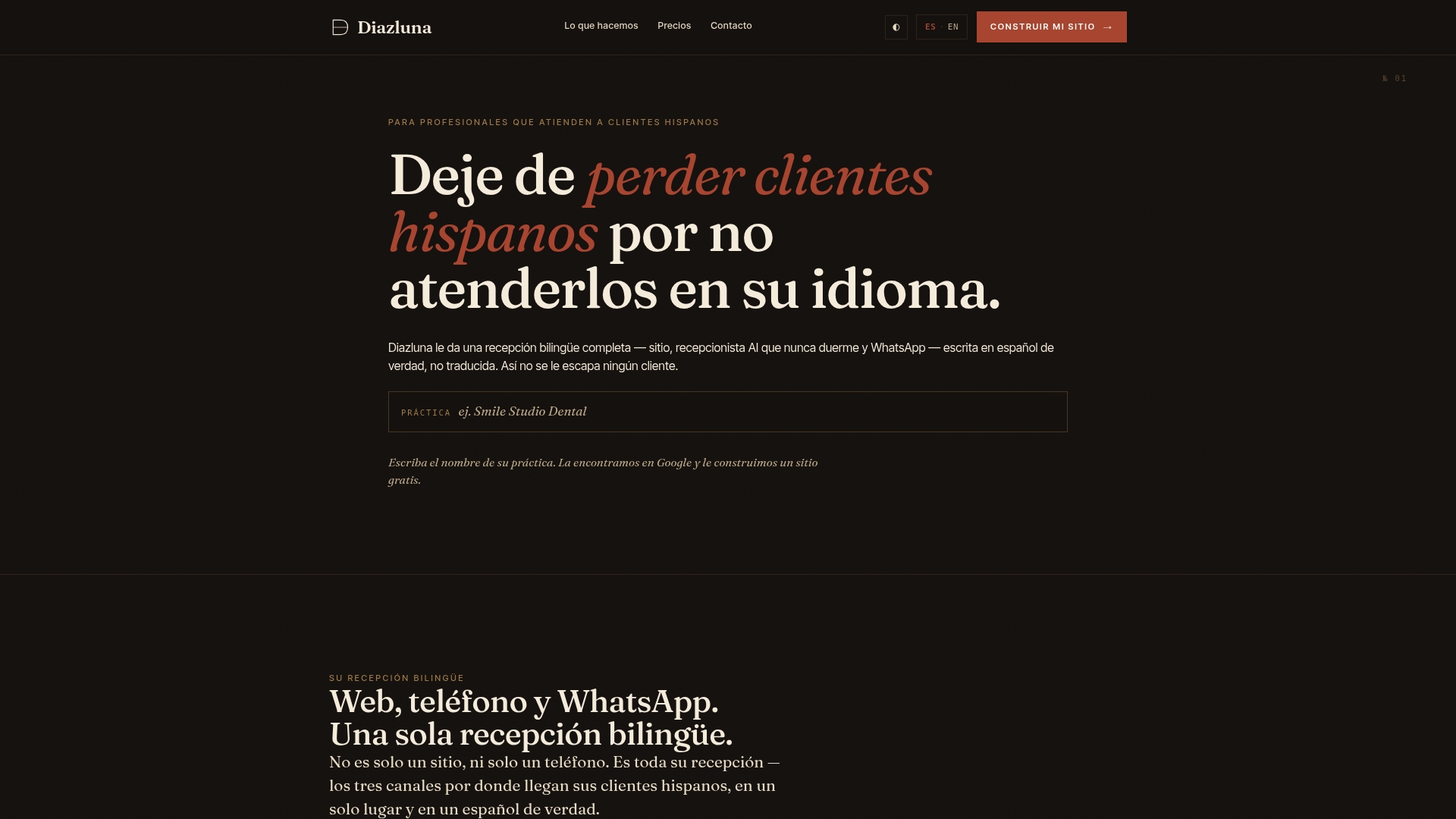
Instead of stitching together a translation API, a scheduling tool, and a texting platform yourself, Diazluna delivers a working bilingual AI receptionist already trained to handle scheduling, urgent-case escalation, and follow-up in natural Spanish from day one. Attorneys serving Spanish-speaking clients can see how the same bilingual front desk applies to legal intake specifically. If you’re ready to stop guessing whether your Spanish callers are converting, book a demo and see the pipeline running on your own call flow before you commit to anything.
Sources
- Replace Manual Intake for Spanish-Speaking Law Firm Leads 2026
- Bilingual AI Receptionist for Healthcare: How It Works and Why Your Practice Needs One
- ROI of a Multilingual AI Receptionist: 57+ Languages, One
- Why Your Bilingual Patients Hang Up (And How Voice AI Fixes It) | Pretty Good AI