October 26, 2026
Spanish Legal Emergency Page: What to Include and Say
A Spanish legal emergency page is a single page, written in natural Spanish, that tells a frightened person what to do in the first minutes of a legal crisis and gives them a way to reach your firm right now. It is not a translated contact form. It names the situation (an arrest, an ICE detention, a protective order, a car accident), uses the phrases a client would actually say, and sends them to a phone line, a WhatsApp chat or a human who answers in Spanish at 2 a.m.
This guide is for law firms, and for medical and dental practices, that serve Hispanic clients. It covers the vocabulary, the public resources that you can point people to, and how to structure the page so it works.
TL;DR
- Build the page around the moment of crisis: short sentences, formal usted commands, one clear action at the top, and a phone and WhatsApp option that works after hours.
- Teach the basics correctly: “¡Es una emergencia!” for urgency, urgencias for the emergency department, and the rule that a 911 caller should state the emergency and language in English so an interpreter can be added.
- Point to public help that exists: 211 for local services, free interpreters at federally funded legal aid offices, and court interpreters in federal proceedings.
- Do not machine-translate. Human-reviewed Spanish with a formal tone is what keeps a scared caller on the line.
- Answer fast: an after-hours Spanish intake path matters more than any wording on the page.
Table of Contents
- Who searches for this, and what they need
- The core Spanish vocabulary for a crisis page
- Write commands in the formal register
- What to tell visitors about calling 911
- Public help you can point people to
- A note on dialects and indigenous languages
- How to structure the page
- The part the page cannot do alone: answering
- Perspective: why we treat this page as a front desk, not a translation
- What this looks like with Diazluna
- A checklist before you publish
- FAQ
- Sources
Who searches for this, and what they need
The query “spanish legal emergencies page” pulls results that are mostly vocabulary lists and phrasebooks: how to say “emergency,” how to ask for an ambulance, flashcards. That tells you something. People are looking for words first. A Spanish-speaking person in trouble, or the relative who is helping them, wants to know what to say and who to call. A practice owner wants to know what such a page should contain.
So a good page does two jobs. It gives the visitor the exact words and the next step, and it gives your firm the intake data it needs: name, phone number, language, type of problem, and how urgent it is.
The core Spanish vocabulary for a crisis page
Start with the words your visitors will recognize at a glance. The U.S. embassy’s emergency phrase sheet gives “¡Es una emergencia!” for “It’s an emergency!” Put it, or a close variant, in the first line of the page.
For the medical side, a dictionary lists urgencias as the Spanish for “emergency department,” and sala de urgencias for an emergency ward. In many Latin American countries you will also hear sala de emergencias or emergencias, and in Spain urgencias is the standard hospital term. A practice serving a mixed community can use urgencias as the main word and add emergencias in parentheses.
A short working list for a legal page:
| English | Spanish | Where to use it |
|---|---|---|
| It’s an emergency | Es una emergencia | Page headline |
| I need a lawyer now | Necesito un abogado ahora | Call and chat buttons |
| I was arrested | Fui arrestado / Fue arrestado un familiar | Situation menu |
| Someone was detained by immigration | Detuvieron a alguien por inmigración | Situation menu |
| I was in an accident | Tuve un accidente | Situation menu |
| I have a court date | Tengo una cita en la corte | Situation menu |
| I need an interpreter | Necesito un intérprete | Intake form |
| Call us 24 hours a day | Llámenos las 24 horas | Header |
Do not stop at a glossary. Ask a native Spanish speaker with legal knowledge to review each line, because a literal translation of a legal term often means something else in a client’s home country. Our own piece on why formal and informal Spanish differ explains why this matters for trust.
Write commands in the formal register
In a crisis you give instructions: stay calm, call this number, write down the officer’s name. In Spanish those commands have a formal form (usted) and an informal one (tú). Guidance on emergency Spanish recommends usted commands in professional settings because they sound polite and encourage cooperation.
On your page, that means:
- “Llame ahora” and not “Llama ahora.”
- “No firme nada sin hablar con un abogado” and not “No firmes nada.”
- “Anote el nombre del oficial” and not “Anota…”
A formal tone signals respect, and respect is what a stressed family looks for in a firm they have never met. Medical teams use the same approach: field guides for responders list lines such as “¿Qué pasó?” and “La ayuda viene en camino”, short and direct, and you can borrow that rhythm.
What to tell visitors about calling 911
Your page is not a replacement for 911, and it should say so in its first screen: if someone is in immediate danger, call 911. Then explain in Spanish how the call works, because many people are afraid they will not be understood.
Seattle’s 911 center advises that callers who need interpretation should say in English what type of emergency it is and what language they speak, after which the call taker brings an interpreter onto the line. You can turn that into a boxed instruction in Spanish:
Llame al 911. Diga en inglés: “Emergency” y el tipo de emergencia (“fire,” “medical,” “police”) y después “Spanish.” Espere en la línea. Un intérprete se unirá a la llamada.
Procedures differ by county, so avoid promising that every center works identically. The federal 911 site notes that many centers use protocols with set questions to dispatch responders, and that callers should answer them and follow the call taker’s instructions. A line telling visitors to stay on the phone and answer every question helps them more than any glossary.
Public help you can point people to
A legal emergency page earns trust when it is useful even to people who will never hire you. Three resources are worth naming.
211 for local services
In the United States, 211 connects callers with local organizations that offer food, shelter, legal advice, help with bills, mental-health support and disaster assistance, and many operators speak Spanish. It is a good fallback for people whose problem you cannot take, such as a matter outside your practice area or county.
Free interpreters at legal aid offices
Legal aid offices that receive federal funding must provide language access services, including free interpreters, to people with limited English proficiency. The same page explains that a person who is refused those services at a legal office or government agency can file a complaint with the U.S. Department of Justice Civil Rights Division. The Justice Department’s own guidance describes how Title VI protects limited English proficient persons from national origin discrimination by recipients of federal funds. A short Spanish paragraph on these rights is a real service to visitors.
Court interpreters
In federal proceedings brought by the United States, the Court Interpreters Act provides for interpreters for people who speak only or mainly a language other than English. The same court guide says certified interpreters are recognized in federal courts for Spanish, Haitian Creole and Navajo, and that qualified interpreters may be used when certified ones are not available. State courts have their own rules, so tell visitors to ask the clerk or their lawyer for an interpreter and to do it early.
Families dealing with an arrest often ask the same thing about the first hearing. A plain-language explainer on how interpreters help in the bail process is a useful thing to link from the “someone was arrested” section of the page.
A note on dialects and indigenous languages
Spanish is not one voice. A word for “emergency room” or “ticket” can differ between Mexico, Central America, the Caribbean and Spain. Pick the most widely understood term, and add the regional alternative when it differs.
Some clients do not speak Spanish well at all. The American Bar Association notes that attorneys should flag cases that need translation services early, because some children from Central America primarily speak indigenous languages and understand Spanish poorly. Put an intake question on your form: “¿Qué idioma habla mejor?” and leave room for an answer other than Spanish or English.
How to structure the page
The layout is the difference between a page that converts and a page that looks thoughtful. Aim for this order:
- Headline and one-line promise. “¿Emergencia legal? Llámenos ahora. Hablamos español las 24 horas.” Say only what you can deliver.
- Three action buttons. Call, WhatsApp, and a short form. Many Hispanic clients prefer messaging, so WhatsApp should not be hidden.
- A “911 first” line for immediate danger.
- Situation menu. Arrest, immigration detention, accident, domestic violence or protective order, workplace injury, eviction. Each opens a short block: what to do now, what not to do, what we will ask you.
- Rights and resources. The interpreter and 211 material above.
- What happens next. A realistic timeline of the first call: who answers, what you will ask, when an attorney calls back.
- Privacy reassurance. Tell visitors you will not ask for immigration status in the first message unless it is needed to help them, only if that is true for your firm.
Keep every block short. People on a phone in a parking lot do not read paragraphs.
Write the situation blocks as instructions
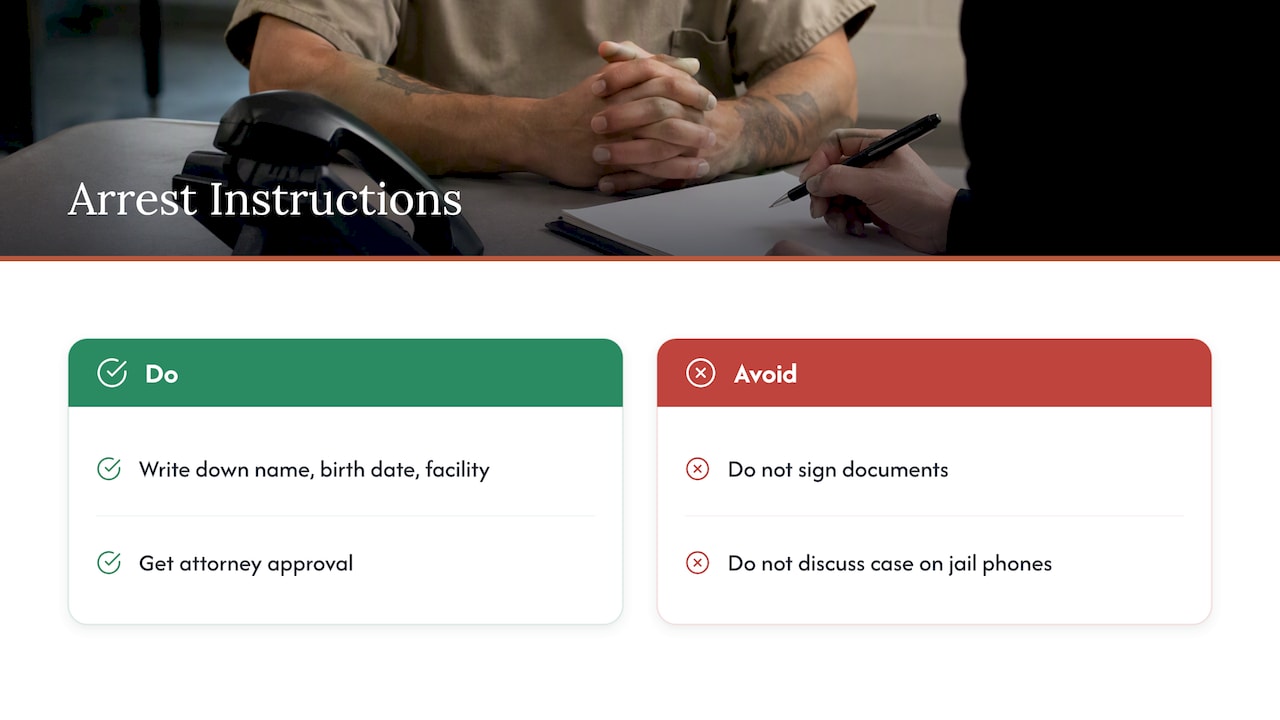
Each block should answer three questions in this order: what should I do right now, what should I avoid, and what will you ask me? For an arrest, for example, the “right now” line might tell the family to write down the full name, date of birth and the facility where the person is held. The “avoid” line might warn against signing documents or discussing the case on jail phones. Have a licensed attorney in your firm approve every instruction, since advice that is right in one state can be wrong in another.
The part the page cannot do alone: answering
A perfect page fails if the call goes to voicemail in English. The page sets a promise; the intake path keeps it. That means someone or something answering in Spanish at night and on weekends, collecting the facts, and flagging urgent matters to an attorney.
Our guides on the Spanish legal digital front desk and on a law firm Spanish website that converts go deeper on this. For the first-contact wording, the copy-ready Spanish greetings give you lines for phone and chat that match the tone of the page.
There is also a compliance angle. If your firm markets to Spanish speakers, your digital experience should not be an afterthought, and our overview of multilingual ADA steps covers accessibility risks that often travel with a bilingual rollout.
Perspective: why we treat this page as a front desk, not a translation
We see the same mistake again and again. A firm pays to translate its English site, adds a Spanish button, and assumes the job is done. Then a mother whose son was just arrested lands on a page whose Spanish reads like a form letter, calls a number that rings out after 6 p.m., and moves on to the next firm in her search results.
Our view is that the emergency page, the phone and the chat are one system. The Spanish has to be written and reviewed by people, with the register Hispanic clients expect. The after-hours answer has to be real. The handoff to an attorney has to carry a summary, so the client does not repeat the worst hour of their life three times. That is how we built Diazluna: a bilingual site, a 24/7 AI receptionist and WhatsApp working together, with urgent cases transferred to you. Tone is not decoration either. We wrote about why Spanish tone matters for retention because the clients who stay are the ones who felt respected on the first call.
— Francisco
What this looks like with Diazluna
If you would rather not assemble the site, the phone line and the chat from separate vendors, our plans cover the pieces in one subscription: Solo Sitio at $99 per month ($990 per year) for the bilingual website, Sitio + María at $199 per month ($1990 per year) that adds the 24/7 AI receptionist, and Sitio + María Pro at $349 per month ($3490 per year) with managed site updates and expanded call capacity. There is a one-off activation fee of $399. See the plans and start on the Diazluna home page, or read how we serve firms with Spanish-speaking clients.
A checklist before you publish
- A native Spanish speaker with legal knowledge has read every line.
- Commands use usted throughout.
- The first screen says “911 first” for immediate danger.
- Phone, WhatsApp and form all work after hours, and you have tested them in Spanish.
- Every situation block has a “do now,” an “avoid” and a “we will ask” line, approved by an attorney.
- Public resources (211, interpreter rights) are linked and current.
- Intake asks which language the person speaks best.
- The page loads fast on a phone and is indexable in both languages. Our guides on a bilingual law firm website and Spanish SEO for lawyers cover that technical side.
FAQ
How do you say “emergency department” in Spanish?
The usual term is urgencias, and sala de urgencias for the ward itself. In parts of Latin America you will also hear sala de emergencias. On a practice website, use urgencias and add the regional variant if your clients mostly come from one country.
What should someone say when calling 911 and needing Spanish?
They should state in English the type of emergency and that they speak Spanish, then stay on the line. The call taker can bring in an interpreter, and the caller should answer each question and follow instructions. Your page can show this as a short script in Spanish.
Can a legal aid office refuse an interpreter?
Legal aid offices that receive federal funding are required to provide language access, including free interpreters, to people with limited English proficiency. Someone who is denied can file a complaint with the Department of Justice Civil Rights Division. Your page can say this in plain Spanish.
Should the emergency page be a separate page or part of the contact page?
Make it separate, with its own Spanish URL and a link in the site header. A visitor in crisis should reach it in one tap, and a dedicated page lets you write the content around the situations they face. Keep the regular contact page for non-urgent questions.
Sources
- Emergency phrases in Spanish, U.S. Embassy Mexico
- Spanish translation of “emergency department”, Collins Dictionary
- What to Tell 9-1-1, Seattle CARE
- FAQ About Calling 911, 911.gov
- Interpreter guide, U.S. District Court of New Jersey
- Getting legal assistance in your language, LawHelp.org
- Guía práctica para emergencias, Nuevo en US
- Emergency grammar in Spanish
- Spanish for medical emergencies guide
- A guide for state court judges and lawyers, American Bar Association
- How interpreters help you post bail