October 6, 2026
Stop Losing Spanish Calls
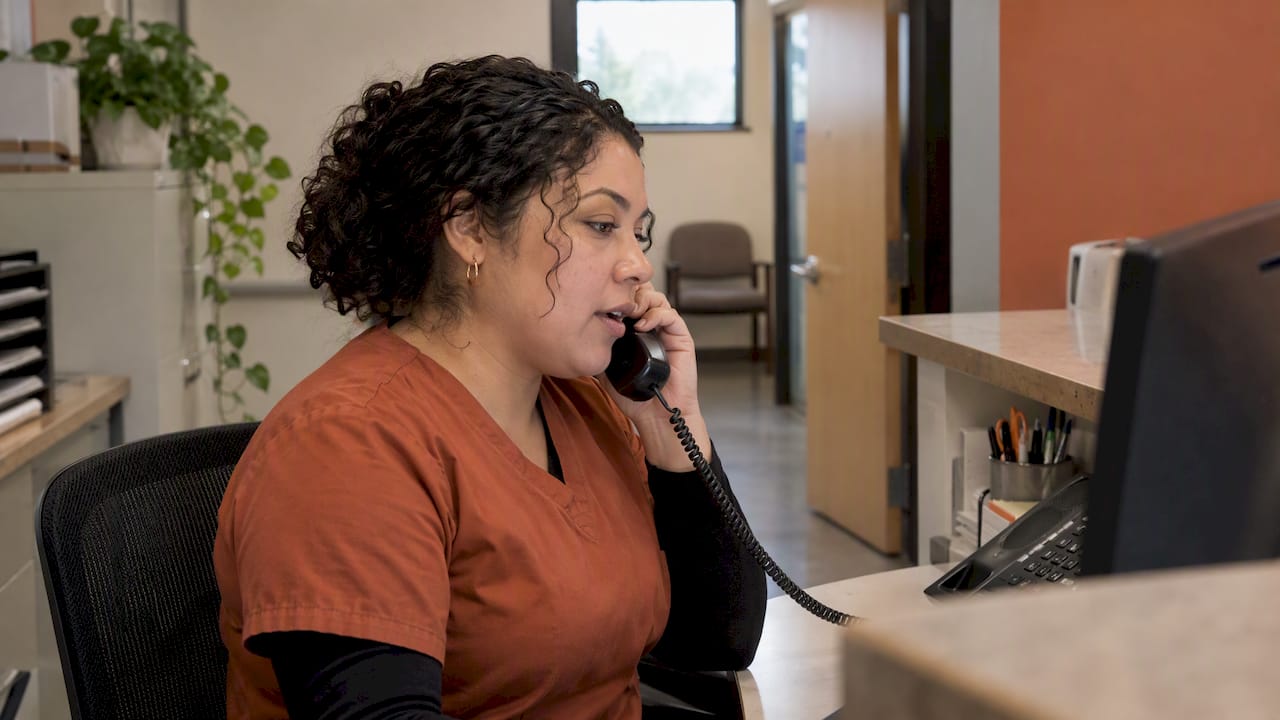
Instead of training internal staff, deploy a bilingual digital front desk: a bilingual website, a 24/7 Spanish and English AI receptionist, and WhatsApp integration. This setup handles Spanish calls immediately and reliably without months of coaching or turnover risk. For dentists, lawyers, and clinic owners who need Spanish coverage now, it replaces an entire hiring and training project with a system that’s live in days.
TL;DR:
- A bilingual digital front desk can be live within days, replacing months of staff training and avoiding turnover risks associated with bilingual hires.
- About 33% of small-business calls are conducted in languages other than English, making Spanish coverage essential to capture a significant client base.
- Vendors must sign a business associate agreement and ensure encryption and risk analysis compliance to handle protected health information legally for healthcare practices.
- During demos, request native speaker call samples, evaluate in-culture content, and conduct live pilots to verify language authenticity and integration quality.
- Pricing typically involves monthly subscriptions and a one-time setup fee, with measurable success signs including increased Spanish call answer rates and higher appointment bookings.
Table of Contents
- Why a bilingual digital front desk outperforms in-house staff training
- HIPAA and BAA basics for healthcare practices using an AI receptionist
- How to evaluate a bilingual digital front desk vendor
- How Diazluna builds the bilingual front-desk model
- Step-by-step: from sign-up to a live bilingual front desk
- What it costs and how to measure the return
- A quick note on getting this right
- Get a bilingual front desk running without the hiring process
- FAQ
- Sources
Why a bilingual digital front desk outperforms in-house staff training
Training a receptionist to handle Spanish calls takes months, and the moment that person leaves, your practice is back to square one. A digital front desk never calls in sick and never quits.
The stakes are real. About one in five U.S. residents speaks a language other than English at home, and an estimated 33% of calls to small-business phone lines aren’t conducted primarily in English. A caller who can’t get through in their preferred language often just hangs up and calls the next practice on the list.
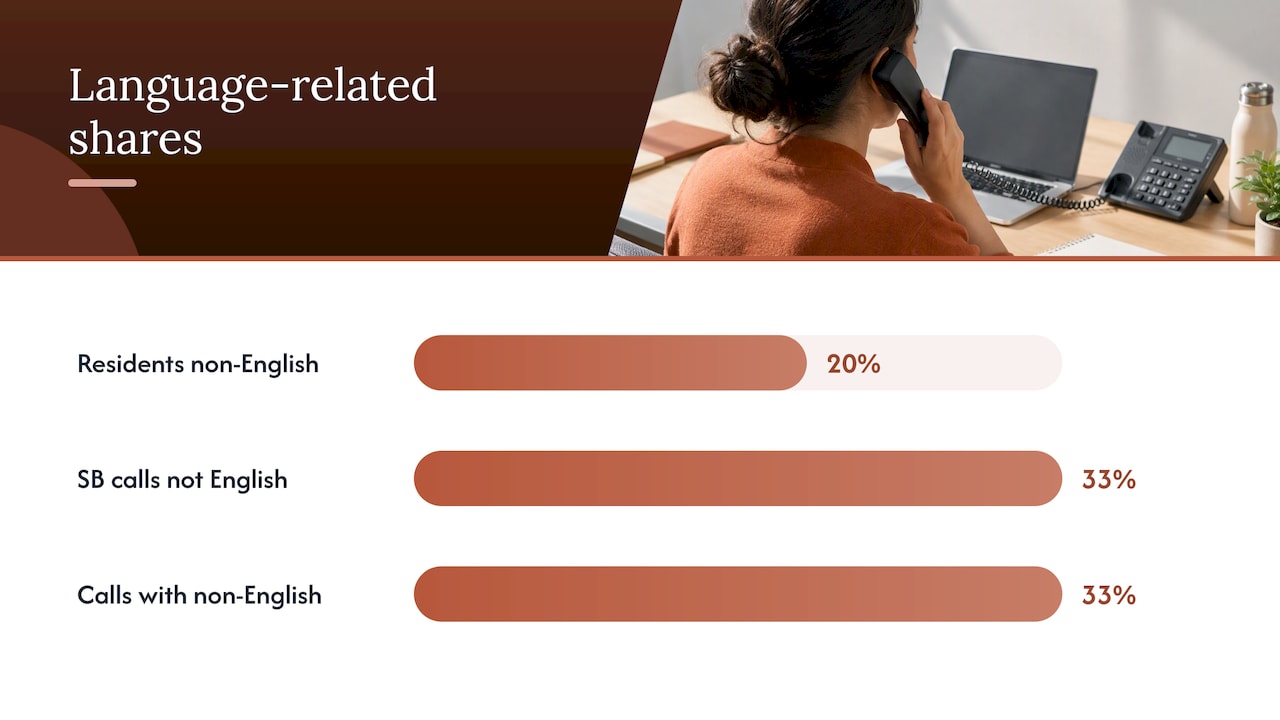
Roughly a third of small-business calls involve a non-English speaker, meaning a practice with no Spanish coverage is turning away a meaningful slice of its potential client base before a human ever picks up.
A few structural advantages make the difference:
- Round-the-clock coverage catches after-hours calls that a single bilingual hire physically cannot answer.
- WhatsApp integration meets Hispanic callers on the channel they already prefer for quick questions and appointment confirmations.
- Consistent service quality doesn’t dip during busy afternoons or staff turnover.
Being “in-language” isn’t the same as being “in-culture.” A literal translation can sound stiff or even confusing, while phrasing that reflects regional tone and context converts better.
HIPAA and BAA basics for healthcare practices using an AI receptionist
Any vendor that creates, receives, or transmits protected health information on a healthcare practice’s behalf is a business associate under federal rules, and that includes an AI receptionist scheduling appointments. A signed business associate agreement under 45 CFR 164.504(e) is required before any patient data flows to that vendor, and encryption alone doesn’t satisfy the obligation.
Cloud-based tools carry the same requirement. HHS guidance on cloud computing confirms that cloud providers handling ePHI are business associates too, even when the service advertises “no-view” encryption, and practices still need to complete their own risk analysis.
Before signing anything, work through this short checklist:
- Confirm the vendor will sign a BAA before any patient data is shared.
- Ask how the vendor limits intake fields to the minimum necessary, such as name, callback number, and general appointment reason.
- Request details on encryption standards and whether subcontractors ever touch call data.
- Verify your own practice has completed a current risk analysis that accounts for this new vendor.
Pro Tip: Treat the signed BAA as a gate, not a formality: no BAA means no patient data goes through that system, period.
Our guide to AI receptionists for Spanish-speaking medical patients walks through these compliance steps in more depth for clinics specifically.
How to evaluate a bilingual digital front desk vendor
Don’t take a vendor’s word for language quality or integration. Run these tests during the demo or trial period.
- Ask for human-reviewed Spanish scripts and real call samples, not machine-translated text, so you can judge whether phrasing sounds natural to a native speaker.
- Request examples of “in-culture” content, since regional phrasing and tone affect whether callers feel understood or feel like they’re talking to a script.
- Confirm how the system hands off to your appointment calendar or practice management software, and ask what happens when a call needs a human.
- Push for a short live-call pilot where real callers interact with the system before you commit, including at least one after-hours test.
- Check how WhatsApp messages thread into the same record as phone calls, so nothing gets lost between channels.
- Get specifics on service level agreements, onboarding timeline, and exactly what data-handling and BAA terms apply.
A law practice evaluating intake accuracy can also borrow structured client intake frameworks to sharpen the qualification questions a bilingual system should be asking. For clinics specifically, our breakdown of the AI receptionist’s day-to-day role covers which tasks should stay automated versus route to staff.
How Diazluna builds the bilingual front-desk model
The platform bundles the key components this guide recommends into one subscription: a bilingual website in Spanish and English, a 24/7 AI receptionist that handles calls, messages, and appointment scheduling, and WhatsApp integration with real-time summaries so urgent cases get flagged for a human.
This approach can result in rapid Google indexing, often within 24 hours of launch, and measurable reductions in client loss among practices that previously had no Spanish coverage. Content is human-reviewed rather than machine-translated, aiming at the in-culture standard rather than a literal one.
Packages can be tailored to different practice needs:
- A package covering just the bilingual website for practices that need Spanish-language presence online.
- An add-on including a 24/7 AI receptionist for practices losing calls to language gaps.
- A more comprehensive option with expanded call capacity and ongoing site updates for busier practices.
As someone who has worked through compliance and language-quality questions with practice owners directly, I’d note that the packages are built to be edited by the owner without technical skills, which matters when a practice wants to update hours or services without waiting on a developer.
Step-by-step: from sign-up to a live bilingual front desk
Getting from decision to a working system follows a predictable path.
- Audit your current call volume, channels, and appointment flow, and pick two or three KPIs to track, such as Spanish-call answer rate.
- Set up bilingual site content, confirm phone routing, map WhatsApp numbers, and write or approve the receptionist’s intake script.
- Run sample calls in both languages, have a native Spanish speaker review the responses, and role-play edge cases like a caller requesting a callback in Spanish only.
- Confirm minimum-necessary data collection so the receptionist isn’t gathering sensitive health details it doesn’t need.
- Go live, then monitor closely for the first 30, 60, and 90 days.
Pro Tip: Compare your 30-day Spanish-call answer rate against your pre-launch baseline; if it isn’t climbing, the script or routing needs adjustment, not more waiting.
Our after-hours Spanish support guide outlines which after-hours scenarios tend to reveal gaps fastest during this testing window, and the bilingual follow-up guide covers scripting for the callback stage once a lead comes in.
What it costs and how to measure the return
Vendors in this space typically price on tiered monthly or annual subscriptions rather than per-call fees, often with a one-time setup or activation charge on top. Budget for that activation cost separately from the ongoing subscription when comparing offers.
The metrics that actually show whether the system is working:
- Spanish-call answer rate, before and after launch.
- Booked-appointment rate specifically from Spanish-language calls and WhatsApp threads.
- Retention among Hispanic clients over the following quarter.
- Search visibility improvements for the bilingual site.
A simple before-and-after test works well here: track missed Spanish calls for two weeks before launch, then compare the same window after go-live. Hispanic consumers show higher engagement with culturally relevant Spanish content, which is one reason practices often see the booked-appointment rate climb faster than the raw call volume alone would suggest. Our guide to bilingual service benefits breaks down which retention signals to watch first.
A quick note on getting this right
Small practices don’t need a six-month training program to serve Spanish-speaking clients well. They need a system that’s compliant, authentic in language, and wired into the tools they already use. My three priorities, in order: confirm the BAA and data handling first, test language authenticity second, and check integration third. Skip any of the three and the rest doesn’t matter much.
— Francisco
Get a bilingual front desk running without the hiring process
We built Diazluna to bundle exactly what this guide recommends: a bilingual website, a 24/7 AI receptionist fluent in Spanish and English, and WhatsApp integration, all under one subscription instead of three separate vendor contracts. We report rapid Google indexing for new sites and a measurable drop in client loss for practices that had no prior Spanish coverage, and we’re glad to share client references on request.
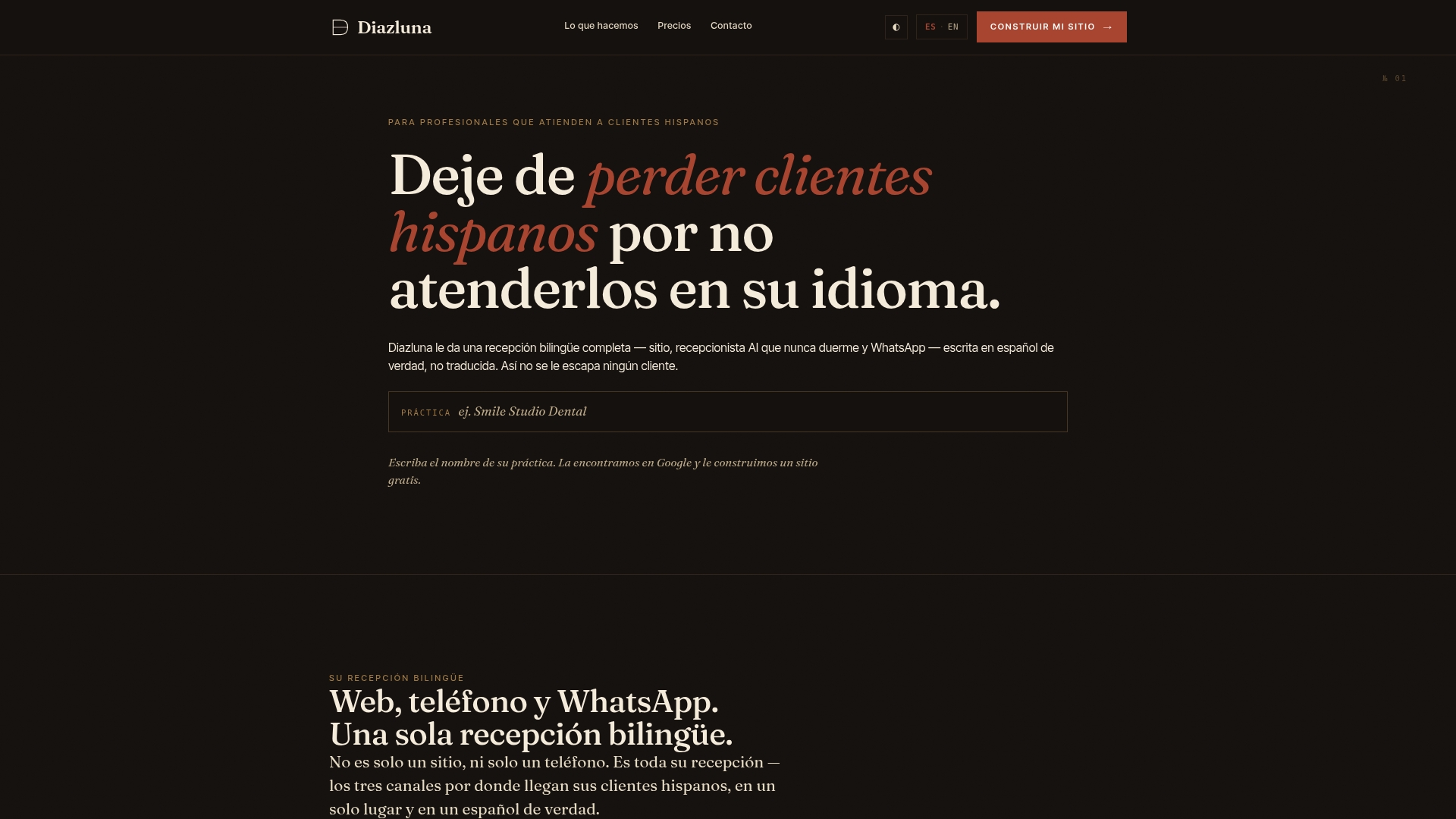
Different subscription tiers are available, commonly including options for a bilingual website alone, a website with 24/7 AI receptionist, and a full-service package with expanded capacity. There is typically a one-time activation fee at setup. If your practice is still routing Spanish callers to voicemail or a part-time bilingual hire, visit our website to compare packages and start the setup process today.
FAQ
Do I still need to train staff if I use an AI receptionist?
No. The point of a bilingual digital front desk is to handle Spanish calls, messages, and scheduling directly, so staff don’t need separate language training for front-desk duties. Staff still handle clinical or legal work as usual, just without fielding the initial call.
Is an AI receptionist HIPAA compliant for medical practices?
An AI receptionist can be used in a HIPAA-compliant way, but only when the vendor signs a business associate agreement and the practice limits data collection to the minimum necessary. Encryption alone does not satisfy this requirement; the signed BAA and a completed risk analysis are what matter.
How fast can a bilingual front desk go live?
Timelines vary by vendor, but setup typically moves through site content, phone routing, and WhatsApp mapping before testing begins, often within days rather than months. Some providers report Google indexing of new bilingual sites within 24 hours of launch.
What’s the difference between translated and in-culture Spanish content?
Translated content converts words directly from English, which can sound stiff or miss regional context. In-culture content is human-reviewed to reflect how Spanish-speaking clients actually talk and what reassures them, which tends to convert better than literal translation.
How much does a bilingual digital front desk cost?
Pricing in this category is usually a monthly or annual subscription plus a one-time setup fee rather than a per-call charge. Diazluna’s plans range from $99 per month for a bilingual website alone up to $349 per month for the full managed package with an AI receptionist, plus a $399 one-time activation fee.
Sources
- How many people speak a language other than English at home? | USAFacts
- Hhs
- 2024 Hispanic market report | Claritas