November 8, 2026
Spanish Digital Consent Forms: What to Include and Keep
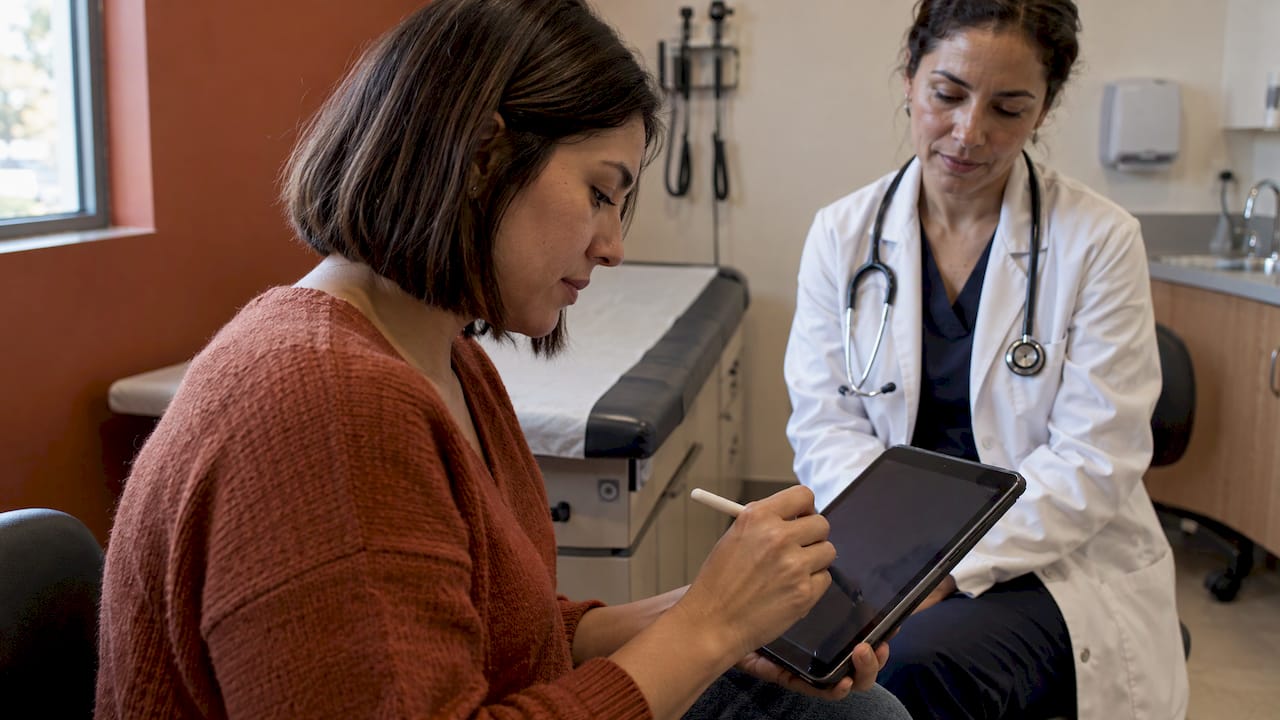
A Spanish digital consent form is a consent document written in Spanish, signed on a screen, phone or tablet, and saved with a record of who signed what and when. For it to hold up, you need four things: Spanish a qualified human has reviewed, an electronic signature tied to a verified identity, a real conversation that confirms the patient understood, and a stored copy that can be retrieved intact. This guide covers each one for dental, medical, legal and research settings in the United States.
TL;DR
- Use Spanish that a qualified human translator has reviewed. Federal rules for covered health entities require that review when the text is critical to rights or access.
- An e-signature is valid when it shows intent to sign, consent to do business electronically, a paper option, and a signed copy for the patient.
- A translated form does not prove understanding. Pair it with a spoken discussion and teach-back in Spanish.
- Keep the signed form, the version the patient saw, and an audit trail that shows any later edits.
- Rules differ by setting: healthcare practices, research and non-medical professions follow different requirements.
Table of Contents
- What a Spanish digital consent form is and when you use it
- What kinds of templates exist
- Getting the Spanish right
- What the form must contain, and when e-signatures count
- Rules that change by setting
- Confirming the patient understood
- What to keep after the signature
- Where the rest of the patient journey fits
- A bilingual front desk that makes forms easier to reach
- FAQ
- Sources
What a Spanish digital consent form is and when you use it
It is the same legal document you would hand over on paper, delivered in Spanish through a secure link, a tablet at the front desk or a text message. The patient or client reads it, signs on screen and receives a copy. The practice stores the signed version and the record behind it.
Practices use them in a few common situations:
- Dental and medical new-patient visits. General treatment consent, privacy acknowledgments and procedure-specific consent such as extractions, sedation or orthodontics.
- Telehealth. Consent to be treated by video or phone, with the risks and limits of remote care explained.
- Texting and communication. Permission to send appointment reminders or clinical messages by text.
- Research. Informed consent for studies, where the rules are stricter.
- Legal intake. Engagement letters and authorizations signed before the first consultation.
The digital part saves time. The Spanish part is where most mistakes happen. Copying English text into a translation tool and publishing the result is the most common one, and it is exactly what the federal rules below are meant to prevent.
What kinds of templates exist
Search results for this topic are mostly template libraries: general treatment consent, orthodontic completion and retention forms, telehealth consent, teletherapy consent, and sample informed consent for research. These are useful starting points, but a template is a draft. It needs your procedures, your practice name, your privacy terms and a review by someone qualified.
Two official starting points are worth knowing:
- For telehealth, the Agency for Healthcare Research and Quality publishes an easy-to-understand telehealth consent form and guidance on obtaining informed consent for telehealth. It is written in plain language, which is the right baseline before you translate.
- For research with participants who do not speak English, HHS guidance says the participant should receive a consent document in a language they understand. It strongly encourages that approach whenever possible.
If you need working examples for specific workflows, we have written about Spanish new patient dental forms, Spanish telemedicine consent and texting consent in Spanish.
Getting the Spanish right
Accuracy is a legal matter in healthcare, not a style choice. Under the federal rule on meaningful access, covered entities must use qualified translators for required translations. The same rule says machine translation must be reviewed by a qualified human translator when accuracy is essential, when the text is critical to rights or access, or when the material is complex, nonliteral or technical. A consent form is all of those at once.
The rule also limits who can interpret. Covered entities generally may not require a patient with limited English proficiency to bring their own interpreter, or rely on unqualified adults, minor children or unqualified staff to interpret, with specified exceptions. A front desk employee who “speaks some Spanish” is not a substitute for a qualified interpreter when a procedure is being explained.
Write for understanding, not just for correctness
A form can be accurate and still be too hard to read. An academic study of obstetric consent comprehension notes that consent forms designed for low-literacy audiences have been shown to improve understanding. It also suggests a short introduction explaining what the process involves. In practice:
- Use short sentences and everyday words. Prefer “cirugía” over a Latinized clinical term where both are correct.
- Explain risks in concrete terms, not only in category names.
- Test the draft with a few native Spanish speakers before you publish it. The same study describes piloting materials with native speakers.
- Consider regional variation. Your patients may come from Mexico, Central America, the Caribbean or South America, and some words differ. Choose neutral wording and check it with people from your community.
Our Spanish readability checklist for clinics walks through this audit step by step.
What the form must contain, and when e-signatures count
Content
The required content depends on the setting. For research, HHS guidance on electronic informed consent says the electronic form must contain all the elements of informed consent required by 45 CFR 46.116 and 21 CFR 50.25. The information must be in language the person understands, and it must be conveyed in a way that minimizes coercion or undue influence.
For clinical care, the content comes from your state’s rules and your procedure. Typically it covers the nature of the treatment, the main risks, alternatives, and the option to ask questions or decline. Your licensing board or malpractice carrier can tell you what your state expects.
The signature
U.S. law accepts electronic signatures broadly. The federal E-Sign Act, signed on June 30, 2000, gives electronic records and signatures a general rule of validity in interstate and foreign commerce. It allows electronic records to satisfy writing requirements if the consumer has affirmatively consented and has not withdrawn that consent.
For the workflow itself, a legal overview of U.S. e-signature rules lists these building blocks:
- Demonstrated intent to sign.
- Clear consent to do business electronically.
- An opt-out that lets the person use paper instead.
- A way to give the patient a signed copy.
For research covered by standard U.S. research regulations, a university research office explains that an electronic signature can document consent when it is attributable to a verified identity. Examples include signing on a digital screen, typing a name while signed into a password-protected system, or receiving a consent link by email or text.
Put the electronic-business consent in Spanish too. A patient who cannot read the line that says “you agree to sign electronically” has not agreed to it in any meaningful way.
Rules that change by setting
| Setting | What drives the rules | What it means for the Spanish form |
|---|---|---|
| Healthcare practice receiving federal funds | Section 1557 and 45 CFR Part 92 | Reasonable steps for meaningful access, qualified translation, notice of language assistance |
| Research with human subjects | 45 CFR 46 and 21 CFR 50 | Consent document in the participant’s language, or a short form with an oral presentation and witness |
| Telehealth | State telehealth rules plus federal access rules | Plain-language consent, delivered in Spanish, documented in the chart |
| Legal and other professional services | State bar or licensing rules, E-Sign Act | Understandable engagement terms, valid e-signature, copy to the client |
Section 1557 in healthcare
Section 1557 requires covered entities to take reasonable steps to provide meaningful access to each individual with limited English proficiency who is eligible to be served or likely to be affected by their programs. A related provision, 45 CFR 92.11, says the notice of availability of language assistance services must appear in consent forms and instructions related to medical procedures or operations, medical power of attorney, or living wills. That notice goes in English and at least the 15 languages most commonly spoken by people with limited English proficiency in the relevant state. If you build digital consent forms, add that notice to the template.
A healthcare compliance vendor’s summary reaches the same practical point: language access covers oral interpretation and written translation of critical documents such as consent forms. For help turning this into an actual policy, see our guides on Section 1557 language access policies and building a language access plan.
Research and the short form
Research has a specific alternative when a full translated document is not available. Under 45 CFR 46.117(b)(2), a short form can state that the required elements were presented orally. The IRB approves a written summary of what will be said, and a witness attends the oral presentation. Only the short form is signed by the subject. The witness signs both the short form and a copy of the summary, and the person obtaining consent signs a copy of the summary. If you work in research, build this path into your digital workflow instead of improvising.
Confirming the patient understood
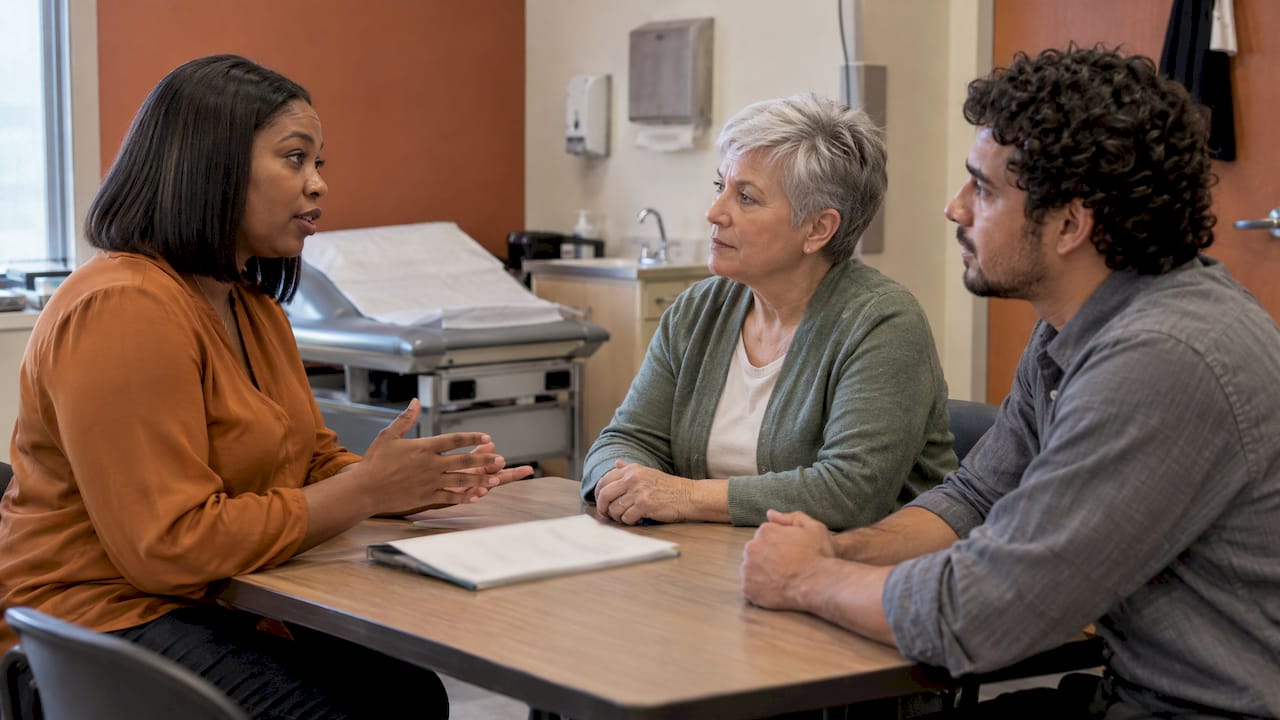
A signature records agreement. It does not record understanding. Research on obstetric patients shows that translated materials, while necessary, do not by themselves eliminate comprehension gaps. The authors point to supplemental education and interactive discussion. A team of researchers writing on consent for Spanish-speaking participants argues that consent should be treated as a process, with teach-back as the main safeguard, rather than as mechanical translation.
A simple routine for the visit:
- Send the Spanish form ahead of time when you can, so the patient has time to read it and ask family members.
- Have a qualified interpreter or a bilingual clinician go through the key points aloud.
- Ask the patient to explain in their own words what the procedure is, what could go wrong and what the alternatives are. Correct and repeat until it is clear.
- Offer the chance to decline or to take the form home.
- Document the conversation in the chart, including the language used.
Staff training matters as much as the form. A healthcare compliance writer notes that even a well-translated form fails if staff are not trained to use it. If the discussion happens in Spanish, the patient should sign the Spanish version, and the person obtaining consent should sign that same version to document the interaction.
Our perspective
We build front desks for practices that serve Hispanic clients, and the pattern repeats: a practice buys a translated PDF, drops it on a page and considers the problem solved. The patient then meets a form in careful Spanish and a front desk that only works in English.
We think consent starts before the signature. It starts when a patient finds a website in Spanish that reads like it was written for them, gets an answer at 9 p.m. in their language, and receives the form in the channel they already use. That is why we put the bilingual site, the AI receptionist and WhatsApp in one place, with Spanish content that is human-reviewed rather than machine-translated.
A digital consent form should be the last step of a respectful conversation, not a hurdle placed in front of it. Get the language right, get the conversation right, and the signature follows.
Francisco
What to keep after the signature
A signed form is only useful if you can find it, read it and show that it has not been altered. Keep these items together:
- The signed form, in the Spanish version the patient actually saw.
- The date, time and the identity checks used for the signature (login, link sent to a verified email or phone).
- The patient’s electronic-business consent and the copy you sent them.
- A note on the consent conversation: who led it, in which language, and whether an interpreter took part.
- The English reference version and its version number, so you can show what the Spanish form corresponded to.
State boards set expectations here. The North Carolina Medical Board’s position statement says licensees should maintain patient records, including clearly documented informed consent when appropriate, and it does not set a retention period. Washington’s medical commission says that where an electronic system stores records, the original information must remain retrievable through a secure, permanent audit trail if an entry is updated or corrected. Retention periods vary by state and profession, so confirm yours with your licensing board or your attorney.
When you change a form, version it. A patient who signed the 2025 Spanish text should be able to be matched to that text, not to today’s edit.
Where the rest of the patient journey fits
Consent is one step in a longer sequence. A patient who cannot find your practice in Spanish never reaches the form. A patient who calls after hours and hears a voicemail in English may not call again. The surrounding pieces matter:
- A bilingual contact form that works for people using assistive tech and for Spanish speakers.
- Spanish appointment confirmations that tell people which forms to complete.
- Bilingual intake that collects history and consent in one visit.
- Spanish discharge instructions that close the loop after treatment.
A bilingual front desk that makes forms easier to reach
Diazluna is a bilingual digital front desk for dental, legal and medical practices serving Hispanic clients. It combines a bilingual website in Spanish and English, an AI receptionist (María) that answers calls and messages around the clock and schedules appointments, and WhatsApp communication, with real-time summaries and transfer of urgent cases.
Plans are published on our site:
| Plan | Monthly | Yearly |
|---|---|---|
| Solo Sitio (bilingual website) | $99 | $990 |
| Sitio + María (website and AI receptionist) | $199 | $1,990 |
| Sitio + María Pro (managed, with site updates and expanded call capacity) | $349 | $3,490 |
Activation is a one-off $399 fee. Your consent documents still need your own legal and clinical review, but the bilingual site and the front desk give patients a Spanish route to your practice from the first click.
See the plans and how setup works and choose the level that fits your practice.
FAQ
Is an electronic signature on a Spanish consent form legally valid?
Generally yes. The federal E-Sign Act gives electronic signatures a general rule of validity, provided the person has agreed to do business electronically. The workflow should also show intent to sign, offer a paper option and provide a signed copy. Your state and profession may add requirements, so check with your board or attorney.
Can I use machine translation for a consent form?
For covered healthcare entities, machine translation of critical text must be reviewed by a qualified human translator. Consent forms fall into that group because they affect rights and are technical. Treat any machine draft as a starting point and have a qualified translator finalize it.
Can a bilingual staff member or the patient’s relative interpret the consent discussion?
Federal rules for covered entities restrict relying on family members, minor children or unqualified staff to interpret, with specified exceptions. Use a qualified interpreter, or a clinician who is qualified to deliver care in Spanish, and document who took part.
Does the Spanish form need to say anything about language assistance?
For covered health entities, the notice of availability of language assistance services must appear in consent forms for medical procedures, medical power of attorney and living wills. It goes in English and in the most common languages of limited English proficiency in your state. Add it to your template.
How long should I keep signed consent forms?
It depends on your state and profession. Some board statements require documented consent without naming a period. Ask your licensing board or counsel for the exact retention period, and keep the audit trail with the form.
Sources
- AHRQ: Easy-to-understand telehealth consent form
- HHS OHRP: Informed consent of subjects who do not speak English
- 45 CFR 46.117: Documentation of informed consent
- 45 CFR 92.201: Meaningful access for individuals with limited English proficiency
- 45 CFR 92.11: Notice of availability of language assistance services
- Disparities in comprehension of the obstetric consent process
- HHS OHRP: Use of electronic informed consent, questions and answers
- Electronic signatures and waivers of documentation of consent
- Electronic signature laws and regulations, United States
- FDIC: Electronic Signatures in Global and National Commerce Act
- HHS: Language access provisions of the Section 1557 final rule
- Multilingual consent forms: legal considerations
- How to achieve informed consent for research with Spanish-speaking participants
- North Carolina Medical Board: Medical records and documentation position statement
- Washington Medical Commission: Medical records policy